
Eco-Types

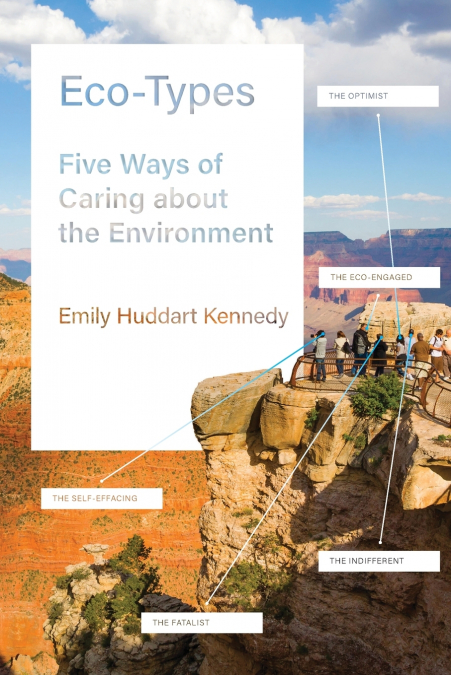
Eco-Types

Emily Huddart Kennedy

29,60 €
IVA incluido
Disponible
Editorial:
Princeton University Press
Año de edición:
2025
Materia
Teoría social
ISBN:
9780691239583
29,60 €
IVA incluido
Disponible

Selecciona una librería:

  • Librería Samer Atenea

  • Kálamo Books
  • Librería Elías (Asturias)
  • Librería Kolima (Madrid)
  • Librería Proteo (Málaga)

Why acknowledging diverse eco-social relationships can help us overcome the political polarization that undermines our ability to protect the environmentWhen we picture the ideal environmentalist, we likely have in mind someone who dedicates herself to reducing her own environmental footprint through individual choices about consumption-driving a fuel-efficient car, for example, or eating less meat, or refusing plastic straws. This is a benchmark that many aspire to-and many others reject. In Eco-Types, Emily Huddart Kennedy shows that there is more than one way to care about the environment, outlining a spectrum of eco-social relationships that range from engagement to indifference.Drawing on three years of interviews and research, Kennedy describes five archetypal relationships with the environment: the Eco-Engaged, often politically liberal, who have an acute level of concern about the environment, a moral commitment to protect it, and the conviction that an individual can make a difference; the Self-Effacing, who share the Eco-Engaged’s concerns but not the belief in their own efficacy; the Optimists, often politically conservative, who are confident in their relationship with the environment, doubt the severity of environmental problems, and resent insinuations that they don’t care; the Fatalists, who are pessimistic about environmental decline and feel little responsibility to adopt environment-friendly habits; and the Indifferent, who have no affinity for any part of the environmental movement.Kennedy argues that when liberals feel they have a moral monopoly on environmental issues, polarization results. If we are serious about protecting the planet, we must acknowledge that we don’t all need to care about the environment in the same way.
Artículos relacionados

  • Rethinking untouchability
    Jesús F. Cháirez-Garza
    This book examines the transformation of untouchability into a political idea in India during the first half of the twentieth century. At its heart is Ambedkar’s role and the concepts he used to champion untouchability as a political problem. Ambedkar’s main objective was to comprehend the numerous avatars of untouchability in order to eradicate this practice. Ambedkar understo...
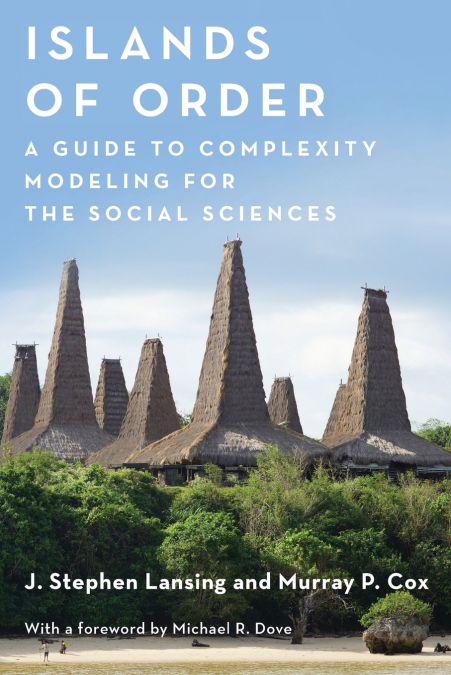
  • Islands of Order
    J. Stephen Lansing / Murray P. Cox
    Two pioneering anthropologists reveal how complexity science can help us better understand how societies change over timeOver the past two decades, anthropologist J. Stephen Lansing and geneticist Murray Cox have explored dozens of villages on the islands of the Malay Archipelago, combining ethnographic research with research into genetic and linguistic markers to shed light on...
    Disponible

    37,20 €

  • The Sage Handbook of Global Sociology
    ...
  • Human Rights, Security Politics and Embodiment
    Aneira J. Edmunds
    How have human rights been entangled with state control of the body? And how have they failed to intervene effectively on tipping points such as the US’s endorsement of torture that removes the victim’s control over their own body? This book explores the way institutional human rights have glossed over such abuses and been complicit in security politics which see the Muslim bod...
    Disponible

    35,86 €

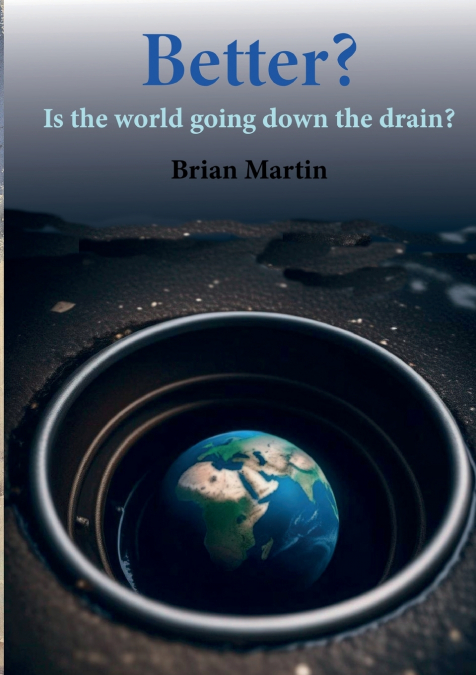
  • Better?
    Brian Martin
    Over the past fifty years, have things been getting better or worse? Brian Martin sets out to address this big question by looking at a range of topics, from climate to feminism, from happiness to war, from deschooling to death. Along the way, he offers personal stories and assessments of key studies. This is an invitation to avoid excessive gloom and unwarranted optimism by th...
    Disponible

    27,71 €