Inicio > Matemáticas y ciencia > Biologia, ciencias de la vida > Botánica y ciencias de las plantas > Écart d’adoption dans l’ensemble de pratiques recommandées pour la culture du pois chiche
Écart d’adoption dans l’ensemble de pratiques recommandées pour la culture du pois chiche

Écart d’adoption dans l’ensemble de pratiques recommandées pour la culture du pois chiche

Godawari Pawar / Rajesh Kadam / Supriya Khuspe

82,91 €
IVA incluido
Disponible
Editorial:
KS OmniScriptum Publishing
Año de edición:
2025
Materia
Botánica y ciencias de las plantas
ISBN:
9786209063442
82,91 €
IVA incluido
Disponible

Selecciona una librería:

  • Librería Samer Atenea
  • Librería Aciertas (Toledo)
  • Kálamo Books
  • Librería Perelló (Valencia)
  • Librería Elías (Asturias)
  • Donde los libros
  • Librería Kolima (Madrid)
  • Librería Proteo (Málaga)

La production mondiale totale de pois chiches s’élève à environ 8,5 millions de tonnes par an et est cultivée sur plus de 10 millions d’hectares. L’Inde cultive des pois chiches sur environ 6,67 millions d’hectares, produisant 5,3 millions de tonnes. Avec 35 % de la superficie mondiale et 27 % de la production, l’Inde est le plus grand producteur de légumineuses. La superficie consacrée à la culture des pois chiches dans le Maharashtra est d’environ 13,95 lakh hectares et la production est de 13,01 lakh tonnes. La superficie consacrée à la culture du pois chiche dans le Marathwada en 2011-2012 est d’environ 58 800 hectares, pour une production d’environ 61 700 tonnes et un rendement de 1 050 kg/ha. Depuis 1990, on observe une augmentation du rendement du pois chiche en Inde, qui est passé de 614 kg par hectare à 735 kg par hectare. Il s’agit de la légumineuse alimentaire la plus importante cultivée dans le monde. L’Inde est le plus grand producteur de cette légumineuse, contribuant à environ 70 % de la production mondiale totale. Les pois chiches de type Desi dominent largement la production en Inde. Les pois chiches sont cultivés dans les régions les plus sèches du pays, car elles sont les plus propices à leur production. Les États producteurs de pois chiches en Inde sont : le Madhya Pradesh, l’Uttar Pradesh, le Rajasthan, le Maharashtra et l’Andhra Pradesh.

Artículos relacionados

  • The Green Architecture
    Ali Mirshafieyan / Ghazal Yeganeh / Maryam Zamani Motlagh
    Protecting green energy as well as non-renewable energy, as well as their sustainable use, many advances in the technology of extracting oil products and other reserves under the ground have caused many improvements. In this regard, proposing the design of buildings in which the consumption of fossil fuels reaches its lowest level is considered one of the important solutions in...
    Disponible

    82,54 €

  • Responsible Use and Management of Agrochemicals
    Juan Carlos Nava
    Uso y manejo responsable de agroquímicos is a work product of the author’s experiences (undergraduate and graduate professor, with research and extension projects), aimed at producers, companies, professionals, students, advisors, researchers, among others.Due to its structure and content, it is expected to be a valuable aid to all people directly or indirectly involved in the ...
    Disponible

    49,45 €

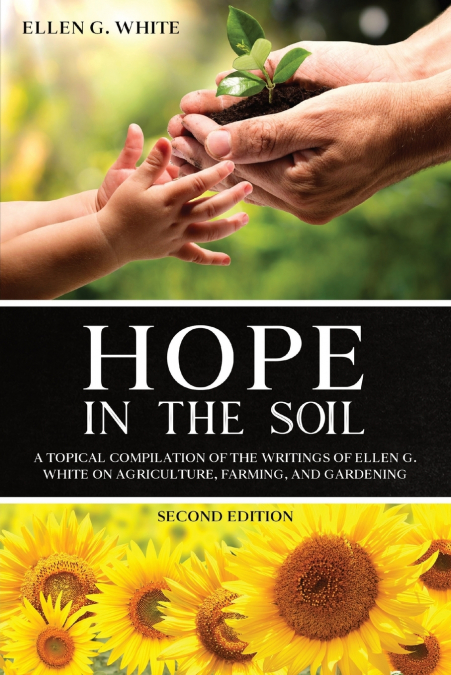
  • Hope in the Soil
    Ellen G White
    Before edible classrooms began 'sprouting' in elementary schools, before buzzwords like 'sustainable agriculture', 'organic,' or 'veganic' came into existence, an exceptional woman named Ellen G. White penned numerous letters and articles on the importance of farming, an outdoor life, and manual labor. Though often remembered for other things, Mrs. White was actively engaged in...
    Disponible

    18,38 €

  • The Green Revolution
    Binitha Sophine Emmanuel
    The Green Revolution, a transformative era in the annals of agriculture, emerged as a game-changing force during the mid-20th century, fundamentally reshaping the methodology of food production and steering the trajectory of global food security. Characterized by a sequence of technological breakthroughs, the Green Revolution aimed to substantially augment agricultural producti...
    Disponible

    53,23 €

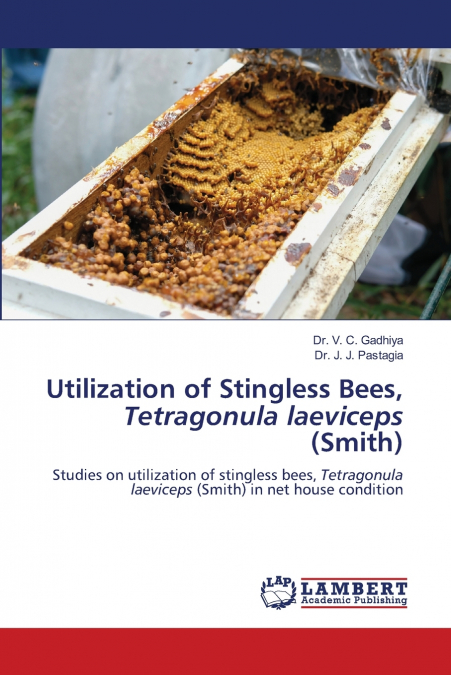
  • Utilization of Stingless Bees, Tetragonula laeviceps (Smith)
    Dr. J. J. Pastagia / Dr. V. C. Gadhiya
    The present investigations on utilization of stingless bees, T. laeviceps Smith in net house condition carried out with the broad aspects like flowers visited by stingless bees, T. laeviceps Smith, toxicity of insecticides to T. laeviceps Smith workers, floral biology of musk melon, foraging behavior of stingless bees, T. laeviceps Smith in net house condition, effect of pollin...
    Disponible

    84,80 €

  • La révolution verte
    Binitha Sophine Emmanuel
    La révolution verte, une ère transformatrice dans les annales de l’agriculture, est apparue comme une force qui a changé la donne au milieu du 20e siècle, remodelant fondamentalement la méthodologie de la production alimentaire et orientant la trajectoire de la sécurité alimentaire mondiale. Caractérisée par une série de percées technologiques, la révolution verte visait à augm...
    Disponible

    53,29 €

Otros libros del autor

  • Adoptionslücke im empfohlenen Maßnahmenpaket für Kichererbsen
    Godawari Pawar / Rajesh Kadam / Supriya Khuspe
    Die weltweite Gesamtproduktion von Kichererbsen liegt bei etwa 8,5 Millionen Tonnen pro Jahr und wird auf einer Fläche von über 10 Millionen Hektar angebaut. Indien baut Kichererbsen auf einer Fläche von etwa 6,67 Millionen Hektar an und produziert 5,3 Millionen Tonnen. Mit 35 Prozent der weltweiten Anbaufläche und 27 Prozent der Produktion ist Indien das größte Erzeugerland vo...
    Disponible

    82,91 €

  • Divario nell’adozione delle pratiche raccomandate per la coltivazione dei ceci
    Godawari Pawar / Rajesh Kadam / Supriya Khuspe
    La produzione mondiale totale di ceci è di circa 8,5 milioni di tonnellate metriche all’anno e viene coltivata su oltre 10 milioni di ettari. L’India coltiva ceci su una superficie di circa 6,67 milioni di ettari, producendo 5,3 milioni di tonnellate. Con il 35% della superficie mondiale e il 27% della produzione, l’India è il più grande produttore di legumi. La superficie colt...
    Disponible

    82,85 €

  • Luka adopcyjna w zalecanym pakiecie praktyk dotyczących uprawy ciecierzycy
    Godawari Pawar / Rajesh Kadam / Supriya Khuspe
    Całkowita światowa produkcja ciecierzycy wynosi około 8,5 mln ton rocznie i jest uprawiana na ponad 10 mln hektarów. Indie uprawiają ciecierzycę na obszarze około 6,67 mln ha, produkując 5,3 mln ton. Z 35% światowego areału i 27% produkcji Indie są największym producentem roślin strączkowych. Powierzchnia upraw ciecierzycy w stanie Maharasztra wynosi około 13,95 lakh hektarów, ...
    Disponible

    82,85 €

  • Lacuna na adoção do pacote recomendado de práticas para o grão-de-bico
    Godawari Pawar / Rajesh Kadam / Supriya Khuspe
    A produção total mundial de grão-de-bico é de cerca de 8,5 milhões de toneladas métricas por ano e é cultivada em mais de 10 milhões de hectares. A Índia cultiva grão-de-bico em cerca de 6,67 milhões de hectares, produzindo 5,3 milhões de toneladas. Com 35% da área mundial e 27% da produção, a Índia é o maior produtor mundial de leguminosas. A área cultivada com grão-de-bico em...
    Disponible

    82,85 €