 Librería Samer Atenea
 Kálamo Books
 Librería Elías (Asturias)
 Librería Kolima (Madrid)
 Librería Proteo (Málaga)
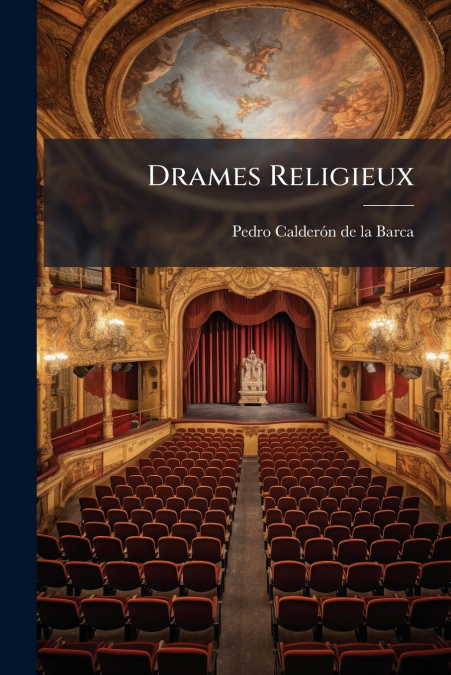
Drames Religieux rassemble trois pièces majeures de Pedro Calderón de la Barca, figure emblématique du Siècle d’Or espagnol. Cette collection inclut 'Les Cheveux d’Absalon', 'La Vierge du Sagrario' et 'Le Purgatoire de Saint Patrice', offrant un aperçu saisissant de la profondeur et de la richesse du théâtre religieux de cette époque. Dans 'Les Cheveux d’Absalon', Calderón explore les thèmes de la rébellion, du pardon et de la justice divine à travers une relecture dramatique de l’histoire biblique d’Absalom. 'La Vierge du Sagrario' dépeint des miracles et la dévotion mariale. 'Le Purgatoire de Saint Patrice' plonge le lecteur dans un voyage spirituel intense, explorant les notions de pénitence et de rédemption. Ces pièces, présentées ici en français, témoignent du talent de Calderón pour entrelacer la théologie, la philosophie et le drame, et offrent une expérience théâtrale à la fois divertissante et profondément spirituelle. Un recueil essentiel pour les amateurs de théâtre classique et d’études religieuses.This work has been selected by scholars as being culturally important, and is part of the knowledge base of civilization as we know it. This work was reproduced from the original artifact, and remains as true to the original work as possible. Therefore, you will see the original copyright references, library stamps (as most of these works have been housed in our most important libraries around the world), and other notations in the work.This work is in the public domain in the United States of America, and possibly other nations. Within the United States, you may freely copy and distribute this work, as no entity (individual or corporate) has a copyright on the body of the work.As a reproduction of a historical artifact, this work may contain missing or blurred pages, poor pictures, errant marks, etc. Scholars believe, and we concur, that this work is important enough to be preserved, reproduced, and made generally available to the public. We appreciate your support of the preservation process, and thank you for being an important part of keeping this knowledge alive and relevant.