Die Bedeutung von Schwefel für Ölsaaten

Die Bedeutung von Schwefel für Ölsaaten

A.B. Patel / Varun Kadu / Vijay Balsane

83,17 €
IVA incluido
Disponible
Editorial:
KS OmniScriptum Publishing
Año de edición:
2025
Materia
Botánica y ciencias de las plantas
ISBN:
9786208492649
83,17 €
IVA incluido
Disponible

Selecciona una librería:

  • Librería Samer Atenea
  • Librería Aciertas (Toledo)
  • Kálamo Books
  • Librería Perelló (Valencia)
  • Librería Elías (Asturias)
  • Donde los libros
  • Librería Kolima (Madrid)
  • Librería Proteo (Málaga)

Der „Einfluss von Schwefelgehalt und -quellen auf Ertrag, Qualität und chemische Zusammensetzung von Sojabohnen in sandigem Lehmboden'. Der Boden unter dem Feldversuch wies einen Mangel an verfügbarem Schwefel (8,5 mg kg-1) auf und war neutral bis leicht alkalisch. Die im Rahmen der Studie untersuchten Schwefelquellen waren S1: Gips (G), S2: Elementarer Schwefel (ES) und S3: Einfaches Superphosphat (SSP). Die gehaltenen Gehalte waren L1: 0 kg ha-1, L2: 20 kg ha-1 und L3: 40 kg ha-1. Der Versuch wurde in einem faktoriellen randomisierten Blockdesign mit vier Wiederholungen angelegt. Die Ergebnisse zeigten, dass der Pflanzenbestand in der Anfangsphase und zum Zeitpunkt der Ernte nicht signifikant durch die verschiedenen Schwefelquellen und -mengen beeinflusst wurde. Auch die Anzahl der Zweige pro Pflanze wurde durch die Schwefelquellen und -mengen nicht signifikant beeinflusst. Die höchste Anzahl an Hülsen pro Pflanze wurde bei der Schwefelausbringung durch Gips (41,92 Hülsen pro Pflanze) unter den verschiedenen Quellen festgestellt. Die unterschiedlichen Schwefelkonzentrationen hatten ebenfalls einen signifikanten Einfluss auf die Anzahl der Hülsen pro Pflanze. Die maximale Anzahl von Hülsen pro Pflanze wurde bei 40 kg S ha-1 verzeichnet, was mit 20 kg S ha-1 gleichauf lag und sich signifikant von der Kontrollgruppe (0 kg S ha-1) unterschied.
Artículos relacionados

  • The Green Architecture
    Ali Mirshafieyan / Ghazal Yeganeh / Maryam Zamani Motlagh
    Protecting green energy as well as non-renewable energy, as well as their sustainable use, many advances in the technology of extracting oil products and other reserves under the ground have caused many improvements. In this regard, proposing the design of buildings in which the consumption of fossil fuels reaches its lowest level is considered one of the important solutions in...
    Disponible

    82,54 €

  • Responsible Use and Management of Agrochemicals
    Juan Carlos Nava
    Uso y manejo responsable de agroquímicos is a work product of the author’s experiences (undergraduate and graduate professor, with research and extension projects), aimed at producers, companies, professionals, students, advisors, researchers, among others.Due to its structure and content, it is expected to be a valuable aid to all people directly or indirectly involved in the ...
    Disponible

    49,45 €

  • Hope in the Soil
    Ellen G White
    Before edible classrooms began 'sprouting' in elementary schools, before buzzwords like 'sustainable agriculture', 'organic,' or 'veganic' came into existence, an exceptional woman named Ellen G. White penned numerous letters and articles on the importance of farming, an outdoor life, and manual labor. Though often remembered for other things, Mrs. White was actively engaged in...
    Disponible

    18,38 €

  • The Green Revolution
    Binitha Sophine Emmanuel
    The Green Revolution, a transformative era in the annals of agriculture, emerged as a game-changing force during the mid-20th century, fundamentally reshaping the methodology of food production and steering the trajectory of global food security. Characterized by a sequence of technological breakthroughs, the Green Revolution aimed to substantially augment agricultural producti...
    Disponible

    53,23 €

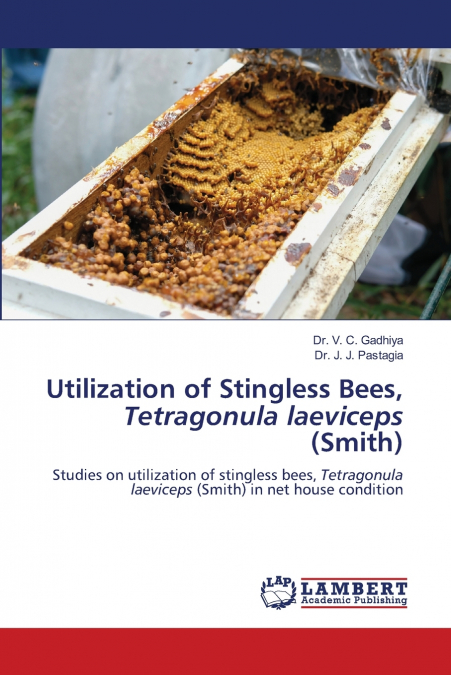
  • Utilization of Stingless Bees, Tetragonula laeviceps (Smith)
    Dr. J. J. Pastagia / Dr. V. C. Gadhiya
    The present investigations on utilization of stingless bees, T. laeviceps Smith in net house condition carried out with the broad aspects like flowers visited by stingless bees, T. laeviceps Smith, toxicity of insecticides to T. laeviceps Smith workers, floral biology of musk melon, foraging behavior of stingless bees, T. laeviceps Smith in net house condition, effect of pollin...
    Disponible

    84,80 €

  • La révolution verte
    Binitha Sophine Emmanuel
    La révolution verte, une ère transformatrice dans les annales de l’agriculture, est apparue comme une force qui a changé la donne au milieu du 20e siècle, remodelant fondamentalement la méthodologie de la production alimentaire et orientant la trajectoire de la sécurité alimentaire mondiale. Caractérisée par une série de percées technologiques, la révolution verte visait à augm...
    Disponible

    53,29 €

Otros libros del autor

  • Importanza dello zolfo nelle colture di semi oleosi
    A.B. Patel / Varun Kadu / Vijay Balsane
    'Influenza dei livelli e delle fonti di zolfo sulla resa, la qualità e la composizione chimica della soia in terreni sabbiosi-argillosi'. Il terreno oggetto dell’esperimento sul campo era carente di S disponibile (8,5 mg Kg-1) e presentava una reazione da neutra a leggermente alcalina. Le fonti di S valutate nell’ambito dello studio erano S1: gesso (G), S2: zolfo elementare (ES...
    Disponible

    83,04 €

  • Znaczenie siarki w uprawach roślin oleistych
    A.B. Patel / Varun Kadu / Vijay Balsane
    „Wpływ poziomu i źródeł siarki na plony, jakość i skład chemiczny soi uprawianej na glebie piaszczysto-gliniastej'. Gleba, na której przeprowadzono eksperyment polowy, charakteryzowała się niedoborem dostępnej siarki (8,5 mg/kg) oraz reakcją od neutralnej do lekko zasadowej. Źródła siarki oceniane w ramach badania to S1: gips (G), S2: siarka elementarna (ES) i S3: superfosfat p...
    Disponible

    83,04 €

  • Importância do enxofre nas culturas de oleaginosas
    A.B. Patel / Varun Kadu / Vijay Balsane
    A Influência dos níveis e fontes de enxofre no rendimento, qualidade e composição química da soja em solo franco-arenoso. O solo sob a experiência de campo era deficiente em S disponível (8,5 mg Kg-1) e neutro a ligeiramente alcalino na reação. As fontes de S avaliadas no estudo foram S1: Gesso (G), S2: Enxofre Elementar (ES) e S3: Superfosfato Simples (SSP). Os níveis mantidos...
    Disponible

    83,04 €

  • Importance du soufre dans les cultures oléagineuses
    A.B. Patel / Varun Kadu / Vijay Balsane
    Influence des niveaux et des sources de soufre sur le rendement, la qualité et la composition chimique du soja dans un sol limono-sableux . Le sol utilisé pour l’expérience sur le terrain était déficient en soufre disponible (8,5 mg kg-1) et présentait une réaction neutre à légèrement alcaline. Les sources de soufre évaluées dans le cadre de l’étude étaient S1 : gypse (G), S2 :...
    Disponible

    83,11 €