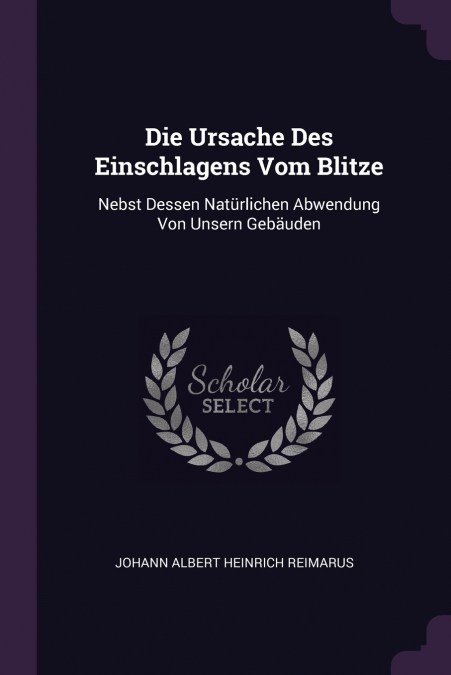
Johann Albert Heinrich Reimarus
 Librería Samer Atenea
 Kálamo Books
 Librería Elías (Asturias)
 Librería Kolima (Madrid)
 Librería Proteo (Málaga)
De Vita Sua Commentarius offers a rare autobiographical glimpse into the life and mind of Johann Albert Heinrich Reimarus (1694-1768), a pivotal figure in the German Enlightenment. Written in Latin, this candid self-portrait reveals Reimarus’ intellectual development, his personal struggles, and his evolving theological views. Reimarus, a professor of Hebrew and Oriental languages, is now best known for his posthumously published 'Apology for the Rational Worshipers of God,' a work that ignited the ’Fragment Controversy’ and challenged traditional Christian dogma. This work provides invaluable insight into the intellectual and religious ferment of 18th-century Europe. Reimarus’s account of his own life offers a personal perspective on the major philosophical and theological debates of his time, making it essential reading for historians of philosophy, theology, and the Enlightenment. This work has been selected by scholars as being culturally important, and is part of the knowledge base of civilization as we know it. This work was reproduced from the original artifact, and remains as true to the original work as possible. Therefore, you will see the original copyright references, library stamps (as most of these works have been housed in our most important libraries around the world), and other notations in the work.This work is in the public domain in the United States of America, and possibly other nations. Within the United States, you may freely copy and distribute this work, as no entity (individual or corporate) has a copyright on the body of the work.As a reproduction of a historical artifact, this work may contain missing or blurred pages, poor pictures, errant marks, etc. Scholars believe, and we concur, that this work is important enough to be preserved, reproduced, and made generally available to the public. We appreciate your support of the preservation process, and thank you for being an important part of keeping this knowledge alive and relevant.