
Inicio > Artes > Creativity conquers the marketplace
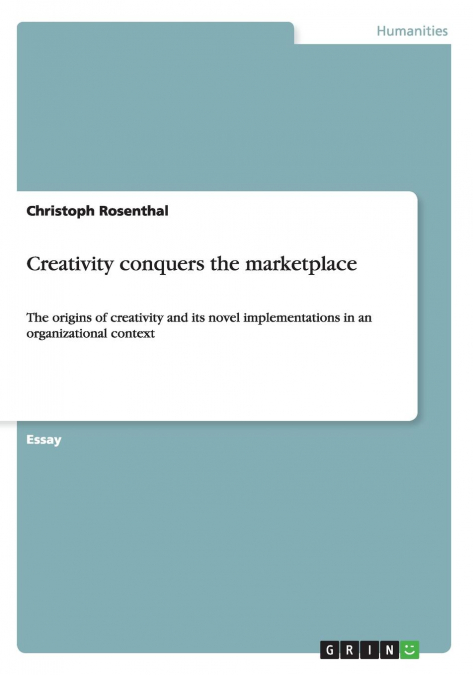
Creativity conquers the marketplace

Creativity conquers the marketplace

Christoph Rosenthal

20,88 €
IVA incluido
Disponible
Editorial:
GRIN Publishing
Año de edición:
2014
Materia
Artes
ISBN:
9783656610526
20,88 €
IVA incluido
Disponible

Selecciona una librería:

  • Librería Samer Atenea
  • Librería Aciertas (Toledo)
  • Kálamo Books
  • Librería Perelló (Valencia)
  • Librería Elías (Asturias)
  • Donde los libros
  • Librería Kolima (Madrid)
  • Librería Proteo (Málaga)

Essay from the year 2011 in the subject Sociology - Work, Profession, Education, Organisation, grade: 9.0/10, Erasmus University Rotterdam, language: English, abstract: Leadbeater's (2000) metaphor of 'a new economy living on thin air' gives a good idea of how to conceive of the knowledge economy. Creativity is an essential feature of the knowledge economy and has transferred from being characteristic for particular niche industries to an overarching, critical, and peculiar feature of various sectors (Pratt & Jeffcutt, 2009). Organizations have been trying to find management solutions and entrepreneurial approaches to fruitfully implement creativity and balance the innate tensions between creativity, control, and organizational structure. The essay at hand provides solutions to this dilemma and identifies starting points for implementing key characteristics and management strategies of creative organizations into creatively managing non-creative organizations. The subject matter will be discussed along the lines of the following set of interrelated questions. • What exactly is creativity, where does it come from and what is its significance in an organizational management context? • What constitutes creative organizations and where does innovation fit in? • To what extend has creativity forged new forms of organizations or has been beneficially implemented by technically non-creative organizations? • What are some innovative and collaborative approaches by organizations to take advantage of the collective nature of the knowledge economy?

Artículos relacionados

  • The Eagle Returns
    C. Paul Burnham / CPaul Burnham
    The Gospel of John was long assumed to be the work of an eyewitness, usually identified as John, son of Zebedee. More recently, many have judged it the unhistorical product of a ''Johannine community.'' Reconsideration by Richard Bauckham has suggested that the author was a Jerusalem disciple who housed the ''Last Supper.'' This book explores the possibility that he was present...
    Disponible

    11,04 €

  • The Old Testament in Theology and Teaching
    APTS Press is privileged to offer this festschrift honoring Dr. Kay Fountain, who for more than twenty years has served the Lord at the Asia Pacific Theological Seminary (APTS), in Baguio City, Philippines, first as a student, then as a faculty member and finally as the Academic Dean. Our hope is that this book will reflect her passion for teaching and understanding the Old Tes...
    Disponible

    22,13 €

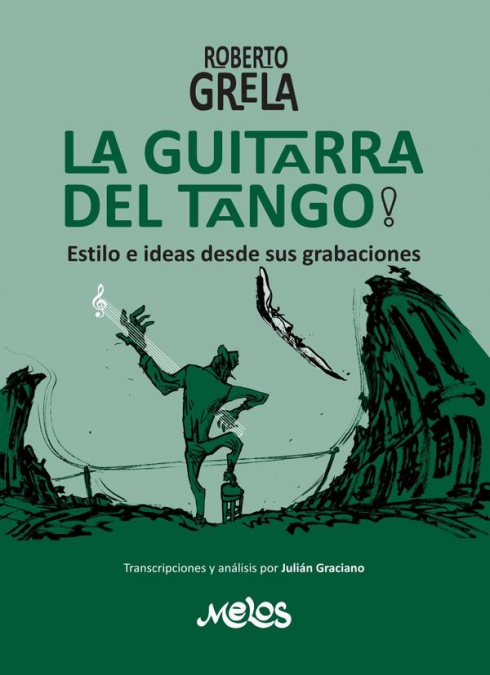
  • MEL4414 - Roberto Grela, La guitarra del tango
    Julián Graciano
    del mayor guitarrista de la historia del tango. Con solo percibir el empleo del plectro (la llamada púa de guitarra en nuestro canyengue) descubrimos un sonido y estilo tan particular que terminó por deslumbrar a todos. Pero si decimos “bastaría”, en potencial, es que nos debemos mucho más: suele decirse del gran Aníbal Troilo que su música y sus orquestas son la gran marca de ...
    Disponible

    29,64 €

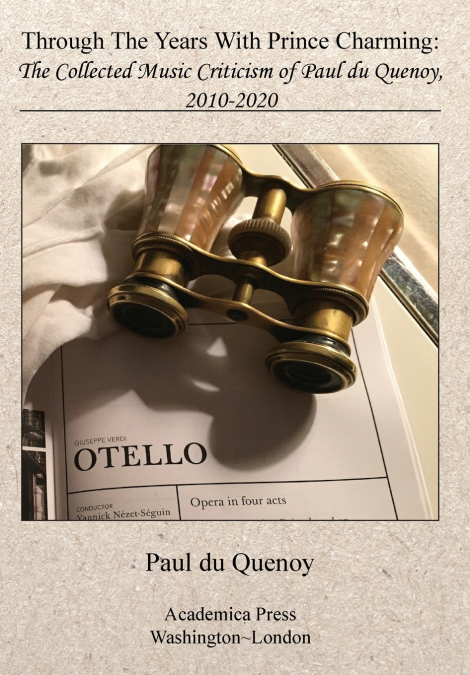
  • Through the years with prince charming
    Paul du Quenoy
    The past decade has overflowed in a raging stream of contradictions. Old certainties have yielded to relentless insecurity over a time when much of the human experience got immeasurably better even as many things only ever seemed to get worse. As Paul du Quenoy’s globetrotting criticism reveals, the arts were in a ferment that matched profound and yet totally unpredicted social...
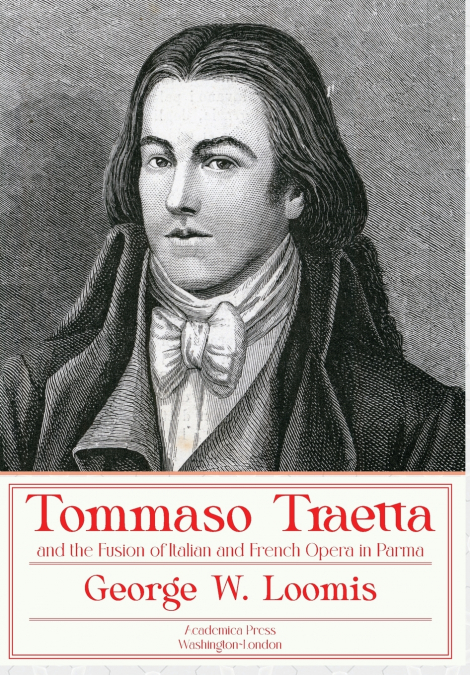
  • Tommaso Traetta and the Fusion of Italian and French Opera in Parma
    George W. Loomis
    In 1759, the court of the Italian Duchy of Parma adopted the inspiration of cultural creators who recommended a reform of Italian opera along French lines. These writers favored combining Italian-style music with the wider range of musical genres and scenic variety of French opera. As the music critic and commentator George W. Loomis shows in this groundbreaking volume, the you...
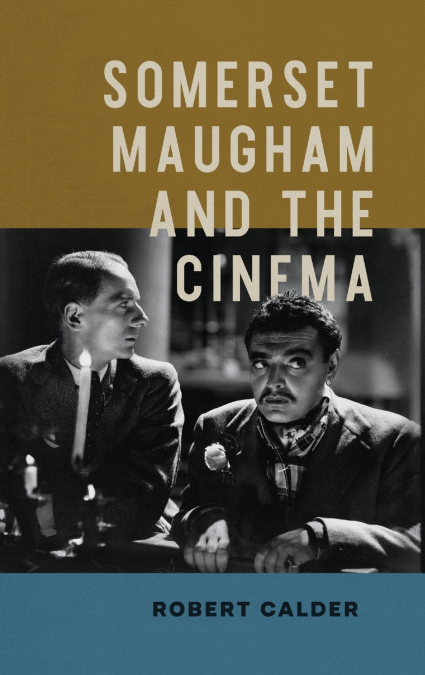
  • Somerset Maugham and the Cinema
    Robert Calder
    William Somerset Maugham (1874-1965) was one of the most prominent and productive authors of the twentieth century-and his works have been among the most cinematically transformed in history. For more than five decades, adaptations of his plays, stories, and novels dominated movie theaters and, later, television screens. More than ninety individual works were filmed, and for ma...