
Inicio > Tecnología, ingeniería, agricultura > > Química industrial > Craquage catalytique de la paraffine pour la production d’oléfines légères
Craquage catalytique de la paraffine pour la production d’oléfines légères

Craquage catalytique de la paraffine pour la production d’oléfines légères

Xiaoyan Hu / Xinlong Yan

66,16 €
IVA incluido
Disponible
Editorial:
KS OmniScriptum Publishing
Año de edición:
2025
Materia
Química industrial
ISBN:
9786208597849
66,16 €
IVA incluido
Disponible

Selecciona una librería:

  • Librería Desdémona
  • Librería Samer Atenea
  • Librería Aciertas (Toledo)
  • Kálamo Books
  • Librería Perelló (Valencia)
  • Librería Elías (Asturias)
  • Donde los libros
  • Librería Kolima (Madrid)
  • Librería Proteo (Málaga)

Par rapport au procédé conventionnel de vapocraquage, dominé par les réactions de craquage thermique, le craquage catalytique du naphta présente l’avantage de réduire la consommation d’énergie et les émissions de dioxyde de carbone, et d’offrir une plus grande sélectivité pour les produits composés de grande valeur. Il s’agit donc d’une alternative compétitive pour la production d’oléfines légères. La paraffine, principal constituant du naphta de distillation directe, est une matière première idéale pour le processus de vapocraquage de la production d’oléfines légères. Cependant, elle est difficile à craquer dans des conditions douces, ce qui pose un problème pour le processus de craquage catalytique. La présente étude s’est concentrée sur les comportements du craquage de la paraffine, notamment : (1) les comportements du craquage du n-heptane sur un catalyseur ZSM-5 frais et à l’équilibre ; (2) les influences de l’introduction d’un catalyseur à base de vanadium (avec différentes charges de vanadium) sur les performances de réaction du craquage du n-heptane sur un catalyseur ZSM-5 ; (3) les différents comportements du craquage du n-heptane dans un réacteur à lit fixe et dans une unité à lit fluidisé circulé.
Artículos relacionados

  • Quantitative Structure-Activity Relationships in Drug Design, Predictive Toxicology, and Risk Assessment
    Kunal Roy
    Quantitative structure-activity relationships (QSARs) represent predictive models derived from the application of statistical tools correlating biological activity or other properties of chemicals with descriptors representative of molecular structure and/or property. Quantitative Structure-Activity Relationships in Drug Design, Predictive Toxicology, and Risk Assessment discus...
    Disponible

    387,85 €

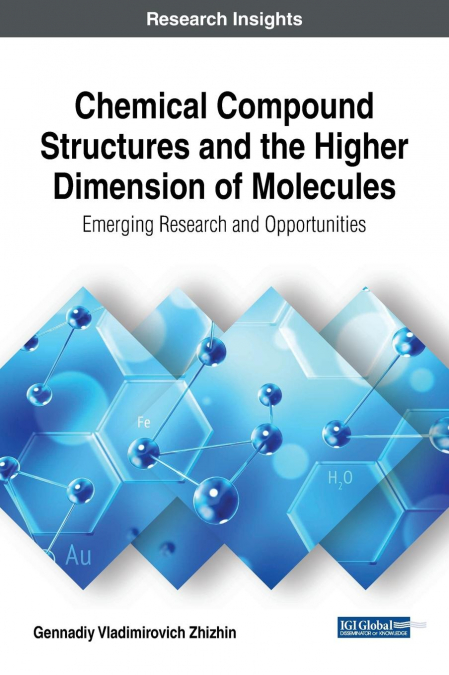
  • Chemical Compound Structures and the Higher Dimension of Molecules
    Gennadiy Vladimirovich Zhizhin
    Originally, scientists believed that molecules were three-dimensional; however, studies have proven that geometric dimensions are continuous. Therefore, molecules are able to have higher dimensions which influences how they interact with other molecules leading to advances in various fields including nanomedicine, nanotoxicology and quantum biology. Chemical Compound Structures...
    Disponible

    237,72 €

  • CHEMICAL THERMODYNAMICS, 2ND EDITION
    Byung Chan Eu / BYUNG CHAN EU & MAZEN AL-GHOUL / EU BYUNG CHAN / Mazen Al-Ghoul
    This book enables the reader to learn, in a single volume, equilibrium and nonequilibrium thermodynamics as well as generalized forms of hydrodynamics for linear and nonlinear processes applied to various hydrodynamic flow processes — including chemical oscillation phenomena and pattern formations, shock wave phenomena, sound wave propagations, and Liesegang pattern formation, ...
    Disponible

    153,00 €

  • CARBOHYDRATE CHEMISTRY
    ALEN RAIMO / Raimo Alen
     This book presents a comprehensive approach to the versatile and fascinating field of carbohydrate chemistry. It covers, besides the colorful historical perspective within the utilization of carbohydrates and their derivatives, all modern aspects on their properties, nomenclature, uses, and natural occurrence as such or as residues in a variety of biologically active molecules...
    Disponible

    153,28 €

  • Development of Nitrogen-Directed Activation Protocols
    Mohammed Abdul Malik
    'Development of Nitrogen-Directed Activation Protocols' by Dnyaneshwar Nilkanth is an informative and insightful book that focuses on the development of new synthetic methodologies for the preparation of natural products, drugs, and new scaffolds. The book presents a comprehensive overview of the strategies that have been developed for the selective activation of C-H bonds in t...
  • Chemical Modulation of Hepcidin in Vertebrates
    Sandeep Basu
    Chemical Modulation of Hepcidin in Vertebrates, written by Sandeep Basu, is a comprehensive book that explores the role of the peptide hormone hepcidin in iron homeostasis and its modulation through various chemical means in vertebrates. The book covers a wide range of topics related to iron metabolism and the regulation of hepcidin expression in different physiological and pat...

Otros libros del autor

  • Katalytisches Cracken von Paraffin zur Herstellung von leichten Olefinen
    Xiaoyan Hu / Xinlong Yan
    Im Vergleich zum herkömmlichen Dampfcrackverfahren, das von thermischen Crackreaktionen dominiert wurde, bietet das katalytische Cracken von Naphtha Vorteile in Bezug auf einen geringeren Energieverbrauch und geringere Kohlendioxidemissionen sowie eine höhere Selektivität für Produkte mit hochwertigen Verbindungen. Daher ist es eine wettbewerbsfähige Alternative für die Produkt...
    Disponible

    66,15 €

  • Cracking catalitico della paraffina per la produzione di olefine leggere
    Xiaoyan Hu / Xinlong Yan
    Rispetto al processo convenzionale di steam cracking, dominato dalle reazioni di cracking termico, il cracking catalitico della nafta presenta vantaggi in termini di minor consumo energetico e di emissioni di anidride carbonica, nonché di maggiore selettività verso prodotti composti di alto valore. Di conseguenza, è un’alternativa competitiva per la produzione di olefine legger...
    Disponible

    66,18 €

  • Cracking catalítico de parafina para produção de olefinas leves
    Xiaoyan Hu / Xinlong Yan
    Em comparação com o processo convencional de craqueamento a vapor, que era dominado por reacções de craqueamento térmico, o craqueamento catalítico da nafta é vantajoso em termos de menor consumo de energia e de emissões de dióxido de carbono, bem como de maior seletividade para produtos compostos de elevado valor. Consequentemente, é uma alternativa competitiva para a produção...
    Disponible

    75,09 €