
Cradle of Humanity

Cradle of Humanity

Mark Maslin

14,44 €
IVA incluido
Disponible
Editorial:
Oxford University Press
Año de edición:
2019
Materia
Evolución
ISBN:
9780198704539
14,44 €
IVA incluido
Disponible

Selecciona una librería:

  • Librería Samer Atenea
  • Librería Aciertas (Toledo)
  • Kálamo Books
  • Librería Perelló (Valencia)
  • Librería Elías (Asturias)
  • Donde los libros
  • Librería Kolima (Madrid)
  • Librería Proteo (Málaga)

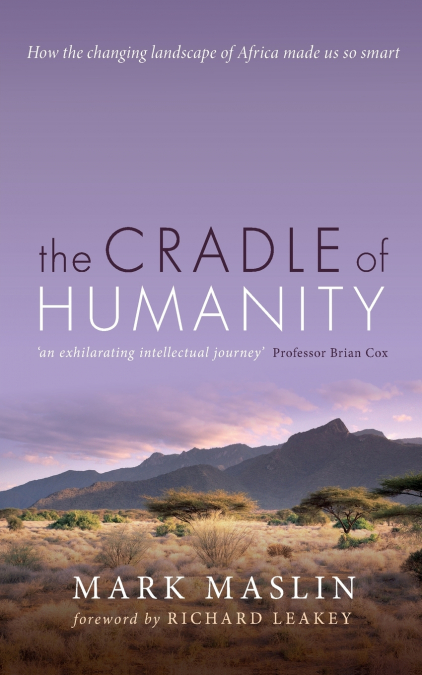
Humans are rather weak when compared with many other animals. We are not particularly fast and have no natural weapons. Yet Homo sapiens currently number nearly 7.5 billion and are set to rise to nearly 10 billion by the middle of this century. We have influenced almost every part of the Earth system and as a consequence are changing the global environmental and evolutionary trajectory of the Earth. So how did we become the worlds apex predator and take over the planet? Fundamental to our success is our intelligence, not only individually but more importantly collectively. But why did evolution favour the brainy ape? Given the calorific cost of running our large brains, not to mention the difficulties posed for childbirth, this bizarre adaptation must have given our ancestors a considerable advantage. In this book Mark Maslin brings together the latest insights from hominin fossils and combines them with evidence of the changing landscape of the East African Rift Valley to show how all these factors led to selection pressures that favoured our ultrasocial brains. Astronomy, geology, climate, and landscape all had a part to play in making East Africa the cradle of humanity and allowing us to dominate the planet.
Artículos relacionados

  • From Logos to Bios
    Wynand de Beer
    ...
  • L’età dell’oro dei cacciatori
    Alberto Peruffo
    L'universo, il pianeta Terra, l'uomo. L'avventura della specie umana si dipana lentamente dall'essere unicellulare fino all'uomo dei giorni nostri che, tra mille travagli, ha raggiunto la condizione di assoluta supremazia.La presenza nell'uomo moderno dei geni del DNA dell'uomo di Neanderthal ha chiarito che, questi antichi uomini, facevano parte, a ...
    Disponible

    40,53 €

  • Exploring Genome’s Junkyard
    Subir Ranjan Kundu
    Exploring Genome’s Junkyard: In the Labyrinth of Evolution narrates the progress of biological evolution, beginning with the conceptual introspection of gene and continuing with the contemporary understanding of the structural and function aspects of the human genome. Recent advances in human genome research have led scientists to the term 'biological dark matter,' which refers...
  • European Hair, Eye, and Skin Color
    Peter Frost
    Europeans, especially those from northern and eastern Europe, are unique in having diverse hair and eye colors and a skin almost as pale as an albino’s. Those colors are not only brighter than the original black and brown but also 'purer'-they lie within thin slices of the visible spectrum. Overall, that color scheme is more developed in women, who naturally have a higher incid...
  • Mitochondrial Eve and Y-Chromosomal Adam
    Subir Ranjan Kundu
    Mitochondrial Eve and Y-Chromosomal Adam discusses theoretical ideas, interpretations, and paleontological evidence to narrate the origin and evolutionary story of Sapiens through the transitional stages of archaic human species involved in the evolutionary pilgrimage, from the great apes and to modern humans. Author Subir Ranjan Kundu investigates the DNA footprints of primate...
  • When Evolution Stops
    Armando Simon
    Evolution is a fact. The evidence for it is simply overwhelming. However, the original mechanism that generates the evolutionary process, as first put forth simultaneously by Charles Darwin and Alfred R. Wallace and which became known as Natural Selection, has now been seen to be too simplistic by some scientists aside from the hard-core neo-Darwinists who insist that nothing w...
    Disponible

    28,77 €