 Librería Samer Atenea
 Kálamo Books
 Librería Elías (Asturias)
 Librería Kolima (Madrid)
 Librería Proteo (Málaga)
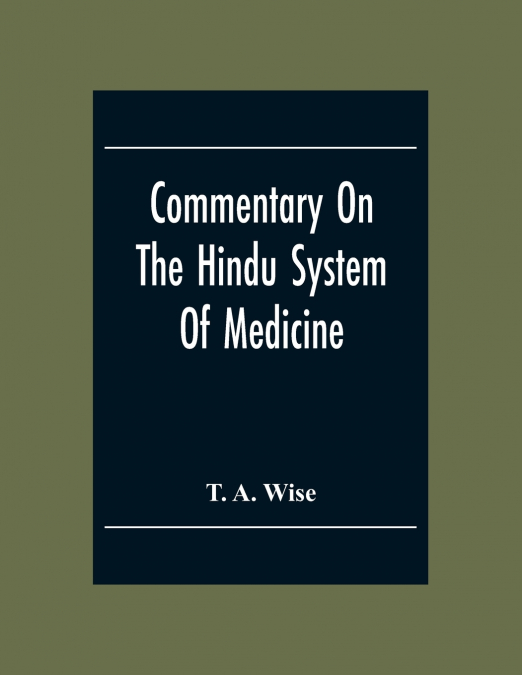
A lucid nineteenth-century commentary that opens the Hindu system of medicine to modern readers and students. It reveals a living tradition. Drawing from classical sources and period scholarship, the work offers clear exposition of core doctrines, attentive commentary on terminology, and contextual notes that bring the ayurvedic classics into conversation with wider medical thought. Read as both a historical document and a practical handbook, it maps traditional Indian medicine onto the shifting intellectual landscape of nineteenth-century India, shedding light on how ancient healing systems were understood, taught and practised in an era of colonial medical studies. Its tone is precise and purposeful; careful readers will recognise the balance between translation, interpretation and critique that makes the text useful for philological enquiry as well as for practical reconstruction of historical therapies.Republished by Alpha Editions in a careful modern edition, this volume preserves the spirit of the original while making it effortless to enjoy today - a heritage title prepared for readers and collectors alike.Equally at home on a curious reader’s shelf and in a specialist library, this edition speaks to anyone exploring the history of ayurveda and the wider indian medical heritage. As a graceful entry for any medical treatise collection, it also functions as a practical herbal remedies guide and a rigorous academic reference book for scholars and researchers working in comparative medical history. Students will find accessible explanations of technical terms; historians will trace the cross-currents between local practice and European medicine. The commentary is particularly valuable to those studying the social life of remedies, the circulation of botanical knowledge, and the intersections of medicine, empire and culture. Collectors of classic literature will value its period voice and cultural significance, while casual readers will appreciate its humane tone and the vivid traces of living tradition that run through its pages.