Collected Writings of Chairman Mao

Collected Writings of Chairman Mao

Collected Writings of Chairman Mao

Mao Tse-tung / Mao Zedong

15,86 €
IVA incluido
Disponible
Editorial:
Digital Pulse Publishing
Año de edición:
2009
Materia
Historia de Asia
ISBN:
9781934255261
15,86 €
IVA incluido
Disponible

Selecciona una librería:

  • Librería Samer Atenea
  • Librería Aciertas (Toledo)
  • Kálamo Books
  • Librería Perelló (Valencia)
  • Librería Elías (Asturias)
  • Donde los libros
  • Librería Kolima (Madrid)
  • Librería Proteo (Málaga)

Mao Zedong (also known as Mao Tse-tung) is regarded as one of the most controversial figures in modern world history. Having conquered the country, he ruled the People’s Republic of China from its establishment as a Communist state in 1949 until the time of his death in 1976. Brilliant and ruthless, his legacy includes guerrilla warfare tactics, violent cultural revolutions, and enduring Communist propaganda. He was named one of the 100 most influential figures of the 20th century by Time Magazine.Eric Margolis, of the Huffington Post writes of Chairman Mao:'Mao was an accomplished poet, writer and historian, a profound thinker, and a superb military strategist. He crushed the US-backed Nationalist’s 4.3-million strong armies in a series of titanic battles, forcing his rival, Chiang Kai-shek, to flee to Taiwan... The Great Helmsman united fractured, war-torn China, restoring its pride and self-confidence after two centuries of humiliation. Mao thwarted both Soviet and U.S. efforts to turn China into a client state, and built up China’s military power... Mao’s aides dared not tell him millions were starving. Red Emperor Mao was prodigal with his people’s lives, and, according to aides who were close to him, was shockingly indifferent to their suffering. Mao horrified even brutal Soviet leaders by saying he was prepared to lose half his people to emerge victorious from a nuclear war...The second volume in this special collection contains three important lectures and essays by Chairman Mao dealing with guerrilla warfare:*Part 1 - On Guerrilla Warfare*Part 2 - Problems of Strategy in Guerrilla War against Japan*Part 3 - On Protracted WarExcerpt from 'Collected Writings of Chairman Mao: Volume 2 - Guerrilla Warfare' by Mao Zedong.Reprinted by permission. All rights reserved.In September 1812, Napoleon, in the course of swallowing all of Europe, invaded Russia at the head of a great army totaling several hundred thousand infantry, cavalry, and artillery. At that time, Russia was weak and her ill-prepared army was not concentrated. The most important phase of her strategy was the use made of Cossack cavalry and detachments of peasants to carry on guerrilla operations. After giving up Moscow, the Russians formed nine guerrilla divisions of about five hundred men each. These, and vast groups of organized peasants, carried on partisan warfare and continually harassed the French Army. When the French Army was withdrawing, cold and starving, Russian guerrillas blocked the way and, in combination with regular troops, carried out counterattacks on the French rear, pursuing and defeating them. The army of the heroic Napoleon was almost entirely annihilated, and the guerrillas captured many officers, men, cannon, and rifles. Though the victory was the result of various factors and depended largely on the activities of the regular army the function of the partisan groups was extremely important. The corrupt and poorly organized country that was Russia defeated and destroyed an army led by the most famous soldier of Europe and won the war in spite of the fact that her ability to organize guerrilla regimes was not fully developed. At times, guerrilla groups were hindered in their operations and the supply of equipment and arms was insufficient. If we use the Russian saying, it was a case of a battle between 'the fist and the axe.'
Artículos relacionados

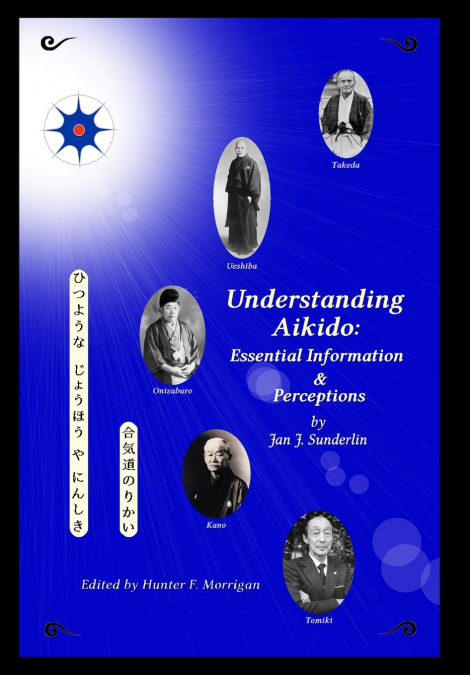
  • Understanding Aikido
    Jan J Sunderlin
    Understanding Aikido: Essential Information and Perceptions (Special Edition) presents an historical, cultural, and philosophical look at the development of the Japanese martial art of Aikido. Sunderlin focuses on the influences brought to bear on Morihei Ueshiba, the founder of Aikido, and the subsequent cultivation of the latter's martial art as a vessel of Budo. The author a...
    Disponible

    63,06 €

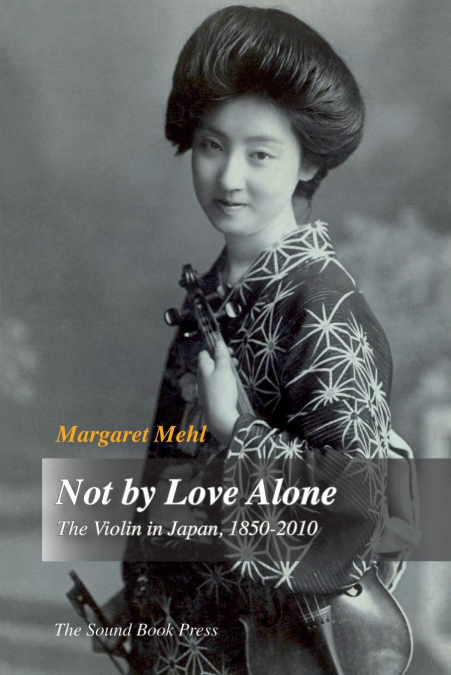
  • Not by Love Alone
    Margaret Mehl
    Suzuki Shin'ichi, the Tokyo String Quartet, Midori - How did Japanese violinists manage to revolutionize violin teaching, win international competitions, conquer Western concert stages, study at world-famous conservatoires and take up positions in leading orchestras and prestigious music faculties? What enabled the Japanese to master Western classical music within a few decades...
    Disponible

    29,32 €

  • Pictures in Transformation
    Luca Maria Olivieri
    ...
    Disponible

    54,79 €

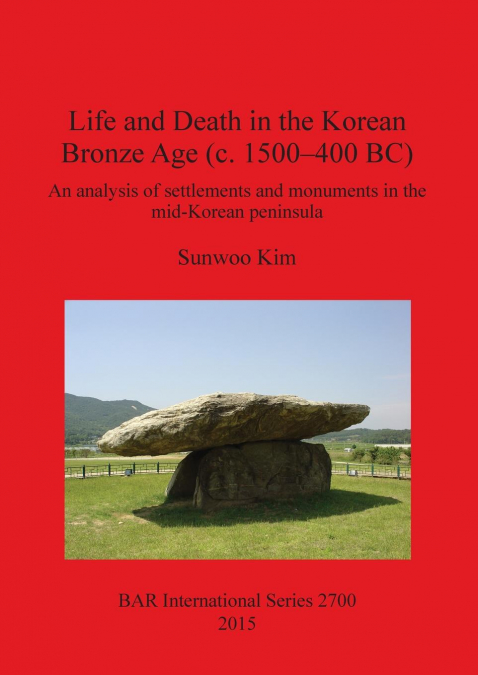
  • Life and Death in the Korean Bronze Age (c. 1500-400 BC)
    Sunwoo Kim
    This research focuses on the Bronze Age in selected areas of Korea; Seoul, Incheon, and Gyeonggi province. Two forms of evidence - settlements and monuments - are taken into account to identify their relationship with landscape and the social changes occurring between ca. 1500 to 400 cal BC. Life and death in the Bronze Age in Korea has not been synthetically investigated befor...
    Disponible

    108,34 €

  • South Asian Archaeology 2007
    Proceedings of the 19th Meeting of the European Association of South Asian Archaeology in Ravenna, Italy, July 2007.                     ...
    Disponible

    182,04 €

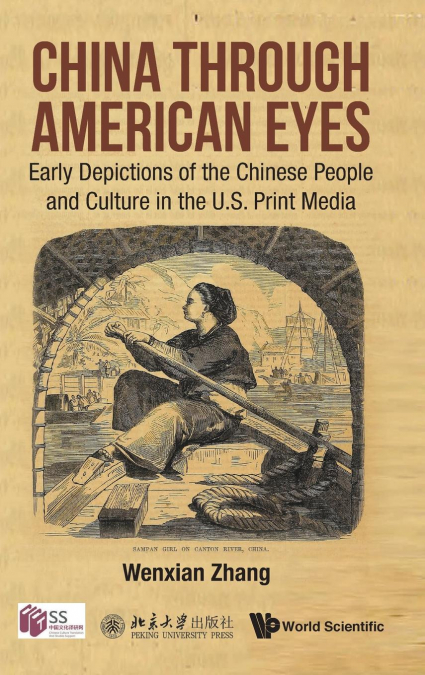
  • CHINA THROUGH AMERICAN EYES
    Wenxian Zhang / ZHANG WENXIAN
    Cultural understanding between the United States and China has been a long and complex process. The period from the mid-nineteenth century to the early twentieth century is not only a critical era in modern Chinese history, but also the peak time of illustrated news reporting in the United States. Besides images from newspapers and journals, this collection also contains pictur...

Otros libros del autor

  • Collected Writings of Chairman Mao
    Mao Tse-tung / Mao Zedong
    Mao Zedong (also known as Mao Tse-tung) is regarded as one of the most controversial figures in modern world history. Having conquered the country, he ruled the People’s Republic of China from its establishment as a Communist state in 1949 until the time of his death in 1976. Brilliant and ruthless, his legacy includes guerrilla warfare tactics, violent cultural revolutions, an...
    Disponible

    15,90 €

  • Collected Writings of Chairman Mao - Politics and Tactics
    Mao Tse-tung / Mao Zedong
    Mao Zedong (also known as Mao Tse-tung) is regarded as one of the most controversial figures in modern world history. Having conquered the country, he ruled the People’s Republic of China from its establishment as a Communist state in 1949 until the time of his death in 1976. Brilliant and ruthless, his legacy includes guerrilla warfare tactics, violent cultural revolutions, an...
    Disponible

    16,04 €

  • Quotations from Chairman Mao Tse-Tung
    Mao Tse-Tung / Mao Zedong
    Quotations from Chairman Mao Tse-Tung’ is a volume of selected statements taken from the speeches and writings by Mao Mao Tse-Tung, published from 1964 to 1976. It was often printed in small editions that could be easily carried and that were bound in bright red covers, which led to its western moniker of the ’Little Red Book’. It is one of the most printed books in history, an...
    Disponible

    41,61 €

  • Quotations from Chairman Mao Tsetung
    Mao Tse-Tung / Mao Zedong
    The 'little red book' used as the Bible of the Red Guards in Maoist Cultural Revolution 1966-76. Mao predicted in November 1956 'in the year 2001, or the beginning of the 21st century, China will have undergone an even greater change'. Introduction by Frederick Ellis MBA. A Collector's Edition. 3 ...
    Disponible

    55,17 €