CO2 Capture and Sequestration

CO2 Capture and Sequestration

Diganta B. Das

79,77 €
IVA incluido
Consulta disponibilidad
Editorial:
MDPI AG
Año de edición:
2024
Materia
Ciencia: cuestiones generales
ISBN:
9783725811311

Selecciona una librería:

  • Librería Samer Atenea
  • Librería Aciertas (Toledo)
  • Kálamo Books
  • Librería Perelló (Valencia)
  • Librería Elías (Asturias)
  • Donde los libros
  • Librería Kolima (Madrid)
  • Librería Proteo (Málaga)

CO2 capture and sequestration (CCS) technologies aim to capture carbon dioxide (CO2) from CO2 sources, separate the CO2, and store it in suitable media. CO2 can be captured using various technologies, including absorption, adsorption, cryogenic processes, and membrane gas separation. Therefore, accurate selection, design, modelling, and optimisation of the processes for CO2 capture and the tuning of the material properties are essential. There are different methods used for CO2 sequestration, e.g., (i) geological sequestration, which injects different phases of CO2 into the subsurface; (ii) oceanic storage, which dissolves CO2 into an ocean at different depths; (iii) the solid-phase reaction of CO2 with metal oxides to produce stable carbonates with no risk of CO2 release to the atmosphere; etc. The flow, transport, and reaction of CO2 during CCS and other related matters are also essential. To address these points, a Special Issue of Clean Technol.and a reprint with all published papers have been organized which highlight the recent trends and innovative developments in CCS. In particular, these papers highlight the following issues: Socio-political issues related to CCS development and deployment; Fundamental technical issues concerning the development and deployment of CCS; The synthesis of value-added chemicals using captured CO2 in CCS; Applications of mathematical modelling for the development of CCS. The development of techno-economic costing models for CCS. Overall, this reprint covers a diverse range of topics, including some of the most pressing concerns for the future growth and development of CCS.

Artículos relacionados

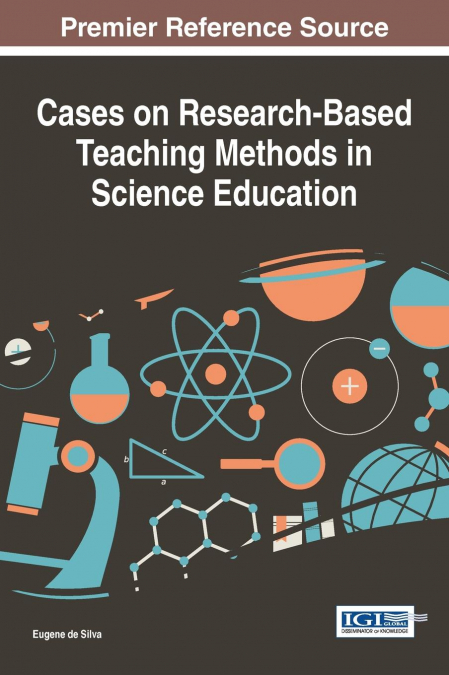
  • Cases on Research-Based Teaching Methods in Science Education
    Eugene de Silva
    While the great scientists of the past recognized a need for a multidisciplinary approach, today’s schools often treat math and science as subjects separate from the rest. This not only creates a disinterest among students, but also a potential learning gap once students reach college and then graduate into the workforce. Cases on Research-Based Teaching Methods in Science Educ...
  • Enhancing Qualitative and Mixed Methods Research with Technology
    Shalin Hai-Jew
    In light of the expensive nature of quantitative research, such as experiments, researchers must seek other methods of understanding the world around them. As such, new qualitative methods are gaining ground in the modern research community. Enhancing Qualitative and Mixed Methods Research with Technology explores the integration of new digital tools into the research process. ...
  • Emerging Research on Bioinspired Materials Engineering
    Mohamed Bououdina
    Bioinspired materials can be defined as the organic or inorganic materials that mimic naturally occurring substances. With applications in a number of fields such as biomedical, chemical, mechanical, and civil engineering, research on the development of biologically-inspired materials is essential to further advancement. Emerging Research on Bioinspired Materials Engineering pr...
  • Contemporary Knowledge and Systems Science
    As branches of research and knowledge continue to expand, platforms for gathering and understanding new information become important aspects of organizational improvement. Contemporary Knowledge and Systems Science provides emerging research on the methods and applications of knowledge systems in social science, economics, and technological developments. While highlighting topi...
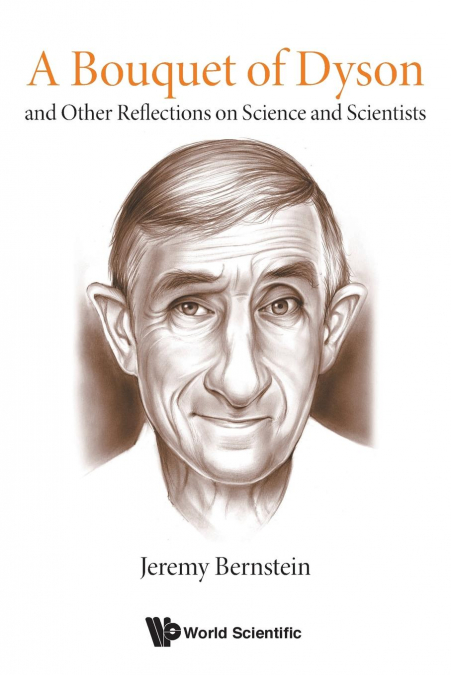
  • BOUQUET OF DYSON, A
    BERNSTEIN JEREMY / Jeremy Bernstein
    University of Texas at Austin My friendship with Freeman Dyson goes back over a half century. My first contact with him goes back to the late 1950s, when I was at the Institute for Advanced Study, and then evolved when I was a consultant at General Atomics in La Jolla, California. Freeman was then trying to design a space ship — the Orion — which would be propelled by atomic bo...
    Disponible

    33,35 €

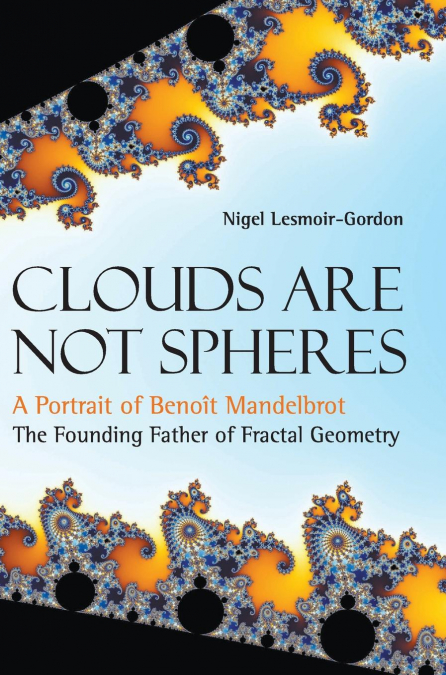
  • CLOUDS ARE NOT SPHERES
    LESMOIR-GORDON NIGEL / NIGEL LESMOIR-GORDON
     The time is right, following Benoît Mandelbrot's death in 2010, to publish this landmark book about the life and work of this maverick math genius.This compact book celebrates the life and achievements of Benoît Mandelbrot with the ideas of fractals presented in a way that can be understood by the interested lay-person. Mathematics is largely avoided. Instead, Mandelbrot&#...