
Charm

Charm

Julia Sonnevend

26,17 €
IVA incluido
Disponible
Editorial:
Princeton University Press
Año de edición:
2026
Materia
Teoría social
ISBN:
9780691231471
26,17 €
IVA incluido
Disponible

Selecciona una librería:

  • Librería Samer Atenea
  • Kálamo Books
  • Librería Elías (Asturias)
  • Librería Kolima (Madrid)
  • Librería Proteo (Málaga)

The utilization—and weaponization—of charm in contemporary global politicsPolitics is a site of performance, and contemporary politicians often perform the role of a regular person—perhaps someone we would like to have a beer with. They win elections not because of the elevated rhetorical performances we often associate with charisma (“ask not what your country can do for you”), but because of something more ordinary and relatable. The everyday magic spell that politicians cast using mass and social media is what sociologist Julia Sonnevend calls “charm.” In this engaging and enlightening book, Sonnevend explores charm (and the related “charm offensive”) as a keyword of contemporary global politics. Successful political leaders deploy this form of personal magnetism—which relies on proximity to political tribes and manifests across a variety of media platforms—to appear authentic and accessible in their quest for power.Sonnevend examines the mediated self-representations of a set of liberal, illiberal, and authoritarian political leaders, past and present: New Zealand’s Jacinda Ardern, Hungary’s Viktor Orbán, Iran’s Mohammad Javad Zarif, North Korea’s Kim Jong-un, and Germany’s Angela Merkel. She considers how charm (or the lack of it) is wielded as a political tool, and the ways charm is weaponized to shape the international image of a country, potentially influencing decisions about military aid, trade, and even tourism. Sonnevend argues that charm will shape the future of democracy worldwide, as political values will be increasingly embodied by mediated personalities. These figures will rise and fall, often fading into irrelevance; but if we do not understand charm’s political power, we cannot grasp today’s fragile political moment.

Artículos relacionados

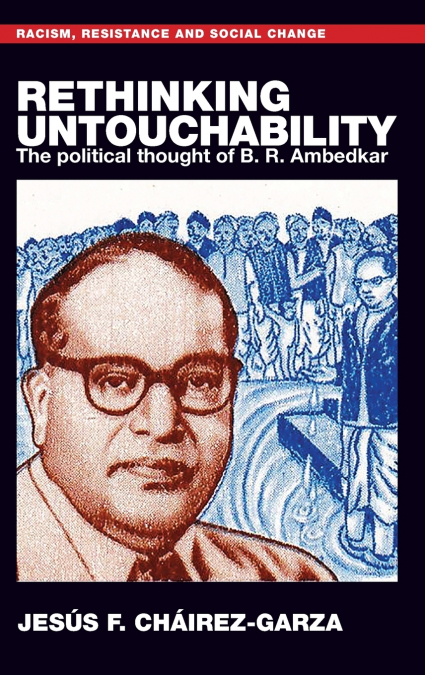
  • Rethinking untouchability
    Jesús F. Cháirez-Garza
    This book examines the transformation of untouchability into a political idea in India during the first half of the twentieth century. At its heart is Ambedkar’s role and the concepts he used to champion untouchability as a political problem. Ambedkar’s main objective was to comprehend the numerous avatars of untouchability in order to eradicate this practice. Ambedkar understo...
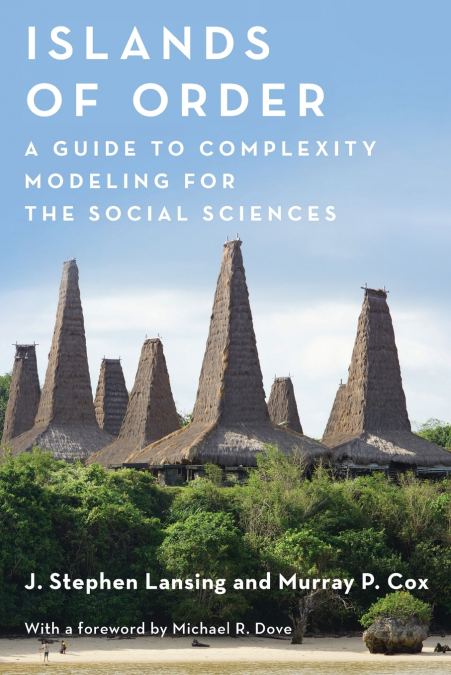
  • Islands of Order
    J. Stephen Lansing / Murray P. Cox
    Two pioneering anthropologists reveal how complexity science can help us better understand how societies change over timeOver the past two decades, anthropologist J. Stephen Lansing and geneticist Murray Cox have explored dozens of villages on the islands of the Malay Archipelago, combining ethnographic research with research into genetic and linguistic markers to shed light on...
  • Islands of Order
    J. Stephen Lansing / Murray P. Cox
    Two pioneering anthropologists reveal how complexity science can help us better understand how societies change over timeOver the past two decades, anthropologist J. Stephen Lansing and geneticist Murray Cox have explored dozens of villages on the islands of the Malay Archipelago, combining ethnographic research with research into genetic and linguistic markers to shed light on...
    Disponible

    37,20 €

  • The Sage Handbook of Global Sociology
    ...
  • Human Rights, Security Politics and Embodiment
    Aneira J. Edmunds
    How have human rights been entangled with state control of the body? And how have they failed to intervene effectively on tipping points such as the US’s endorsement of torture that removes the victim’s control over their own body? This book explores the way institutional human rights have glossed over such abuses and been complicit in security politics which see the Muslim bod...
    Disponible

    35,86 €

  • Better?
    Brian Martin
    Over the past fifty years, have things been getting better or worse? Brian Martin sets out to address this big question by looking at a range of topics, from climate to feminism, from happiness to war, from deschooling to death. Along the way, he offers personal stories and assessments of key studies. This is an invitation to avoid excessive gloom and unwarranted optimism by th...
    Disponible

    27,71 €

Otros libros del autor