 Librería Samer Atenea
 Kálamo Books
 Librería Elías (Asturias)
 Librería Kolima (Madrid)
 Librería Proteo (Málaga)
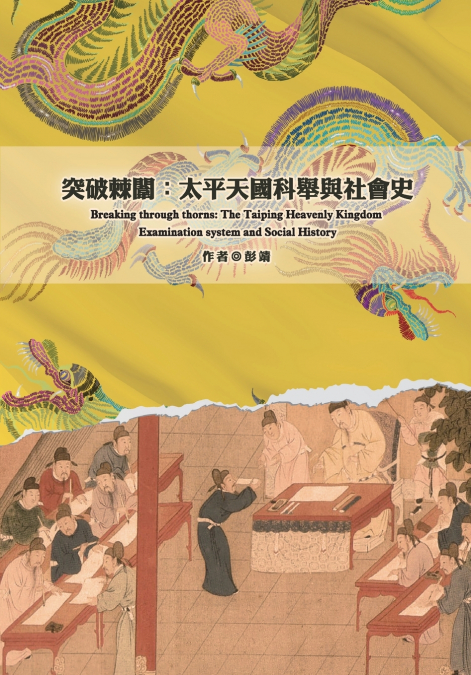
Breaking Through the Thorny Gate: The Taiping Heavenly Kingdom’s Civil Examinations and Social HistoryIn the long river of Chinese history, the Taiping Heavenly Kingdom movement is undoubtedly a profound and complex mark. However, discussions of this sweeping peasant uprising have often focused on its military struggles, political systems, and religious ideology, while rarely delving into its unique practices and deep influence in the realm of traditional culture-particularly regarding the civil examination system. Professor Peng Jing of Shanghai Jiao Tong University, in his latest major work Breaking Through the Thorny Gate: The Taiping Heavenly Kingdom’s Civil Examinations and Social History, takes up his pen precisely in this academic 'blank space,' presenting readers with a historical tapestry that combines macroscopic vision with microscopic investigation.The book is divided into two parts, with a rigorous structure and clear logic.The first part, 'A History of the Taiping Heavenly Kingdom’s Civil Examinations,' is a profound scholarly exploration. Professor Peng begins with late Qing society before the Taiping Heavenly Kingdom, peeling back layers to trace the transformation of the civil examination system during the turbulent Xianfeng and Tongzhi eras. Even more valuable is the author’s detailed investigation of Hong Xiuquan’s personal examination experiences, closely linking them to his revolutionary ideology and revealing how examination failure served as a catalyst for his revolutionary thought. The book meticulously examines and analyzes the Taiping Heavenly Kingdom’s groundbreaking examination reforms-particularly the implementation of the female examination system and the Imperially Approved Regulations on Scholar Ranks. These unprecedented measures not only demonstrated the Taiping regime’s determination to break with the old system but also provide valuable perspectives for later generations to understand its philosophy of talent selection.The second part, 'A Social History of the Taiping Heavenly Kingdom,' expands the research perspective from the examination system to broader social dimensions. Professor Peng skillfully situates the Taiping movement within a multidimensional historical network, exploring its impact on late Qing Shanghai, analyzing the rise and fall of the Xiang Army and Huai Army, and examining the internal connections between political success or failure and changes in popular support. A dedicated chapter on the relationship between the United States and the Taiping Heavenly Kingdom further reveals the author’s international perspective. It is worth noting that the author also pays special attention to the princely mansions and mural art of the Taiping Heavenly Kingdom, combining historical research with art history to present the unique cultural features and historical value of the regime, thereby breaking down stereotypical impressions of the Taiping movement.The scholarly value of this book lies not only in the breadth of its content but also in the author’s rigorous critical spirit and innovative academic perspectives. Building on previous research, Professor Peng corrects many historical details-for example, his critical examination of the history of the Jiangnan Examination Hall and his revision of the implementation circumstances of the Imperially Approved Regulations on Scholar Ranks. The concepts introduced in the book-such as 'the civil examination system as China’s cultural soft power'-along with discussions on how to draw lessons from historical experience to reform modern college entrance examinations and civil service systems, carry strong contemporary relevance. As Professor Hao Lun of Moscow University remarks, this book offers extremely valuable explorations of the examination system’s historical influence, modern significance, and its function as a reference for cultural development.Breaking Through the Thorny Gate: The Taiping Heavenly Kingdom’s Civil Examina...