Blocs en béton cellulaire autoclavé (CAA)

Blocs en béton cellulaire autoclavé (CAA)

Dele Simeon / Olatunji Oladiran

52,01 €
IVA incluido
Disponible
Editorial:
KS OmniScriptum Publishing
Año de edición:
2024
Materia
Ciencia, ingeniería y tecnología medioambientales
ISBN:
9786203135398
52,01 €
IVA incluido
Disponible

Selecciona una librería:

  • Librería Samer Atenea
  • Librería Aciertas (Toledo)
  • Kálamo Books
  • Librería Perelló (Valencia)
  • Librería Elías (Asturias)
  • Donde los libros
  • Librería Kolima (Madrid)
  • Librería Proteo (Málaga)

Le béton cellulaire autoclavé (CAA) s’est avéré être un matériau durable qui peut réduire les émissions de carbone, la consommation d’énergie et répondre à la pénurie de logements. Malgré ces avantages, son utilisation en tant qu’unité de mur dans les projets de construction africains reste limitée, voire inexistante. Cette étude évalue l’acceptabilité et les facteurs clés des blocs AAC en tant que matériau de mur. Pour ce faire, dix-sept enquêtes en ligne ont été envoyées par courriel à des praticiens de la construction sud-africains dans cinq provinces, tandis que 99 ont été auto-administrées à Lagos, au Nigeria, et analysées à l’aide d’outils statistiques. L’enquête a révélé que les principaux blocs AAC en Afrique du Sud utilisent de l’OPC (grades 52,5 et 42,5), de l’AP, du RHA, du POFA ou du PFA. Les propriétés de légèreté, de respect de l’environnement et de résistance à la chaleur sont les principales utilisations au Nigeria, tandis que l’isolation contre le feu, l’absorption thermique et la flexibilité sont appréciées en Afrique du Sud. L’étude conclut que les fabricants de CAA autres que les quatre principaux types de blocs n’auront qu’une clientèle limitée. Si les propriétés de légèreté sont le moteur de l’adoption des blocs de CAA dans les deux pays, d’autres éléments ont une importance différente. Ce choix profite aux constructions de grande hauteur en réduisant les coûts de fondation.
Artículos relacionados

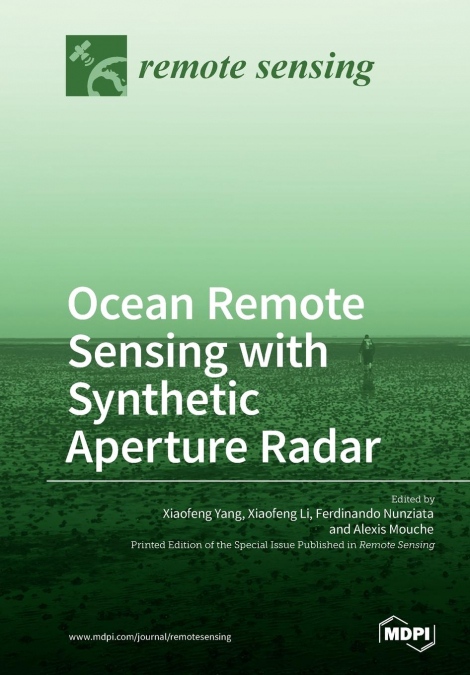
  • Ocean Remote Sensing with Synthetic Aperture Radar
    The ocean covers approximately 71% of the Earth’s surface, 90% of the biosphere and contains 97% of Earth’s water. The Synthetic Aperture Radar (SAR) can image the ocean surface in all weather conditions and day or night. SAR remote sensing on ocean and coastal monitoring has become a research hotspot in geoscience and remote sensing. This book—Progress in SAR Oceanography—prov...
    Disponible

    83,90 €

  • Handbook of Research on Advancements in Environmental Engineering
    Nediljka Gaurina-Medjimurec
    The protection of clean water, air, and land for the habitation of humans and other organisms has become a pressing concern amid the intensification of industrial activities and the rapidly growing world population. The integration of environmental science with engineering principles has been introduced as a means of long-term sustainable development. The Handbook of Research o...
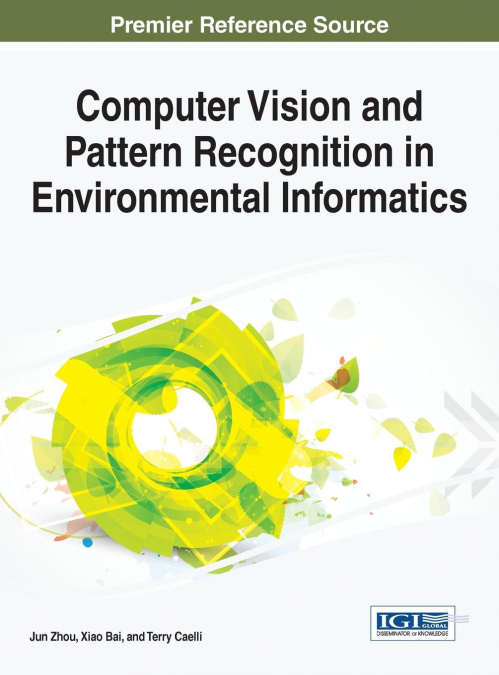
  • Computer Vision and Pattern Recognition in Environmental Informatics
    Computer Vision and Pattern Recognition (CVPR) together play an important role in the processes involved in environmental informatics due to their pervasive, non-destructive, effective, and efficient natures. As a result, CVPR has made significant contributions to the field of environmental informatics by enabling multi-modal data fusion and feature extraction, supporting fast ...
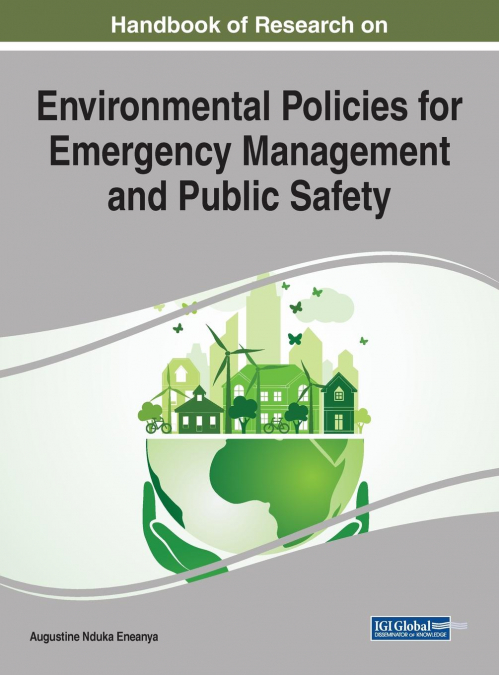
  • Handbook of Research on Environmental Policies for Emergency Management and Public Safety
    Augustine Nduka Eneanya
    In a world of earthquakes, tsunamis, and hurricanes, it is evident that emergency response plans are crucial to solve problems, overcome challenges, and restore and improve communities affected by such negative events. Although the necessity for quick and efficient aid is understood, researchers and professionals continue to strive for the best practices and methodologies to pr...
  • A New Water Future
    Ric Davidge
    Just as cities and nations face the challenge of providing clean water to their citizens and their economies, a new opportunity has finally been constructed that can fix these challenges.  This is a time-sensitive opportunity, and this book is provided to help you move forward. AQUEOUS International, Inc. has developed this over the past 30 years with global research and the co...
    Disponible

    12,86 €

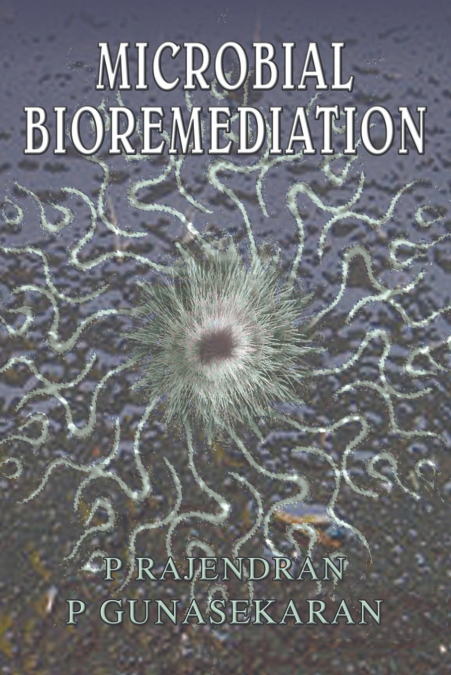
  • Microbial Bioremediation
    P Gunasekaran / P Rajendran
    Discover the groundbreaking world of bioremediation with 'Microbial Bioremediation' authored by Dr. P. Rajendran and Dr. P. Gunasekaran. This comprehensive book unveils the power of living organisms, including plants in phytoremediation and microbes such as bacteria, algae, and fungi in microbial bioremediation, as efficient, eco-friendly, and cost-effective alternatives to con...
    Disponible

    30,82 €

Otros libros del autor

  • Autoklavierte Porenbetonblöcke (AAC)
    Dele Simeon / Olatunji Oladiran
    Porenbeton hat sich als nachhaltiges Material erwiesen, das den Kohlendioxidausstoß und den Energieverbrauch senken und dem Wohnungsmangel entgegenwirken kann. Trotz dieser Vorteile wird Porenbeton in afrikanischen Bauprojekten nur begrenzt oder gar nicht als Wandbaustoff verwendet. Diese Studie bewertet die Akzeptanz und die wichtigsten Faktoren von Porenbetonblöcken als Wandm...
    Disponible

    52,07 €

  • Blocos de betão celular autoclavado (AAC)
    Dele Simeon / Olatunji Oladiran
    O betão celular autoclavado (CAA) provou ser um material sustentável que pode reduzir as emissões de carbono, a utilização de energia e resolver a escassez de habitação. Apesar destes benefícios, a sua utilização como unidade de parede em projectos de construção africanos continua a ser limitada ou inexistente. Este estudo avalia a aceitabilidade e os factores-chave dos blocos ...
    Disponible

    52,01 €

  • Blocchi in calcestruzzo aerato autoclavato (AAC)
    Dele Simeon / Olatunji Oladiran
    Il calcestruzzo aerato autoclavato (AAC) ha dimostrato di essere un materiale sostenibile che può ridurre le emissioni di carbonio, l’uso di energia e affrontare la carenza di alloggi. Nonostante questi vantaggi, il suo uso come unità di rivestimento nei progetti edilizi africani rimane limitato o inesistente. Questo studio valuta l’accettabilità e i fattori chiave dei blocchi ...
    Disponible

    52,01 €

  • Autoclaved Aerated Concrete (AAC) Blocks
    Dele Simeon / Olatunji Oladiran
    Autoclaved aerated concrete (AAC) has proven to be a sustainable material that may reduce carbon emissions, energy use, and address housing shortages. Despite these benefits, its use as a walling unit in African construction projects remains limited or non-existent. This study evaluates the acceptability and key drivers of AAC blocks as a walling material. To achieve this, seve...
    Disponible

    51,89 €