
Betão autoadensável

Betão autoadensável

Muhammad Nouman Haral

94,96 €
IVA incluido
Disponible
Editorial:
KS OmniScriptum Publishing
Año de edición:
2025
Materia
Ciencia, ingeniería y tecnología medioambientales
ISBN:
9786209065620
94,96 €
IVA incluido
Disponible

Selecciona una librería:

  • Librería Samer Atenea
  • Librería Aciertas (Toledo)
  • Kálamo Books
  • Librería Perelló (Valencia)
  • Librería Elías (Asturias)
  • Donde los libros
  • Librería Kolima (Madrid)
  • Librería Proteo (Málaga)

O betão autoadensável (SCC) tornou-se de vital importância para a indústria da construção desde a sua invenção no Japão, em 1988. A principal vantagem do SCC é a facilidade de colocação e consolidação; no entanto, a necessidade de utilizar materiais em pó adicionais e uma elevada dosagem de superplastificantes torna-o mais caro do que o betão convencional. Muitos materiais cimentícios suplementares (SCMs), como cinzas volantes (FA), fumo de sílica (SF) e materiais finos, como pó de calcário (LSP) e pó de calcário (LSD), são usados em todo o mundo para produzir SCC. Esta pesquisa teve como objetivo estudar o efeito da incorporação de pozolana natural (NP) como SCM nas propriedades do SCC. Espera-se que o livro satisfaça as necessidades do leitor sobre a incorporação de pozolana natural saudita no SCC.

Artículos relacionados

  • Ocean Remote Sensing with Synthetic Aperture Radar
    The ocean covers approximately 71% of the Earth’s surface, 90% of the biosphere and contains 97% of Earth’s water. The Synthetic Aperture Radar (SAR) can image the ocean surface in all weather conditions and day or night. SAR remote sensing on ocean and coastal monitoring has become a research hotspot in geoscience and remote sensing. This book—Progress in SAR Oceanography—prov...
    Disponible

    83,90 €

  • Handbook of Research on Advancements in Environmental Engineering
    Nediljka Gaurina-Medjimurec
    The protection of clean water, air, and land for the habitation of humans and other organisms has become a pressing concern amid the intensification of industrial activities and the rapidly growing world population. The integration of environmental science with engineering principles has been introduced as a means of long-term sustainable development. The Handbook of Research o...
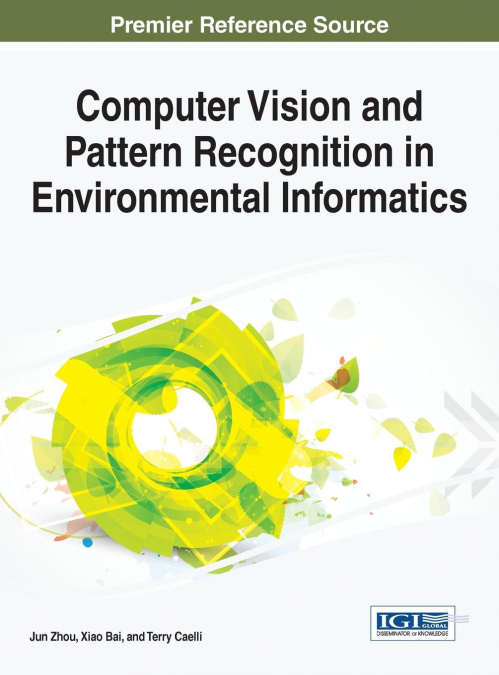
  • Computer Vision and Pattern Recognition in Environmental Informatics
    Computer Vision and Pattern Recognition (CVPR) together play an important role in the processes involved in environmental informatics due to their pervasive, non-destructive, effective, and efficient natures. As a result, CVPR has made significant contributions to the field of environmental informatics by enabling multi-modal data fusion and feature extraction, supporting fast ...
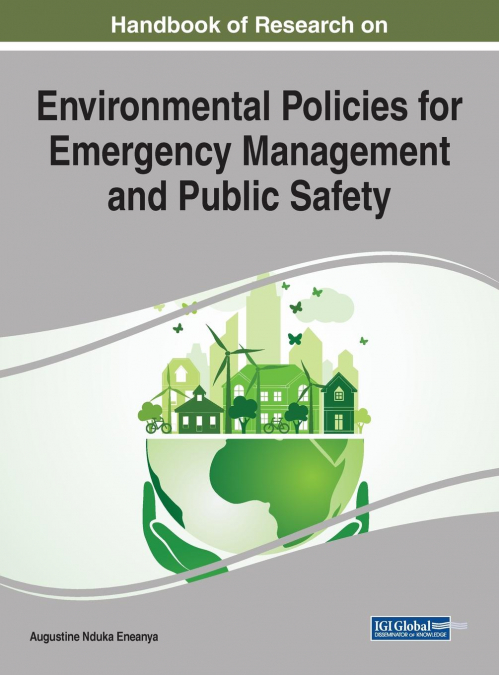
  • Handbook of Research on Environmental Policies for Emergency Management and Public Safety
    Augustine Nduka Eneanya
    In a world of earthquakes, tsunamis, and hurricanes, it is evident that emergency response plans are crucial to solve problems, overcome challenges, and restore and improve communities affected by such negative events. Although the necessity for quick and efficient aid is understood, researchers and professionals continue to strive for the best practices and methodologies to pr...
  • A New Water Future
    Ric Davidge
    Just as cities and nations face the challenge of providing clean water to their citizens and their economies, a new opportunity has finally been constructed that can fix these challenges.  This is a time-sensitive opportunity, and this book is provided to help you move forward. AQUEOUS International, Inc. has developed this over the past 30 years with global research and the co...
    Disponible

    12,86 €

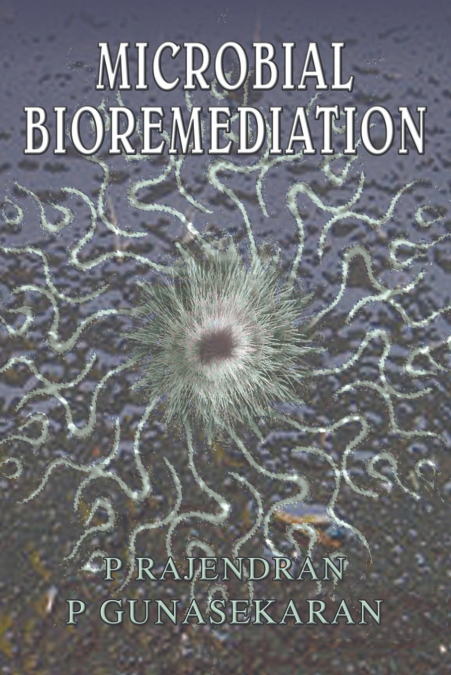
  • Microbial Bioremediation
    P Gunasekaran / P Rajendran
    Discover the groundbreaking world of bioremediation with 'Microbial Bioremediation' authored by Dr. P. Rajendran and Dr. P. Gunasekaran. This comprehensive book unveils the power of living organisms, including plants in phytoremediation and microbes such as bacteria, algae, and fungi in microbial bioremediation, as efficient, eco-friendly, and cost-effective alternatives to con...
    Disponible

    30,82 €

Otros libros del autor

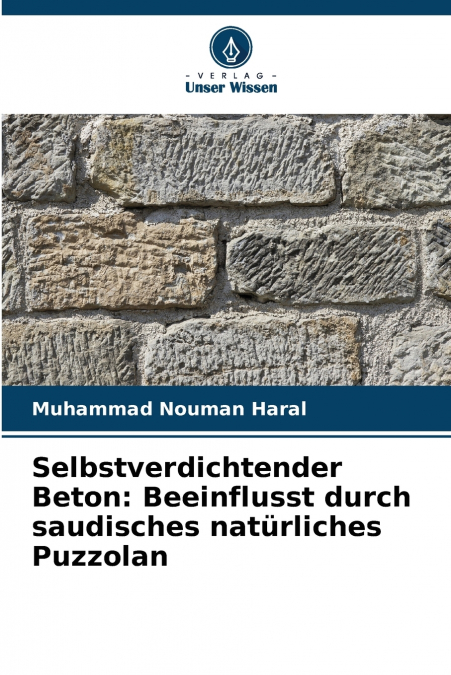
  • Selbstverdichtender Beton
    Muhammad Nouman Haral
    Selbstverdichtender Beton (SCC) hat seit seiner Erfindung in Japan im Jahr 1988 eine entscheidende Bedeutung für die Bauindustrie erlangt. Der Hauptvorteil von SCC ist die einfache Verlegung und Verdichtung; jedoch ist er aufgrund der Notwendigkeit, zusätzliche Pulvermaterialien und hohe Dosierungen von Fließmitteln zu verwenden, teurer als herkömmlicher Beton. Weltweit werden ...
    Disponible

    94,95 €

  • Béton autoplaçant
    Muhammad Nouman Haral
    Le béton autoplaçant (SCC) est devenu d’une importance vitale pour l’industrie de la construction depuis son invention au Japon en 1988. Le principal avantage du SCC est sa facilité de mise en place et de consolidation ; cependant, la nécessité d’utiliser des matériaux en poudre supplémentaires et un dosage élevé de superplastifiants le rend plus coûteux que le béton convention...
    Disponible

    94,96 €

  • Calcestruzzo autocompattante
    Muhammad Nouman Haral
    Il calcestruzzo autocompattante (SCC) ha assunto un’importanza fondamentale per l’industria delle costruzioni sin dalla sua invenzione in Giappone nel 1988. Il vantaggio principale dell’SCC è la facilità di posa e consolidamento; tuttavia, la necessità di utilizzare materiali in polvere aggiuntivi e un elevato dosaggio di superfluidificanti lo rende più costoso del calcestruzzo...
    Disponible

    94,96 €

  • Beton samozagęszczalny
    Muhammad Nouman Haral
    Beton samozagęszczalny (SCC) stał się niezwykle ważny dla branży budowlanej od momentu jego wynalezienia w Japonii w 1988 roku. Główną zaletą SCC jest łatwość układania i konsolidacji; jednak konieczność stosowania dodatkowych materiałów proszkowych i wysokich dawek superplastyfikatorów sprawia, że jest on droższy od betonu tradycyjnego. Do produkcji SCC na całym świecie stosuj...
    Disponible

    94,96 €