 Librería Samer Atenea
 Kálamo Books
 Librería Elías (Asturias)
 Librería Kolima (Madrid)
 Librería Proteo (Málaga)
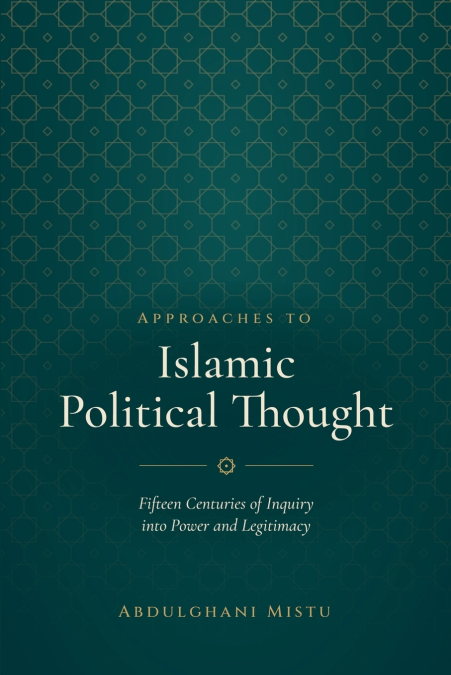
How should power be governed, and what makes it legitimate? For fifteen centuries, Muslim jurists, theologians, philosophers, royal secretaries, historians, and modern reformers have returned to these questions, and answered them in strikingly different ways.Rather than retelling this history century by century or sect by sect, this book maps it by approach. It reconstructs the distinct methods through which Islamic political thought was produced: the counsel literature addressed to princes, the jurists’ ordinances of government, the philosophers’ virtuous city, the theologians’ doctrine of the imamate, the Shiʿi, Ibadi, and Muʿtazili traditions, and Ibn Khaldun’s science of civilization. It then follows the modern reformers, the Islamic movements, the critics of the caliphate, and today’s revisionist thinkers. It closes with a critical reading of Western scholarship, and with a comparison that sets classical concepts such as the oath of allegiance, consultation, and divine sovereignty against the social contract, democracy, and popular sovereignty.Reading classical authorities such as al-Mawardi, al-Juwayni, Ibn Taymiyya, and Ibn Khaldun alongside modern thinkers, the book shows how each approach framed the question of legitimacy, what it brought to light, and what it left unsaid.Grounded throughout in the Arabic sources, Approaches to Islamic Political Thought offers students, researchers, and general readers a clear map of one of the richest and most contested traditions of political reflection.The book includes a chronology of thinkers and works, a glossary of Arabic terms, and a full bibliography.