
Inicio > Tecnología, ingeniería, agricultura > Ingeniería mecánica y de materiales > Ingeniería mecánica > Applications of Vector Analysis and Complex Variables in Engineering
Applications of Vector Analysis and Complex Variables in Engineering

Applications of Vector Analysis and Complex Variables in Engineering

Otto D. L. Strack

88,17 €
IVA incluido
Disponible
Editorial:
Springer Nature B.V.
Año de edición:
2021
Materia
Ingeniería mecánica
ISBN:
9783030411701
88,17 €
IVA incluido
Disponible

Selecciona una librería:

  • Librería Samer Atenea
  • Librería Aciertas (Toledo)
  • Kálamo Books
  • Librería Perelló (Valencia)
  • Librería Elías (Asturias)
  • Donde los libros
  • Librería Kolima (Madrid)
  • Librería Proteo (Málaga)

This textbook presents the application of mathematical methods and theorems tosolve engineering problems, rather than focusing on mathematical proofs. Applications of Vector Analysis and Complex Variables in Engineering explains the mathematical principles in a manner suitable for engineering students, who generally think quite differently than students of mathematics. The objective is to emphasize mathematical methods and applications, rather than emphasizing general theorems and principles, for which the reader is referred to the literature. Vector analysis plays an important role in engineering, and is presented in terms of indicial notation, making use of the Einstein summation convention. This text differs from most texts in that symbolic vector notation is completely avoided, as suggested in the textbooks on tensor algebra and analysis written in German by Duschek and Hochreiner, in the 1960s. The defining properties of vector fields, the divergence and curl, are introduced in terms of fluid mechanics. The integral theorems of Gauss (the divergence theorem), Stokes, and Green are introduced also in the context of fluid mechanics. The final application of vector analysis consists of the introduction of non-Cartesian coordinate systems with straight axes, the formal definition of vectors and tensors. The stress and strain tensors are defined as an application. Partial differential equations of the first and second order are discussed. Two-dimensional linear partial differential equations of the second order are covered, emphasizing the three types of equation: hyperbolic, parabolic, and elliptic. The hyperbolic partial differential equations have two real characteristic directions, and writing the equations along these directions simplifies the solution process. The parabolic partial differential equations have two coinciding characteristics; this gives useful information regarding the character of the equation, but does not help in solving problems. The elliptic partial differential equations do not have real characteristics. In contrast to most texts, rather than abandoning the idea of using characteristics, here the complex characteristics are determined, and the differential equations are written along these characteristics. This leads to a generalized complex variable system, introduced by Wirtinger. The vector field is written in terms of a complex velocity, and the divergence and the curl of the vector field is written in complex form, reducing both equations to a single one. Complex variable methods are applied to elliptical problems in fluid mechanics, and linear elasticity.The techniques presented for solving parabolic problems are the Laplace transform and separation of variables, illustrated for problems of heat flow and soil mechanics.  Hyperbolic problems of vibrating strings and bars, governed by the wave equation are solved by the method of characteristics as well as by Laplace transform. The method of characteristics for quasi-linear hyperbolic partial differential equations is illustrated for the case of a failing granular material, such as sand, underneath a strip footing. The Navier Stokes equations are derived and discussed in the final chapter as an illustration of a highly non-linear set of partial differential equations and the solutions are interpreted by illustrating the role of rotation (curl) in energy transfer of a fluid.
Artículos relacionados

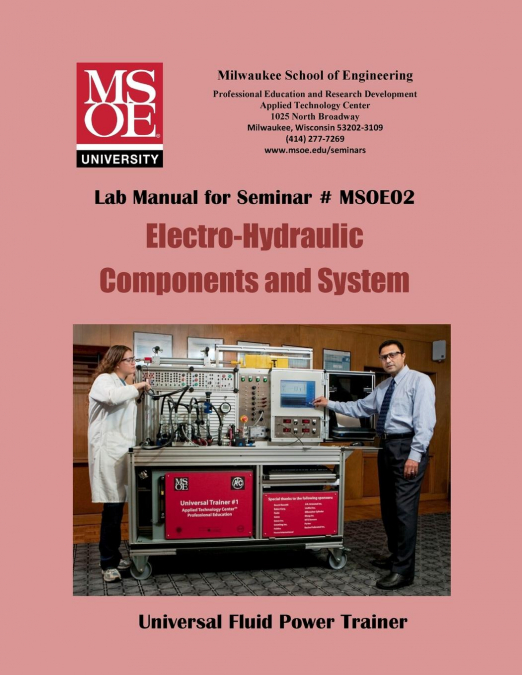
  • Lab Manual-MSOE02-UFPT
    Dr. Medhat Khalil / DrMedhat Khalil / Medhat khalil
    Universal Trainer Lab Manual associated with the text book HSV2 and course MSOE02 (Electro-Hydraulic Components and Systems). The manual contains lab numbers 20 to 29. It also contains instructions about the lab objectives, the devices used in the lab, the step-by-step procedure of the lab and the expected observations. ...
    Disponible

    27,55 €

  • Reliability in Power Electronics and Electrical Machines
    Hashem Oraee / Shahriyar Kaboli
    In modern industries, electrical energy conversion systems consist of two main parts: electrical machines and power electronic converters. With global electricity use at an all-time high, uninterrupted operation of electrical power converters is essential. Reliability in Power Electronics and Electrical Machines: Industrial Applications and Performance Models provides an in-dep...
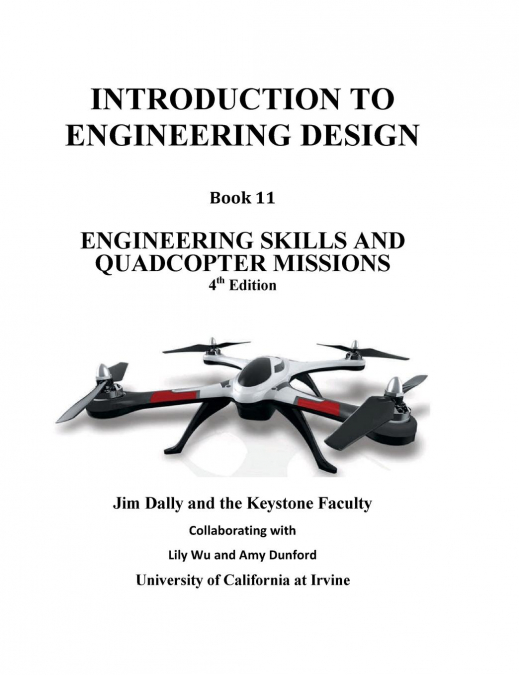
  • Introduction to Engineering Design, Book 11, 4th Edition
    Jim Dally
    This book is the fourth edition of the eBook edition of the eleventh textbook in this series: Introduction to Engineering Design.  Jim Dally, working with College House Enterprises, LLC and faculty members in the Keystone Program within the Clark School of Engineering, has prepared ten previous textbooks in this series—a new one almost every 18 months.  These books are written ...
    Disponible

    79,79 €

  • EMBEDDED COOLING OF ELECTRONIC DEVICES
    IYENGAR MADHUSUDAN / JUSTIN A WEIBEL MEH MADHUSUDAN IYENGAR
    This book is a comprehensive guide on emerging cooling technologies for processors in microelectronics. It covers various topics such as chip-embedded two-phase cooling, monolithic microfluidic cooling, numerical modeling, and advances in materials engineering for conduction-limited direct contact cooling, with a goal to remedy high heat flux issues.The book also discusses the ...
  • Motorcycle Design
    James Sadauckas / Roberto Lot
    This book aims to provide the core concepts of motorcycle dynamics and illustrates their application in vehicle design to readers who have a serious interest in the subject and in particular engineers with a career path in the powered two wheelers sector. ...
    Disponible

    83,23 €

  • Advances in MEMS and Microfluidic Systems
    Microelectromechanical systems (MEMS) device applications are common in many areas. Micromirror arrays are used as video projectors; microsensors find their application for measuring acceleration, temperature, and pressure; and they can also be used in the medical field for measuring blood pressure. Microfluidics have also been widely employed in life sciences applications, suc...
    Disponible

    235,81 €

Otros libros del autor

  • Applications of Vector Analysis and Complex Variables in Engineering
    Otto D. L. Strack
    This textbook presents the application of mathematical methods and theorems tosolve engineering problems, rather than focusing on mathematical proofs. Applications of Vector Analysis and Complex Variables in Engineering explains the mathematical principles in a manner suitable for engineering students, who generally think quite differently than students of mathematics. The obje...