 Librería Samer Atenea
 Kálamo Books
 Librería Elías (Asturias)
 Librería Kolima (Madrid)
 Librería Proteo (Málaga)
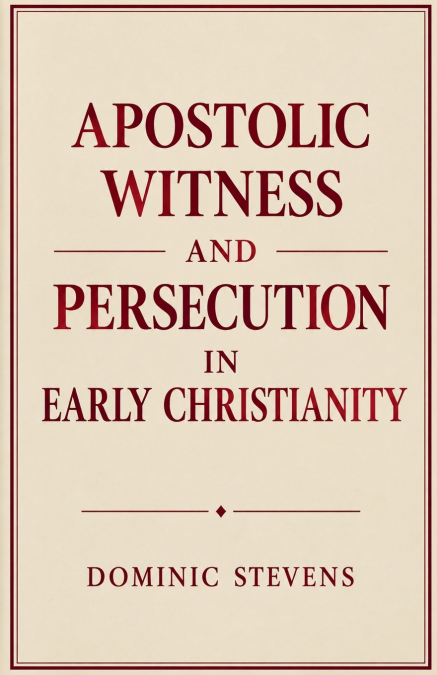
Among the many themes that run through the New Testament, few are as pervasive and as deeply interconnected as apostolic witness and persecution. From the opening proclamation of John the Baptist to the visions of faithful endurance in the Book of Revelation, the first-century Christian movement understood itself as a community called to bear witness to the saving acts of God in Jesus Christ while simultaneously enduring opposition from religious, social, and political forces. The New Testament consistently presents these realities not as separate experiences but as closely related dimensions of Christian existence. Witness provokes opposition, and opposition becomes the context in which witness is tested, refined, and manifested with greater clarity.The term 'witness' occupies a central place in the vocabulary of early Christianity. Derived from the Greek word martyria and related terms such as martys, the concept originally referred to testimony, especially testimony concerning facts that had been seen and heard. In the New Testament, however, witness acquires a richer theological meaning. The apostles were not merely transmitters of information about Jesus of Nazareth. They were commissioned representatives of the risen Lord, entrusted with proclaiming his death, resurrection, exaltation, and future return. Their witness was rooted in personal encounter, empowered by divine calling, and sustained through the activity of the Holy Spirit. This book explores the relationship between apostolic witness and persecution throughout the New Testament while remaining firmly within the bounds of the first century.