 Librería Samer Atenea
 Kálamo Books
 Librería Elías (Asturias)
 Librería Kolima (Madrid)
 Librería Proteo (Málaga)
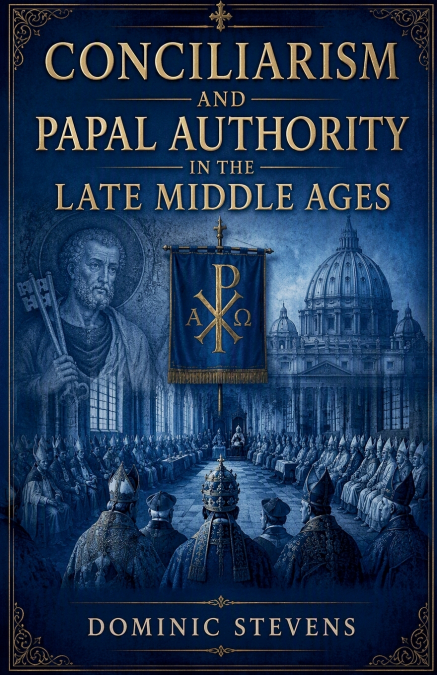
Few questions exercised the medieval Church more profoundly than the question of authority. In a religious society that understood itself as a unified Christian commonwealth, the issue was not merely administrative or constitutional. It touched the nature of the Church itself, the preservation of orthodoxy, the salvation of souls, and the relationship between divine and human governance. By the later Middle Ages, disputes concerning the proper locus of authority within the Church had developed into one of the most significant institutional and intellectual controversies in Western history. At the center of this controversy stood two competing yet often overlapping visions of ecclesiastical order: the doctrine of papal supremacy and the theory known as conciliarism.Papal authority was by no means a late medieval invention. The bishops of Rome had, for centuries, claimed a distinctive position within Christendom based upon their succession from Saint Peter, whom medieval theologians regarded as the chief of the apostles and the recipient of Christ’s special commission to govern the Church. By the thirteenth century, these claims had evolved into an elaborate theory of papal monarchy. Popes increasingly asserted universal jurisdiction over the Church, intervened in matters across Europe, legislated through canon law, appointed bishops, directed crusades, and exercised judicial authority on an unprecedented scale. The pope came to be portrayed not merely as the first bishop among many, but as the supreme governor of the Christian world.