 Librería Samer Atenea
 Kálamo Books
 Librería Elías (Asturias)
 Librería Kolima (Madrid)
 Librería Proteo (Málaga)
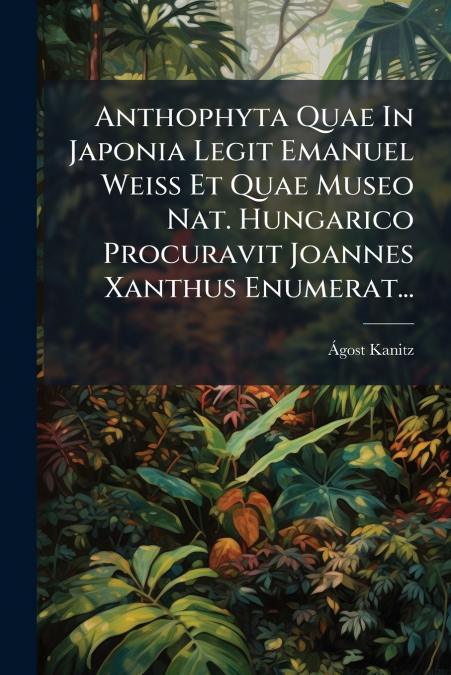
Anthophyta Quae In Japonia Legit Emanuel Weiss Et Quae Museo Nat. Hungarico Procuravit Joannes Xanthus Enumerat... è un testo di botanica del XIX secolo. Scritto da Ágost Kanitz, il libro cataloga le Anthophyta (piante da fiore) raccolte in Giappone da Emanuel Weiss e conservate nel Museo Nazionale Ungherese, curate da Joannes Xanthus. Quest’opera rappresenta una risorsa storica per botanici e studiosi interessati alla flora giapponese e alle pratiche tassonomiche del periodo. Il libro offre un’istantanea dettagliata delle specie vegetali presenti in Giappone durante il periodo delle spedizioni di Weiss, e documenta gli sforzi del Museo Nazionale Ungherese nella conservazione e catalogazione di tali reperti. La combinazione delle osservazioni di Weiss e della cura di Xanthus rende questo testo un documento importante per la storia della botanica e delle esplorazioni scientifiche.This work has been selected by scholars as being culturally important, and is part of the knowledge base of civilization as we know it. This work was reproduced from the original artifact, and remains as true to the original work as possible. Therefore, you will see the original copyright references, library stamps (as most of these works have been housed in our most important libraries around the world), and other notations in the work.This work is in the public domain in the United States of America, and possibly other nations. Within the United States, you may freely copy and distribute this work, as no entity (individual or corporate) has a copyright on the body of the work.As a reproduction of a historical artifact, this work may contain missing or blurred pages, poor pictures, errant marks, etc. Scholars believe, and we concur, that this work is important enough to be preserved, reproduced, and made generally available to the public. We appreciate your support of the preservation process, and thank you for being an important part of keeping this knowledge alive and relevant.