
Angkor and the Khmer Empire

Angkor and the Khmer Empire

Michael McPherson

33,52 €
IVA incluido
Disponible
Editorial:
Draft2Digital
Año de edición:
2022
Materia
Historia de Asia
ISBN:
9798215170731
33,52 €
IVA incluido
Disponible

Selecciona una librería:

  • Librería Samer Atenea
  • Librería Aciertas (Toledo)
  • Kálamo Books
  • Librería Perelló (Valencia)
  • Librería Elías (Asturias)
  • Donde los libros
  • Librería Kolima (Madrid)
  • Librería Proteo (Málaga)

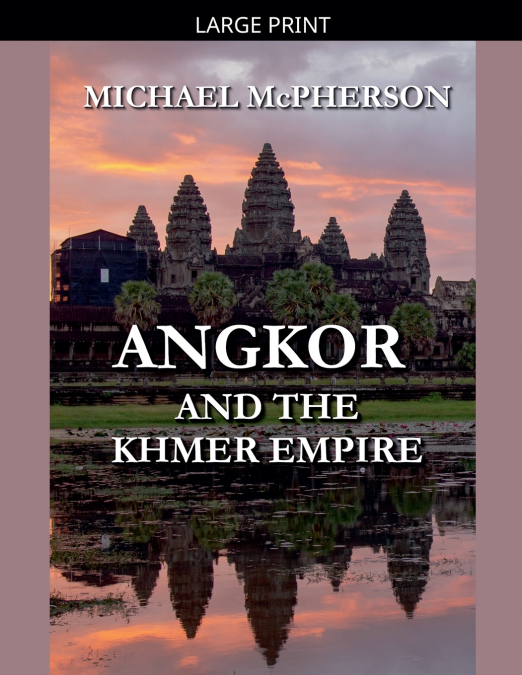
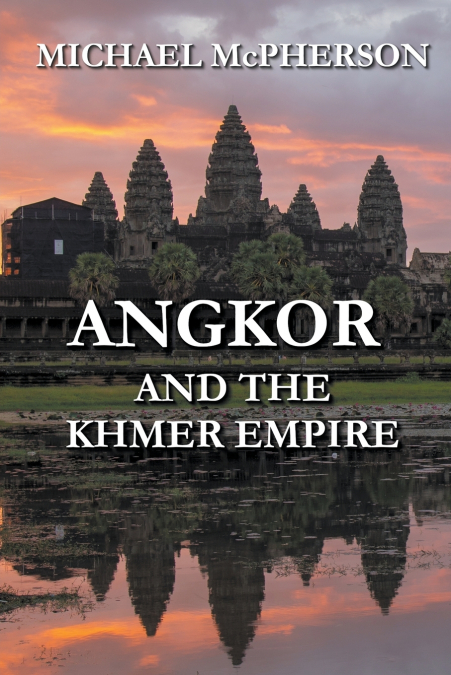
The Khmer Empire was the most powerful in Southeast Asia for 600 years. Ruled by kings called "god-kings," it dominated much of the Mekong and Chao Phraya River basins between 802 and 1431 and built some of the most impressive temples in the world. Cambodia, Laos, Thailand, and Vietnam are all former Khmer territories. For hundreds of years before its collapse in 1431, the Khmer Empire dominated Southeast Asia. With its capital at Angkor, it was the region’s largest and most powerful Empire, incorporating parts of Vietnam, Thailand, Burma, and Malaysia into its territory.Historians disagree on the reason for its fall. One theory is that it was a result of an internal power struggle. Another theory is that the Empire’s citizens were unhappy with their ruler and demanded another leader, which led to the collapse of Angkor. Another popular theory is that because no central government was in charge, local leaders started fighting with each other over land rights.Some historians also think that foreign invaders might have played a role in ending Khmer influence over Southeast Asia and causing their downfall. They say this because after Angkor was abandoned by its people and left unattended for centuries, several different groups took control over it—including Europeans who colonized Vietnam and Thailand during this period (18th century). To them, this suggests there must’ve been some conflict between these new rulers of the Khmer Empire."Historians think Angkor had a population between 750,000 and 1 million by the 12th century, making it one of the largest cities ever built. Angkor Wat is also the largest religious building in the world, with a footprint of 400 acres or 162 hectares. It covers an area greater than Manhattan Island in New York City. Angkor Wat was built as a Hindu temple, but it also reflects influences from Buddhism and Jainism. The temple was constructed by King Suryavarman II during his reign from 1113 to 1145. It took about 30 years to build, but today only 15 percent of the original structure remains standing. The architecture at Angkor is unmatched for its scale, complexity, and harmony. Compared to other temple complexes in Asia, the temples of Angkor are the most significant religious buildings in the world.
Artículos relacionados

  • Understanding Aikido
    Jan J Sunderlin
    Understanding Aikido: Essential Information and Perceptions (Special Edition) presents an historical, cultural, and philosophical look at the development of the Japanese martial art of Aikido. Sunderlin focuses on the influences brought to bear on Morihei Ueshiba, the founder of Aikido, and the subsequent cultivation of the latter's martial art as a vessel of Budo. The author a...
    Disponible

    63,06 €

  • Not by Love Alone
    Margaret Mehl
    Suzuki Shin'ichi, the Tokyo String Quartet, Midori - How did Japanese violinists manage to revolutionize violin teaching, win international competitions, conquer Western concert stages, study at world-famous conservatoires and take up positions in leading orchestras and prestigious music faculties? What enabled the Japanese to master Western classical music within a few decades...
    Disponible

    29,32 €

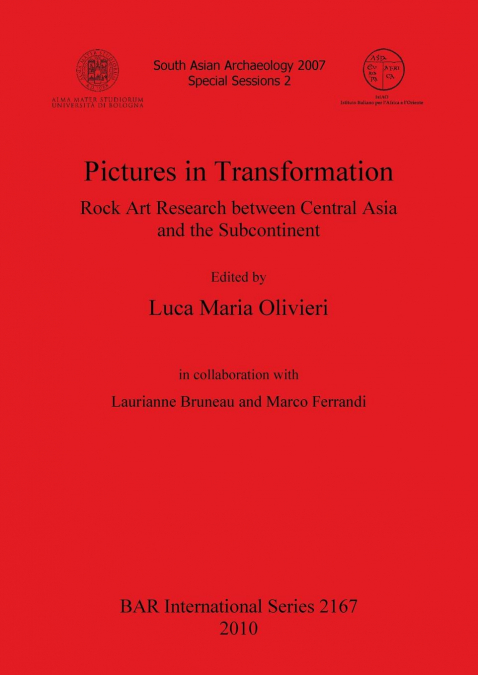
  • Pictures in Transformation
    Luca Maria Olivieri
    ...
    Disponible

    54,79 €

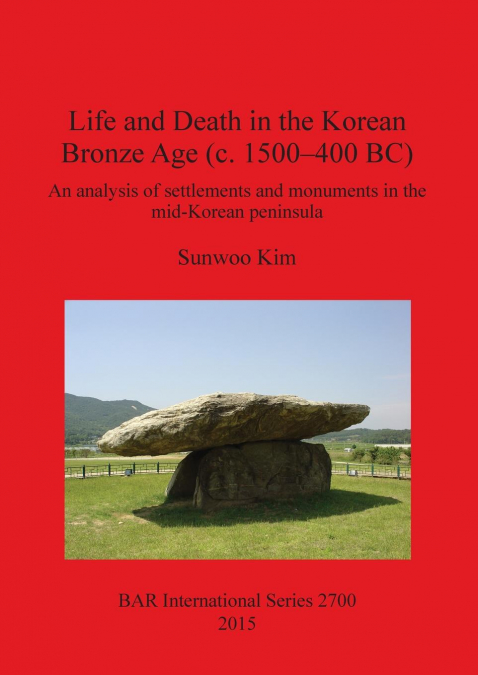
  • Life and Death in the Korean Bronze Age (c. 1500-400 BC)
    Sunwoo Kim
    This research focuses on the Bronze Age in selected areas of Korea; Seoul, Incheon, and Gyeonggi province. Two forms of evidence - settlements and monuments - are taken into account to identify their relationship with landscape and the social changes occurring between ca. 1500 to 400 cal BC. Life and death in the Bronze Age in Korea has not been synthetically investigated befor...
    Disponible

    108,34 €

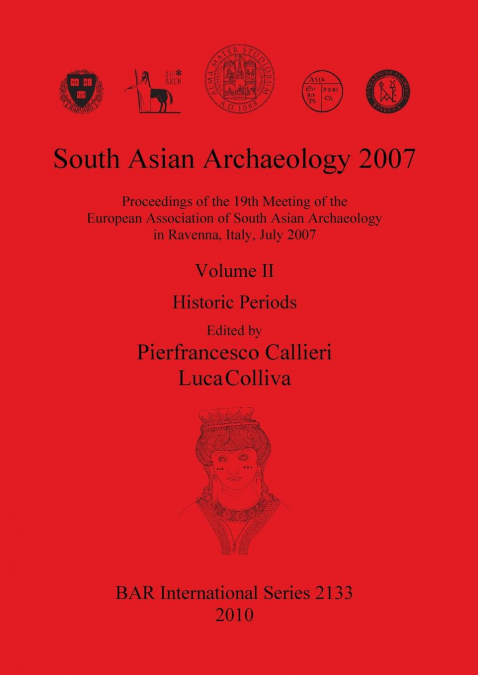
  • South Asian Archaeology 2007
    Proceedings of the 19th Meeting of the European Association of South Asian Archaeology in Ravenna, Italy, July 2007.                     ...
    Disponible

    182,04 €

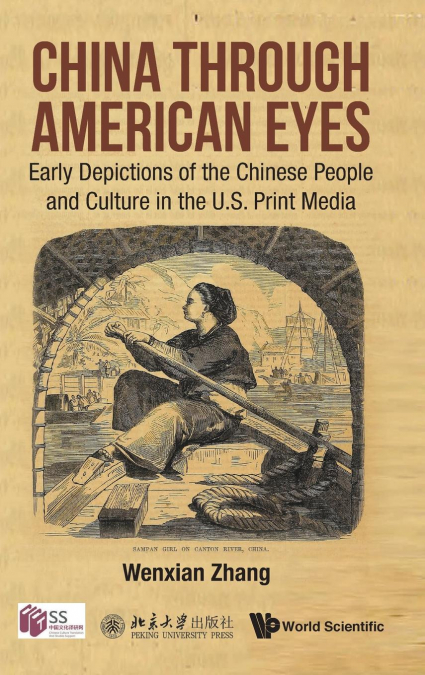
  • CHINA THROUGH AMERICAN EYES
    Wenxian Zhang / ZHANG WENXIAN
    Cultural understanding between the United States and China has been a long and complex process. The period from the mid-nineteenth century to the early twentieth century is not only a critical era in modern Chinese history, but also the peak time of illustrated news reporting in the United States. Besides images from newspapers and journals, this collection also contains pictur...

Otros libros del autor

  • Angkor and the Khmer Empire
    Michael McPherson
    The Khmer Empire was the most powerful in Southeast Asia for 600 years. Ruled by kings called 'god-kings,' it dominated much of the Mekong and Chao Phraya River basins between 802 and 1431 and built some of the most impressive temples in the world. Cambodia, Laos, Thailand, and Vietnam are all former Khmer territories. For hundreds of years before its collapse in 1431, the Khme...
    Disponible

    40,74 €

  • Our Eternal Legacy
    Michael McPherson
    An uplifting, empowering and enriching book of prose to assist in the growth of African people, worldwide, and those who wish to learn about what we experience, see and feel... ...
    Disponible

    10,86 €