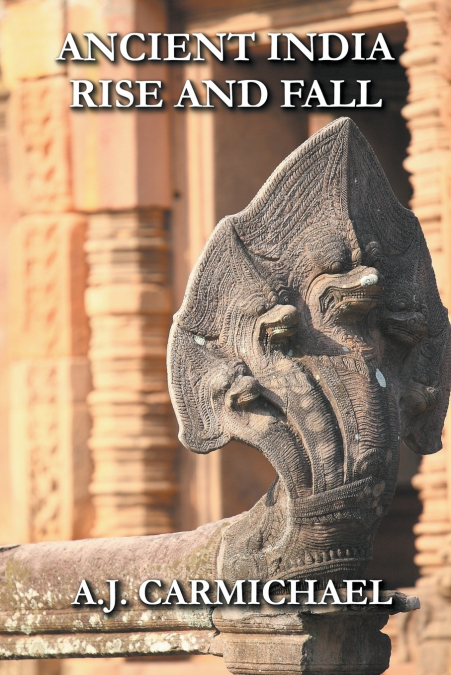

Ancient India, Rise and Fall

Ancient India, Rise and Fall

A.J. Carmichael

22,04 €
IVA incluido
Disponible
Editorial:
Draft2Digital
Año de edición:
2022
Materia
Historia de Asia
ISBN:
9798215067932
22,04 €
IVA incluido
Disponible

Selecciona una librería:

  • Librería Samer Atenea
  • Librería Aciertas (Toledo)
  • Kálamo Books
  • Librería Perelló (Valencia)
  • Librería Elías (Asturias)
  • Donde los libros
  • Librería Kolima (Madrid)
  • Librería Proteo (Málaga)

In ancient Indian history, there were four significant eras as highlighted below, a quick introduction is important in order to digest the material in this book. Prehistoric era: From 500,000 BCE to 11,000 BCE, South Asian hunter-gatherers made stone tools and painted cave paintings at Bhimbetka during the Old and Middle Stone Ages. Merhgarh, in Baluchistan, was where South Asian farming began between 11,000 and 3000 years ago. From 2500 BCE to 1900 BCE, the great Indian cities of Mohenjo Daro and Harappa provide us with much archaeological evidence. Eras of India: Vedic and post-Vedic, No Aryan invasion took place, but a nomadic group of Indo-European speakers migrated from Iran and Afghanistan, calling themselves Arya, or the noble. Over the past four millennia, Indo-Aryan culture has developed uniquely within India, blending the values and heritages of the Arya and indigenous peoples. In the Indo-European language family, the Rig Veda is the oldest text. Among the three Vedas and other complementary Vedic literature, it is a crucial text in Vedic Hinduism. We have today’s vast agricultural infrastructure in north India due to the expansion of the Indo-Aryans from Punjab to the Ganga basin. Mahajanapadas (great states) were formed from the Vedic polity, which Magadha dominated. Northwest India was invaded by both the Persians and the Greeks later in this period. Ajivakas, Buddhists, and Jains objected to the caste system, animal sacrifices, brahman dominance, and the Vedas in Vedic Hinduism.The Great Empires lasted from about 300 BCE to c. AD 500. From Chandragupta Maurya’s Arthashastra, an excellent manual of political economy, we can understand the principles of the Mauryan Empire, founded from Magadha in 321 BCE. With the help of many rock and pillar inscriptions, Ashoka humanized the empire and propagated Buddha’s principles. The smaller Shaka, Kushan, and Satavahana kingdoms followed the Mauryan Empire. A flourishing agricultural industry and trade, both domestic and international, contributed significantly to Indian prosperity during this period. China and Rome dominated trade between India and China. According to the Samanta philosophy of tolerant neighborliness, the Gupta Empire followed a model of decentralized power. The Hindu-Buddhist-Jain civilization reached its peak of elitism under the Guptas. Classical Indian culture refers to that. Throughout history, Buddhism has remained popular but has evolved into Mahayana Buddhism, which emphasizes the Bodhisattva. Buddhism, Sanskrit literature, and mathematics flourished in this era, as at Ajanta. The feudal era lasted from 500 AD to 1200 AD (and beyond). Among the most prominent post-Gupta regional and feudal kingdoms were those of King Harsha, the early Chalukyas, and the Pallavas. The kings maintained their power through large land grants, feudatory power, and patronage systems. During the eleventh and twelfth centuries, the aggressive and iconoclastic Turco-Afghans quickly invaded India due to the inter-Indian wars waged by the Gurjara-Pratihara, Pala, and Rashtrakuta kingdoms. The deep south remained highly dynamic and Hindu under the Pallavas and Cholas. The Vedic and Puranic forms of Hinduism gradually replaced Buddhism in India, while the holy and puranic forms of Hinduism stayed. Muslim power, embodied in the slave dynasty of Qutb-ud-Din Aybak, entrenched itself in north India from 1206 onward, paving the way for Indo-Islamic culture to flourish.

Artículos relacionados

  • Understanding Aikido
    Jan J Sunderlin
    Understanding Aikido: Essential Information and Perceptions (Special Edition) presents an historical, cultural, and philosophical look at the development of the Japanese martial art of Aikido. Sunderlin focuses on the influences brought to bear on Morihei Ueshiba, the founder of Aikido, and the subsequent cultivation of the latter's martial art as a vessel of Budo. The author a...
    Disponible

    63,06 €

  • Not by Love Alone
    Margaret Mehl
    Suzuki Shin'ichi, the Tokyo String Quartet, Midori - How did Japanese violinists manage to revolutionize violin teaching, win international competitions, conquer Western concert stages, study at world-famous conservatoires and take up positions in leading orchestras and prestigious music faculties? What enabled the Japanese to master Western classical music within a few decades...
    Disponible

    29,32 €

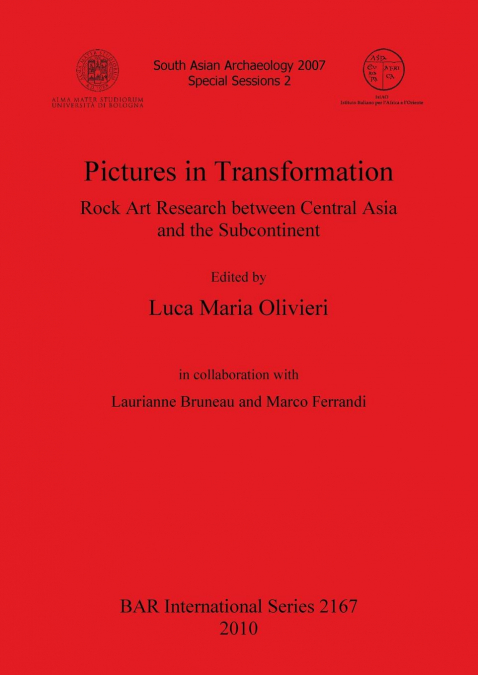
  • Pictures in Transformation
    Luca Maria Olivieri
    ...
    Disponible

    54,79 €

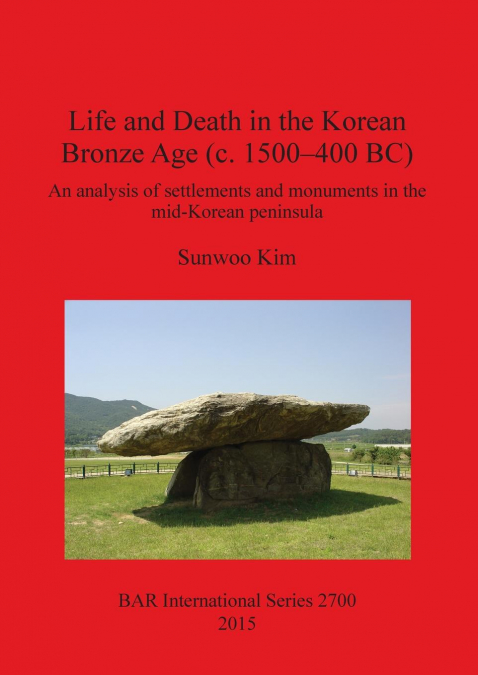
  • Life and Death in the Korean Bronze Age (c. 1500-400 BC)
    Sunwoo Kim
    This research focuses on the Bronze Age in selected areas of Korea; Seoul, Incheon, and Gyeonggi province. Two forms of evidence - settlements and monuments - are taken into account to identify their relationship with landscape and the social changes occurring between ca. 1500 to 400 cal BC. Life and death in the Bronze Age in Korea has not been synthetically investigated befor...
    Disponible

    108,34 €

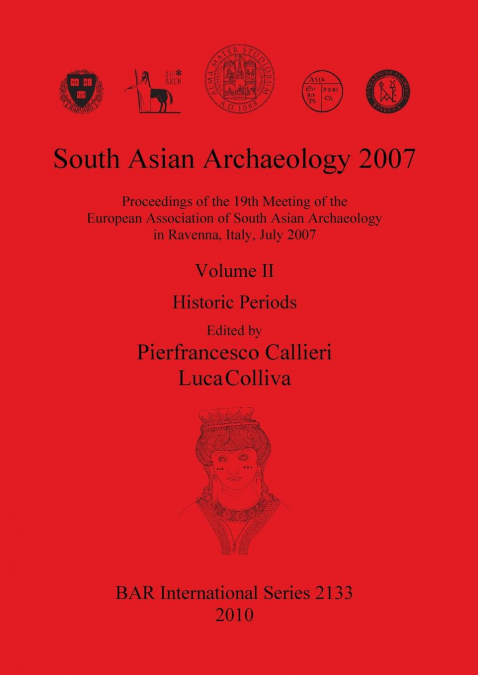
  • South Asian Archaeology 2007
    Proceedings of the 19th Meeting of the European Association of South Asian Archaeology in Ravenna, Italy, July 2007.                     ...
    Disponible

    182,04 €

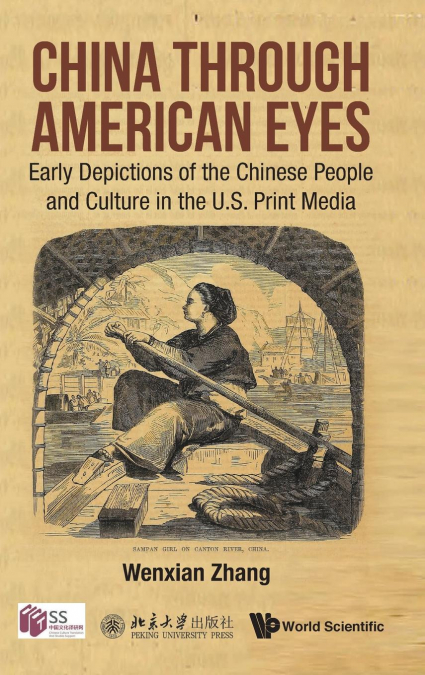
  • CHINA THROUGH AMERICAN EYES
    Wenxian Zhang / ZHANG WENXIAN
    Cultural understanding between the United States and China has been a long and complex process. The period from the mid-nineteenth century to the early twentieth century is not only a critical era in modern Chinese history, but also the peak time of illustrated news reporting in the United States. Besides images from newspapers and journals, this collection also contains pictur...

Otros libros del autor

  • The Ramessides, Egypt’s Warrior Pharaohs
    A.J. Carmichael
    The Ramessides: Egypt’s Warrior Pharaohs transports readers into one of the most dramatic and influential eras of ancient Egypt. Rising from military roots in the Delta, the Nineteenth Dynasty transformed Egypt into an empire of builders, conquerors, and god-kings. From the brief reign of Ramesses I to the commanding presence of Seti I and the legendary exploits of Ramesses II ...
    Disponible

    31,49 €

  • Tutankhamun
    A.J. Carmichael
    A child ascends a broken throne. Temples stand silent, the gods’ names scarred from stone, and Egypt’s borders feel the press of rivals. In Tutankhamun: The Living Image, the boy who began as Tutankhaten and became Tutankhamun carries a nation’s need to believe again.Drawing on inscriptions, art, and modern medical analysis, this book follows the young pharaoh from the aftersho...
    Disponible

    28,56 €

  • Age of the Pharoahs, from Narmer to Cleopatra
    A.J. Carmichael
    For over three thousand years, ancient Egypt stood as one of the most extraordinary civilizations in human history-a land of pyramids and pharaohs, gods and hieroglyphs, empire and endurance. From the rise of Djoser’s Step Pyramid to the splendor of the New Kingdom and the drama of Cleopatra’s fall, Egypt shaped not only its own destiny but the imagination of the world.This boo...
    Disponible

    27,52 €

  • God-Kings of the Nile
    A.J. Carmichael
    Across the deserts and along the banks of the Nile, the pharaohs of Egypt built more than temples and tombs-they built an enduring vision of kingship that linked gods, cosmos, and people into one eternal order. This book takes readers on a sweeping journey through the age of the pharaohs, weaving together history, mythology, archaeology, and cultural memory to reveal how Egypt’...
    Disponible

    24,45 €

  • Myths and Legends of the Ancient Near East
    A.J. Carmichael
    Mesopotamia, 'the land between the rivers,' lies cradled by the Tigris and Euphrates. In the modern world, this area encompasses Iraq, northeastern Syria, southeastern Turkey, and southwestern Iran. To the ancient mind, it was a liminal place, where the forces of life and death were ever in tension. Fertile soil gave birth to the first great urban civilizations, but it was bord...
    Disponible

    29,56 €

  • Lost Tribes of Israel
    A.J. Carmichael
    Why do the Lost Tribes Matter?The Mystery That Simply Refuses to Die'They went into captivity and vanished from the face of the earth-but their memory haunts the corridors of time.'Throughout the annals of sacred scripture, imperial conquest, and cultural folklore, few mysteries have endured with such fierce fascination as that of the Lost Tribes of Israel. The idea that ten of...
    Disponible

    27,55 €