
Inicio > Matemáticas y ciencia > Biologia, ciencias de la vida > Botánica y ciencias de las plantas > Agriculturally Important Microbes for Sustainable Agriculture
Agriculturally Important Microbes for Sustainable Agriculture

Agriculturally Important Microbes for Sustainable Agriculture


210,30 €
IVA incluido
Disponible
Editorial:
Springer Nature B.V.
Año de edición:
2018
Materia
Botánica y ciencias de las plantas
ISBN:
9789811354366
210,30 €
IVA incluido
Disponible

Selecciona una librería:

  • Librería Samer Atenea
  • Librería Aciertas (Toledo)
  • Kálamo Books
  • Librería Perelló (Valencia)
  • Librería Elías (Asturias)
  • Donde los libros
  • Librería Kolima (Madrid)
  • Librería Proteo (Málaga)

This book presents a compilation of case studies from different countries on achieving agricultural sustainability. The book stresses that, in order to meet the needs of our rapidly growing population, it is imperative to increase agricultural productivity. If global food production is to keep pace with an increasing population, while formulating new food production strategies for developing countries, the great challenge for modern societies is to boost agricultural productivity. Today, the application of chemicals to enhance plant growth or induced resistance in plants is limited due to the negative effects of chemical treatment and the difficulty of determining the optimal concentrations to benefit the plant. In the search for alternative means to solve these problems, biological applications have been extensively studied. Naturally occurring plant-microbe-environment interactions are utilized in many ways to enhance plant productivity. As such, a greater understanding of how plants and microbes coexist and benefit one another can yield new strategies to improve plant productivity in the most sustainable way. Developing sustainable agricultural practices requires understanding both the basic and applied aspects of agriculturally important microorganisms, with a focus on transforming agricultural systems from being nutrient-deficient to nutrient-rich. This work is divided into two volumes, the aim being to provide a comprehensive description and to highlight a holistic approach, respectively. Taken together, the two volumes address the fundamentals, applications, research trends and new prospects of agricultural sustainability.  Volume one consists of two sections, with the first addressing the role of microbes in sustainability, and the second exploring beneficial soil microbe interaction in several economically important crops. Section I elucidates various mechanisms and beneficial natural processes that enhance soil fertility and create rhizospheric conditions favourable for high fertility and sustainable soil flora. It examines the mechanism of action and importance of rhizobacteria and mycorrhizal associations in soil. In turn, section II presents selected case studies involving economically important crops. This section explains how agriculturally beneficial microbes have been utilized in sustainable cultivation with high productivity. Sustainable food production without degrading the soil and environmental quality is a major priority throughout the world, making this book a timely addition. It offers a comprehensive collection of information that will benefit students and researchers working in the field of rhizospheric mechanisms, agricultural microbiology, biotechnology, agronomy and sustainable agriculture, as well as policymakers in the area of food security and sustainable agriculture.
Artículos relacionados

  • The Green Architecture
    Ali Mirshafieyan / Ghazal Yeganeh / Maryam Zamani Motlagh
    Protecting green energy as well as non-renewable energy, as well as their sustainable use, many advances in the technology of extracting oil products and other reserves under the ground have caused many improvements. In this regard, proposing the design of buildings in which the consumption of fossil fuels reaches its lowest level is considered one of the important solutions in...
    Disponible

    82,54 €

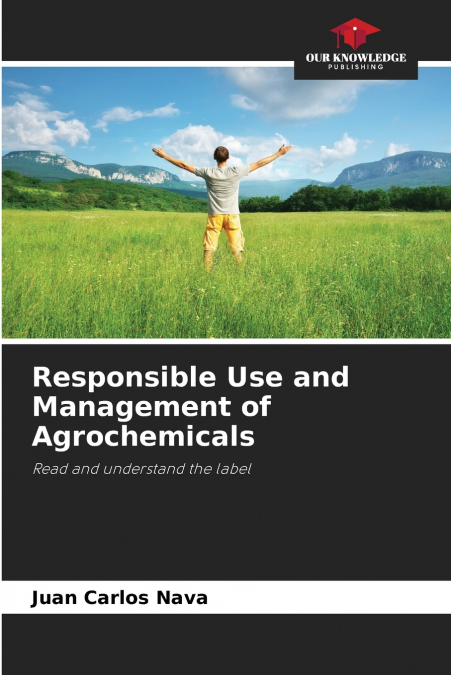
  • Responsible Use and Management of Agrochemicals
    Juan Carlos Nava
    Uso y manejo responsable de agroquímicos is a work product of the author’s experiences (undergraduate and graduate professor, with research and extension projects), aimed at producers, companies, professionals, students, advisors, researchers, among others.Due to its structure and content, it is expected to be a valuable aid to all people directly or indirectly involved in the ...
    Disponible

    49,45 €

  • Hope in the Soil
    Ellen G White
    Before edible classrooms began 'sprouting' in elementary schools, before buzzwords like 'sustainable agriculture', 'organic,' or 'veganic' came into existence, an exceptional woman named Ellen G. White penned numerous letters and articles on the importance of farming, an outdoor life, and manual labor. Though often remembered for other things, Mrs. White was actively engaged in...
    Disponible

    18,38 €

  • The Green Revolution
    Binitha Sophine Emmanuel
    The Green Revolution, a transformative era in the annals of agriculture, emerged as a game-changing force during the mid-20th century, fundamentally reshaping the methodology of food production and steering the trajectory of global food security. Characterized by a sequence of technological breakthroughs, the Green Revolution aimed to substantially augment agricultural producti...
    Disponible

    53,23 €

  • Utilization of Stingless Bees, Tetragonula laeviceps (Smith)
    Dr. J. J. Pastagia / Dr. V. C. Gadhiya
    The present investigations on utilization of stingless bees, T. laeviceps Smith in net house condition carried out with the broad aspects like flowers visited by stingless bees, T. laeviceps Smith, toxicity of insecticides to T. laeviceps Smith workers, floral biology of musk melon, foraging behavior of stingless bees, T. laeviceps Smith in net house condition, effect of pollin...
    Disponible

    84,80 €

  • La révolution verte
    Binitha Sophine Emmanuel
    La révolution verte, une ère transformatrice dans les annales de l’agriculture, est apparue comme une force qui a changé la donne au milieu du 20e siècle, remodelant fondamentalement la méthodologie de la production alimentaire et orientant la trajectoire de la sécurité alimentaire mondiale. Caractérisée par une série de percées technologiques, la révolution verte visait à augm...
    Disponible

    53,29 €