
Inicio > Tecnología, ingeniería, agricultura > Ciencia, ingeniería y tecnología medioambientales > A Comparison of the Heft Subsurface and Delfic Particle Size Distributions and Effects in HPAC
A Comparison of the Heft Subsurface and Delfic Particle Size Distributions and Effects in HPAC

A Comparison of the Heft Subsurface and Delfic Particle Size Distributions and Effects in HPAC

Eric T. Skaar

20,02 €
IVA incluido
Disponible
Editorial:
BiblioScholar
Año de edición:
2012
Materia
Ciencia, ingeniería y tecnología medioambientales
ISBN:
9781288305964
20,02 €
IVA incluido
Disponible

Selecciona una librería:

  • Librería Samer Atenea
  • Librería Aciertas (Toledo)
  • Kálamo Books
  • Librería Perelló (Valencia)
  • Librería Elías (Asturias)
  • Donde los libros
  • Librería Kolima (Madrid)
  • Librería Proteo (Málaga)

The Heft subsurface three component lognormal fallout particle size distribution is compared and contrasted with the single lognormal fallout particle size distribution used by the Defense Land Fallout Interpretive Code (DELFIC). Comparison of the two distributions is accomplished with results from the AFIT smear code and the Hazard Prediction and Assessment Capability (HPAC). The effect of the distributions is explored in HPAC for varying yield weapons, varying surfaces, precipitation conditions, varying wind effects and varying dose rate times. The results from the two distributions are quantitatively compared using the concepts of grounded source normalization constant and the rate at which activity is being deposited on the ground everywhere at time t. The Heft subsurface three component lognormal fallout particle size distribution results in significantly less activity on the ground than does the DELFIC single lognormal particle size distribution. The grounded source normalization constant resulting from the Heft distribution is up to three times smaller than that observed when using the DEFLIC distribution.This work has been selected by scholars as being culturally important, and is part of the knowledge base of civilization as we know it. This work was reproduced from the original artifact, and remains as true to the original work as possible. Therefore, you will see the original copyright references, library stamps (as most of these works have been housed in our most important libraries around the world), and other notations in the work.This work is in the public domain in the United States of America, and possibly other nations. Within the United States, you may freely copy and distribute this work, as no entity (individual or corporate) has a copyright on the body of the work.As a reproduction of a historical artifact, this work may contain missing or blurred pages, poor pictures, errant marks, etc. Scholars believe, and we concur, that this work is important enough to be preserved, reproduced, and made generally available to the public. We appreciate your support of the preservation process, and thank you for being an important part of keeping this knowledge alive and relevant.

Artículos relacionados

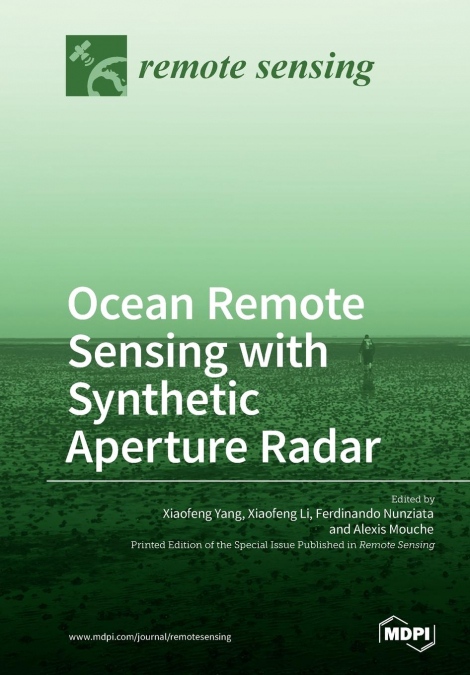
  • Ocean Remote Sensing with Synthetic Aperture Radar
    The ocean covers approximately 71% of the Earth’s surface, 90% of the biosphere and contains 97% of Earth’s water. The Synthetic Aperture Radar (SAR) can image the ocean surface in all weather conditions and day or night. SAR remote sensing on ocean and coastal monitoring has become a research hotspot in geoscience and remote sensing. This book—Progress in SAR Oceanography—prov...
    Disponible

    83,90 €

  • Handbook of Research on Advancements in Environmental Engineering
    Nediljka Gaurina-Medjimurec
    The protection of clean water, air, and land for the habitation of humans and other organisms has become a pressing concern amid the intensification of industrial activities and the rapidly growing world population. The integration of environmental science with engineering principles has been introduced as a means of long-term sustainable development. The Handbook of Research o...
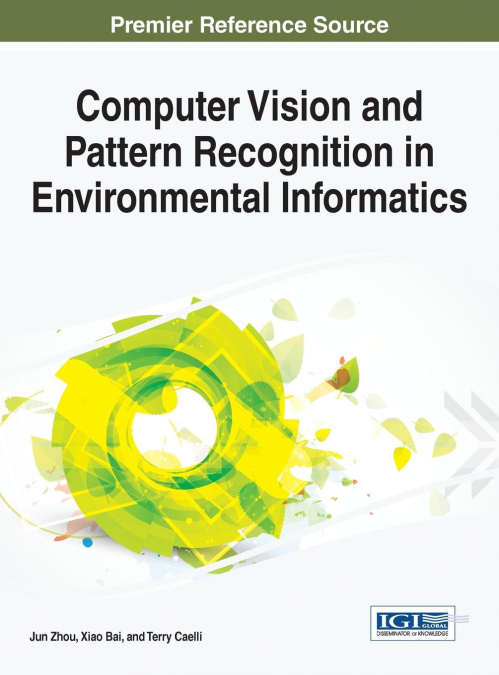
  • Computer Vision and Pattern Recognition in Environmental Informatics
    Computer Vision and Pattern Recognition (CVPR) together play an important role in the processes involved in environmental informatics due to their pervasive, non-destructive, effective, and efficient natures. As a result, CVPR has made significant contributions to the field of environmental informatics by enabling multi-modal data fusion and feature extraction, supporting fast ...
  • Handbook of Research on Environmental Policies for Emergency Management and Public Safety
    Augustine Nduka Eneanya
    In a world of earthquakes, tsunamis, and hurricanes, it is evident that emergency response plans are crucial to solve problems, overcome challenges, and restore and improve communities affected by such negative events. Although the necessity for quick and efficient aid is understood, researchers and professionals continue to strive for the best practices and methodologies to pr...
  • A New Water Future
    Ric Davidge
    Just as cities and nations face the challenge of providing clean water to their citizens and their economies, a new opportunity has finally been constructed that can fix these challenges.  This is a time-sensitive opportunity, and this book is provided to help you move forward. AQUEOUS International, Inc. has developed this over the past 30 years with global research and the co...
    Disponible

    12,86 €

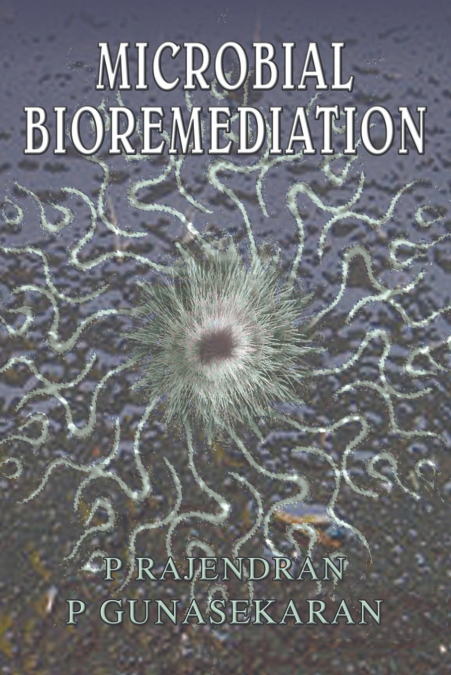
  • Microbial Bioremediation
    P Gunasekaran / P Rajendran
    Discover the groundbreaking world of bioremediation with 'Microbial Bioremediation' authored by Dr. P. Rajendran and Dr. P. Gunasekaran. This comprehensive book unveils the power of living organisms, including plants in phytoremediation and microbes such as bacteria, algae, and fungi in microbial bioremediation, as efficient, eco-friendly, and cost-effective alternatives to con...
    Disponible

    30,82 €