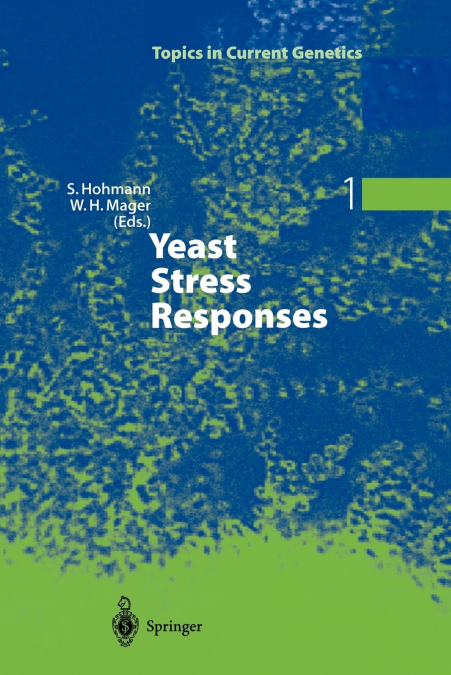

Yeast Stress Responses

Yeast Stress Responses


428,49 €
IVA incluido
Disponible
Editorial:
Springer Nature B.V.
Año de edición:
2010
Materia
Biología celular (citología)
ISBN:
9783642078750
428,49 €
IVA incluido
Disponible

Selecciona una librería:

  • Librería Samer Atenea
  • Librería Aciertas (Toledo)
  • Kálamo Books
  • Librería Perelló (Valencia)
  • Librería Elías (Asturias)
  • Donde los libros
  • Librería Kolima (Madrid)
  • Librería Proteo (Málaga)

Every cell has developed mechanisms to respond to changes in its environment and to adapt its growth and metabolism to unfavorable conditions. The unicellular eukaryote yeast has long proven as a particularly useful model system for the analysis of cellular stress responses, and the completion of the yeast genome sequence has only added to its powerThis volume comprehensively reviews both the basic features of the yeast genral stress response and the specific adapations to different stress types (nutrient depletion, osmotic and heat shock as well as salt and oxidative stress). It includes the latest findings in the field and discusses the implications for the analysis of stress response mechanisms in higher eukaryotes as well.
Artículos relacionados

  • Sex and the Origins of Death
    William R. Clark
    ...
    Disponible

    56,65 €

  • The Way of the Cell
    Franklin M. Harold
    ...
    Disponible

    29,88 €

  • Haematopoietic and Lymphoid Cell Culture
    Margaret J. Dallman / Margaret JDallman
    ...
    Disponible

    81,61 €

  • Mitochondria
    Douglas C Wallace / Richard J Youle
    'A subject collection from Cold Spring Harbor perspectives in biology.' ...
  • Organelle and Molecular Targeting
    Drugs must be delivered to the target tissue or, better yet, the target organelles. A more specific target minimizes toxicity and side effects and maximizes therapeutic effect. This book is a comprehensive review of Organelle Targeting. ...
  • How Life is Different
    Vitaly Shubin
    The book examines basic principles of the structure and organization of living organisms and their differences from objects of inanimate nature. It is shown how a single program-information structure permeates all evolutionary stages of life, including the cell, multicellular organisms and humans. ...