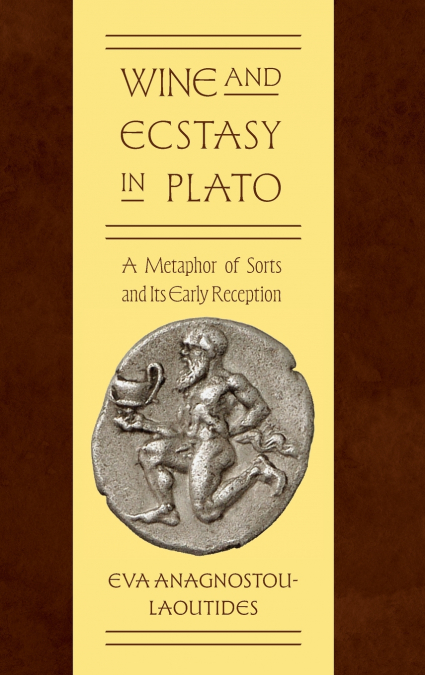

Wine and Ecstasy in Plato

Wine and Ecstasy in Plato

Eva Anagnostou-Laoutides

179,70 €
IVA incluido
Consulta disponibilidad
Editorial:
State University of New York Press
Año de edición:
2025
Materia
Filosofía occidental: antigua, hasta c. 500
ISBN:
9798855804850

Selecciona una librería:

  • Librería Samer Atenea
  • Librería Aciertas (Toledo)
  • Kálamo Books
  • Librería Perelló (Valencia)
  • Librería Elías (Asturias)
  • Donde los libros
  • Librería Kolima (Madrid)
  • Librería Proteo (Málaga)

Examines inebriation as a culturally informed metaphor employed by Plato to defend the mind-altering effects of philosophy and its reception to the second-century CE.Wine and Ecstasy in Plato examines Plato’s use of inebriation as a metaphor for the experience of transcendence and traces its reception to the second century CE. Drawing on the premises of cognitive phenomenology, Eva Anagnostou-Laoutides explores Socratic inebriation as an imperfect yet surprisingly effective sense-mediated reference to the mental processes that produce consciousness. Given the radical dichotomy in Greek culture between getting drunk with virtue and vice, Plato defends the Socratic way of drinking against misinterpretation. Thus, he engages thoroughly with the political, medical, philosophical, religious, and literary undertones of his metaphor. By replacing other forms of ecstasy with sober philosophical insight, Plato seeks to normalize transcendence and accommodate inspiration in the ideal polis. Socratic inebriation fueled numerous debates about the value and method of pursuing new models of consciousness during the Hellenistic and Roman period. By tracing these debates across several thinkers, including Seneca, Horace, Lucian of Samosata, and importantly Philo of Alexandria, Anagnostou-Laoutides reveals an important chapter in the history of human thought where truth and happiness are always situated beyond reason.

Artículos relacionados

  • The Nature of Things
    Lucretius Lucretius
    De rerum natura (On the Nature of Things) is a 1st century BC didactic poem by the Roman poet and philosopher Lucretius with the goal of explaining Epicurean philosophy to a Roman audience. Lucretius presents the principles of atomism; the nature of the mind and soul; explanations of sensation and thought; the development of the world and its phenomena; and explains a variety o...
  • Pompeii
    Fergus Mason
    Pompeii was one of most advanced cities of its time; it had a complex water system, gymnasium, and an amphitheater. Despite it's advancements, there was one thing it wasn't ready for: Mount Vesuvius—the volcano that led to its ultimate doom.  The 79 AD eruption of Mount Vesuvius was one of the worst disasters in all of European history. In a near instant, over 15,000 p...
    Disponible

    10,36 €

  • Middle Platonism and Neoplatonism, Volume 1
    Stephen Gersh
    'It is generally agreed that those types of philosophy that are loosely called ’Platonic’ and ’Neoplatonic’ played a crucial role in the history of European culture during the centuries between antiquity and the Renaissance. However, until now no scholar has attempted to describe the evolution of these forms of thought in a single comprehensive academic study.' So writes Stephe...
  • Middle Platonism and Neoplatonism, Volume 2
    Stephen Gersh
    It is generally agreed that those types of philosophy that are loosely called 'Platonic' and 'Neoplatonic' played a crucial role in the history of European culture during the centuries between antiquity and the Middle Ages. However, until now no scholar has attempted to describe the evolution of these forms of thought in a single comprehensive academic study. Middle Platonism a...
  • Porphyry’s Commentary on Ptolemy’s Harmonics
    Andrew Barker
    ...
    Disponible

    77,17 €

  • The Roots of Platonism
    John Dillon
    ...
    Disponible

    25,29 €

Otros libros del autor

  • In the Garden of the Gods
    Eva Anagnostou-Laoutides
    Examining the evolution of kingship in the Ancient Near East from the time of the Sumerians to the rise of the Seleucids, this book argues that the Sumerian emphasis on the divine favour that the fertility goddess and the Sun god bestowed upon the king should be understood metaphorically from the start and that these metaphors survived in later ...
    Disponible

    82,59 €

  • In the Garden of the Gods
    Eva Anagnostou-Laoutides
    Examining the evolution of kingship in the Ancient Near East from the time of the Sumerians to the rise of the Seleucids, this book argues that the Sumerian emphasis on the divine favour that the fertility goddess and the Sun god bestowed upon the king should be understood metaphorically from the start and that these metaphors survived in later historical periods, through popul...