
Inicio > Artes > Arquitectura > Wind Catchers Remarkable Example of Iranian Green Architecture
Wind Catchers Remarkable Example of Iranian Green Architecture

Wind Catchers Remarkable Example of Iranian Green Architecture

Amin Saeidian

50,79 €
IVA incluido
Disponible
Editorial:
KS OmniScriptum Publishing
Año de edición:
2014
Materia
Arquitectura
ISBN:
9783659640872
50,79 €
IVA incluido
Disponible

Selecciona una librería:

  • Librería Samer Atenea
  • Librería Aciertas (Toledo)
  • Kálamo Books
  • Librería Perelló (Valencia)
  • Librería Elías (Asturias)
  • Donde los libros
  • Librería Kolima (Madrid)
  • Librería Proteo (Málaga)

It’s almost impossible to read or watch the news today without seeing stories related to energy. At this time, questions about energy are taking on an increasingly more important major role in the national discussion. The most common question asked is: In a world where the subject of minimizing the use of energy becomes more critical, how can we as architects take advantage of our environment with no or minimal impact on it? How can we learn from the ancient and traditional architecture and use those methods in our design in order to minimize energy use? One answer is to use a passive systems utilizing natural ventilation to achieve energy reduction. This system can be found in both wealthy and less developed regions. There are many magnificent building styles from all over the world with new shapes, materials, arrangements, decorations, and concepts for heating, cooling and more. But unfortunately vernacular architecture, which is the product of the relationship between nature and culture, has been ignored over the last couple of centuries as modern methodologies took over. This is unfortunate since many of the old ways use natural methods and simple concepts.
Artículos relacionados

  • Selected Papers from Building A Better New Zealand (BBNZ 2014) Conference
    This Special Issue includes expanded academic papers selected from the forthcoming BBNZ 2014 Conference.The 2014 Building a Better New Zealand conference was held at The Rendezvous Hotel, Auckland, from 3 September 2014 to 5 September 2014.Themes:•Achieving Better Buildings•Improving the Performance of Materials•Improving the performance of existing buildings•Sustainability•Pro...
  • An Architect’s Guide to Construction
    Brian Palmquist
    After more than 35 years 'in the trenches' as an architect, specialist consultant and now quality director for a large North American construction company, Brian Palmquist has written An Architect’s Guide to Construction in order to share a balanced wealth of knowledge and experience about the construction phase of building projects.Considering both the consultant and contracto...
    Disponible

    19,68 €

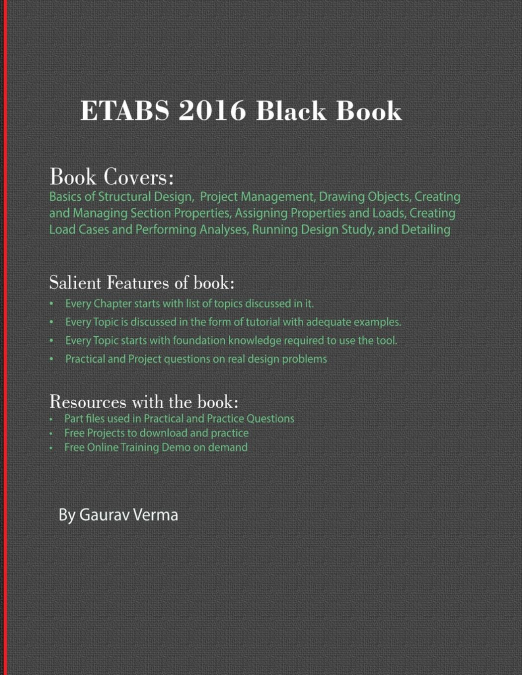
  • ETABS 2016 Black Book
    Gaurav Verma
    The ETABS 2016 Black Book, is written to help beginners learn the basics of ETABS structure modeling and analysis. The book follows a step by step methodology. This book explains the designing of structure, assigning various properties to structure, applying different load conditions, and performing analyses. This book also covers the basics of detailing in ETABS. The book cove...
    Disponible

    66,22 €

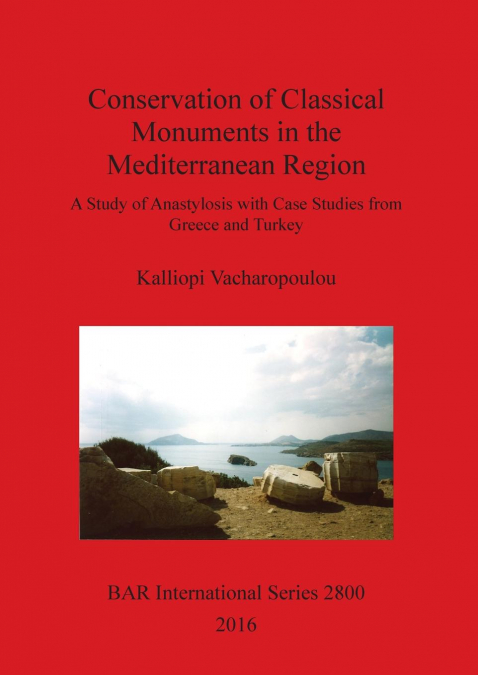
  • Conservation of Classical Monuments in the Mediterranean Region
    Kalliopi Vacharopoulou
    This work studies the conservation of classical monuments in the Mediterranean region. It focuses on a specific method, anastylosis, and its application to classical monuments. The terminology, philosophy, theoretical principles and technical issues of anastylosis are explored within the wider context of cultural heritage management, through case studies from Greece and Turkey,...
    Disponible

    128,17 €

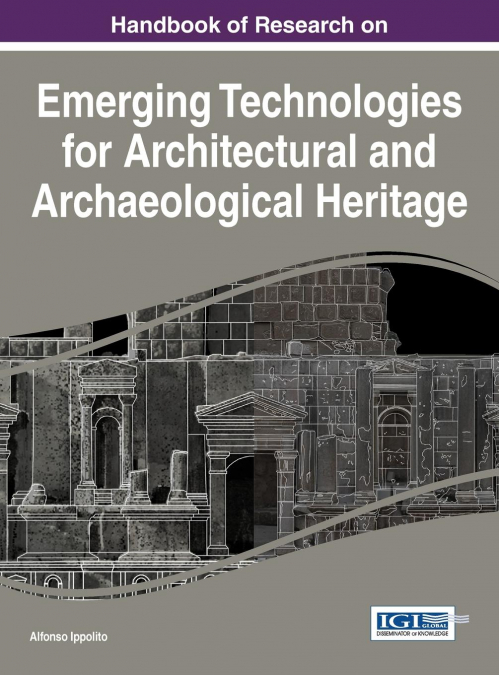
  • Handbook of Research on Emerging Technologies for Architectural and Archaeological Heritage
    Alfonso Ippolito
    Cultural heritage is a vital, multifaceted component of modern society. To better protect and promote the integrity of a culture, certain technologies have become essential tools. The Handbook of Research on Emerging Technologies for Architectural and Archaeological Heritage is an authoritative reference source for the latest scholarly research on the use of technological assis...
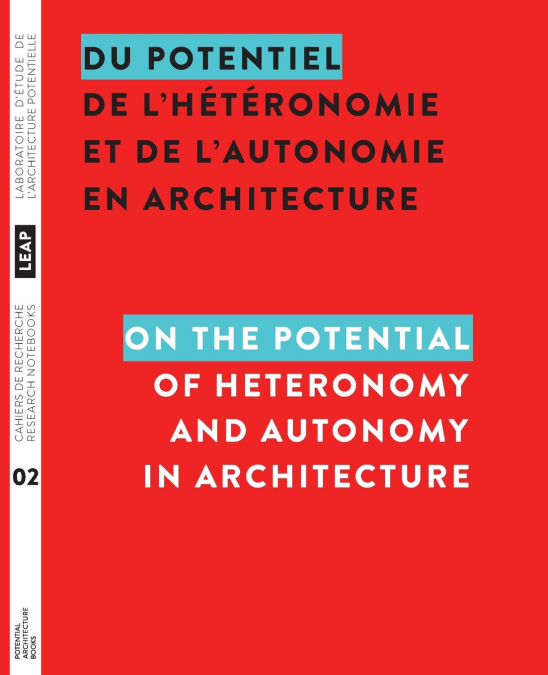
  • Du potentiel de l’hétéronomie et de l’autonomie en architecture / On the Potential of Heteronomy and Autonomy in Architecture
    Cette deuxième édition des Cahiers du Laboratoire d’Étude de l’Architecture Potentielle propose une réflexion sur l’un des problèmes centraux du Mouvement moderne et de la critique postmoderne : la tension entre l’hétéronomie et l’autonomie en architecture.Abordé à l’aide d’un texte peu connu de Stanford Anderson, le thème invitait chacun, chacune à penser l’architecture entre ...
    Disponible

    32,66 €