William Wilbur Miller Barbour

William Wilbur Miller Barbour

Jean-Paul Benowitz

19,76 €
IVA incluido
Disponible
Editorial:
Santos Books
Año de edición:
2026
Materia
Historia de América
ISBN:
9798994893821
19,76 €
IVA incluido
Disponible

Selecciona una librería:

  • Librería Samer Atenea

  • Kálamo Books
  • Librería Elías (Asturias)
  • Librería Kolima (Madrid)
  • Librería Proteo (Málaga)

What began as a question about a face in a photograph became,in time, one of the most important questions a biographer can askabout the past: not merely who was this person, but what did hislife cost him, what did it build, and what does it ask of us? WilliamWilbur Miller Barbour left no autobiography, no collection of privateletters, no public monument with his name on it. He left instead theharder thing: a career of twenty-five years spent in the spaces betweenthe law’s promise and American life’s reality, doing the work the lawcould not do, building the conditions for genuine human communityin cities where the word community was used to describe what racialexclusion had produced and preserved. He died at forty-nine, in LosAngeles, in March 1957. He had been working all week. He was stillworking when his heart gave out. The movement he had been buildingtoward since his graduation from Elizabethtown College in 1932would culminate, in the Civil Rights Act of 1964, the Voting RightsAct of 1965, and the Fair Housing Act of 1968, in legislation he did notlive to see signed. He was a builder of foundations. He never saw thestructure rise.Barbour learned, in ways no classroom could teach, what it meant tolabor against odds for something larger than oneself. He built foundations.He laid groundwork. He worked in the soil of human rightsand human dignity at a moment when the harvest was nowhere insight, when the arc of history showed no visible signs of bending inthe direction anyone who cared about justice might have wished. Hedid not live to see what rose from what he planted.He brought to the work a dual formation few men of his generationcould claim. The Anabaptist and Pietist tradition of the Church of theBrethren had pressed into him, during his years as a student at ElizabethtownCollege, a mandate both institutional and theological. Theprophetic tradition of the African Methodist Episcopal Church hadformed him from childhood in a conviction equally deep and equallydemanding: racial hierarchy was incompatible with the Gospel. Thesetwo traditions arose from entirely different histories and wholly distinctexperiences of American life. In Barbour they converged on asingle claim. The Declaration meant what it said. The Gospel demandedits fulfillment. The gap between democratic promise anddemocratic practice was not a fact to be accommodated but a civicfailure to be opposed, by specific, costly, theologically grounded work,in specific cities, in institutional settings, for as long as it took.He spent twenty-five years opposing it. At the Semiquincentennial, itremains opposed. His story belongs to this moment. 6
Artículos relacionados

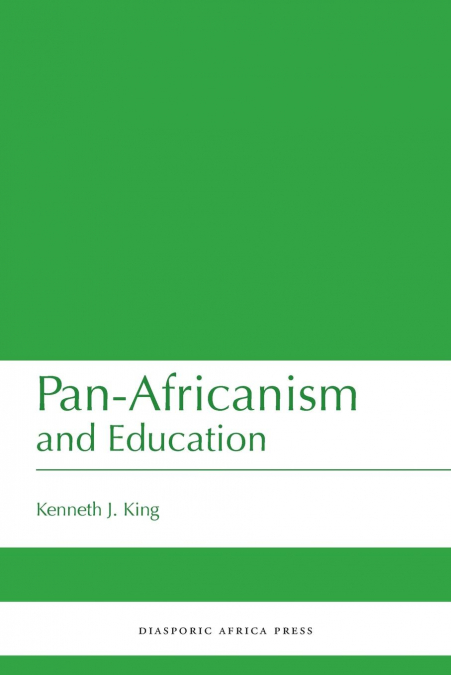
  • Pan-Africanism and Education
    Kenneth J. King / Kenneth JKing
    This is an analysis of the complex links between Black America and Africa in the period of 1880 to 1945. It examines an extended white attempt to pattern politics and education in colonial Africa upon the example of the U.S. South. This export of United States race relations to Africa was resisted by Black intellectuals in the United States and many of the early nationalists in...
    Disponible

    24,60 €

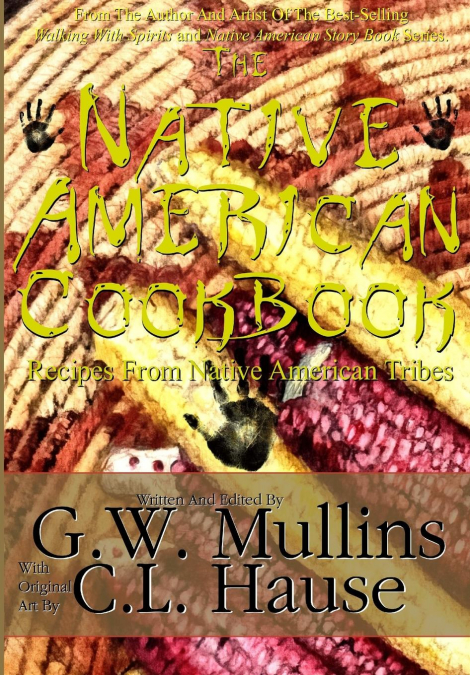
  • The Native American Cookbook Recipes From Native American Tribes
    G.W. Mullins
    Light Of The Moon Publishing along with Author G.W. Mullins and Illustrator / Artist C.L. Hause have joined together to explore Native American Indian Cooking.  More than just a cookbook, this Native American recipe collection offers a look into a forgotten past.  'The Native American Cookbook Recipes From Native American Tribes,' offers a large collection of recipes from and i...
  • A Public Spirit
    George H. Atkinson
    George Henry Atkinson (1819-89) was a son of New England who arrived in the Oregon Territory in 1848, sent by the American Home Missionary Society. Although his commission from the Society specified that his work was to be ecclesiastical and educational, he took an approach to that assignment which went well beyond his mandate. Well-informed and energetic, he made an impact on ...
    Disponible

    10,45 €

  • North Carolina Women of the Confederacy
    Lucy London Anderson
    Long out of print, this volume of recollections, stories, and verse provides a glimpse of women's lives on the home front-and sometimes in the thick of battle-during the War between the States. Nearly fifty years after the American Civil War, Lucy Worth London Anderson (Mrs. John Huske Anderson) of Fayetteville, N.C., compiled one of the first memorial collections honoring the...
    Disponible

    17,20 €

  • Freedom by a Thread
    Freedom by a Thread: The History of Quilombos in Brazil brings together some of the best scholars in the world working on the history of quilombos (maroon societies) in Brazil from a variety of perspectives and approaches. Over 40 percent of the total volume of captive Africans arrived in Brazil during a 400-year period of legal and contraband transatlantic slaving. If slavery ...
    Disponible

    36,71 €

  • Nashville Baseball History
    Bill Traughber
    Nashville is a Big League city despite never having been home to a major league team. From the Civil War era, to star-studded exhibitions, to outstanding Negro Leagues teams, to some of the great minor league franchises of all time, few cities have as rich a baseball tradition as Nashville, Tennessee.Nashville sports historian Bill Traughber, who has been writing about baseball...
    Disponible

    13,15 €