
Inicio > Humanidades > Historia > Historia militar > Segunda Guerra Mundial > Why the Allies Lost the Battle of Crete
Why the Allies Lost the Battle of Crete

Why the Allies Lost the Battle of Crete

Kelsey Aaron Smith

26,52 €
IVA incluido
Disponible
Editorial:
W. Frederick Zimmerman
Año de edición:
2010
Materia
Segunda Guerra Mundial
ISBN:
9781608880331
26,52 €
IVA incluido
Disponible

Selecciona una librería:

  • Librería Samer Atenea
  • Librería Aciertas (Toledo)
  • Kálamo Books
  • Librería Perelló (Valencia)
  • Librería Elías (Asturias)
  • Donde los libros
  • Librería Kolima (Madrid)
  • Librería Proteo (Málaga)

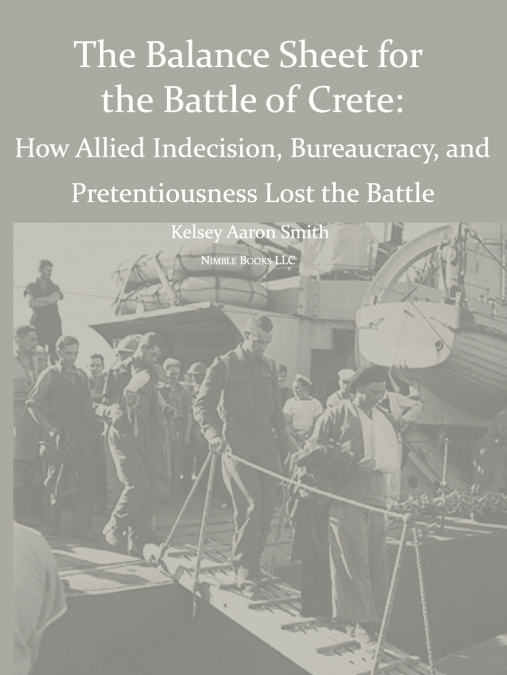
The Allied strategy for defending Crete was plagued by a series of compromises at the national and theatre level. The disorder caused by the fractured and often changing strategy made it nearly impossible for subordinate commanders to establish priorities of effort and establish a synchronized operational concept. Consequently, the tactical commander, Freyberg, was unable to organize, equip and resource his defense properly.Alied strategy was unsuccessful for two reasons. First, the development of Allied strategy resembled that of a pinball game rather than a deliberative, objectives-based process. Rather than forcing the Germans into a predictable move, counter-move contest, the indecisive Allied strategy caused them to out-maneuver themselves resulting in available Allied combat power going unemployed. Second, an overall lack of unity of command plagued the implementation of strategies. Polliticians, the General Staff and subordinate commanders who disagreed with the strategy did their best to derail or not support it. Not only were the Allies strategically out-maneuvered due to these factors, but the consequences of these strategic errors were visited on operational and tactical units in dramatic fashion. The operational ommanders tasked to provide forces, equipment, resources and support to the effort considered Greece and eventually Crete economy of force operations and released resources without reducing their own capabilities.The Allies failed to clearly define, articulate, and implement the strategic objectives of their entry into Greece. As a result, subordinate commanders were unable to create operational level unity of command and to synchronize their efforts to achieve the Allied objectives. Consequently, CreForce and Freyberg were unable to obtain, organize and synchronize the elements of combat power necessary to defend Crete and lost the battle.

Artículos relacionados

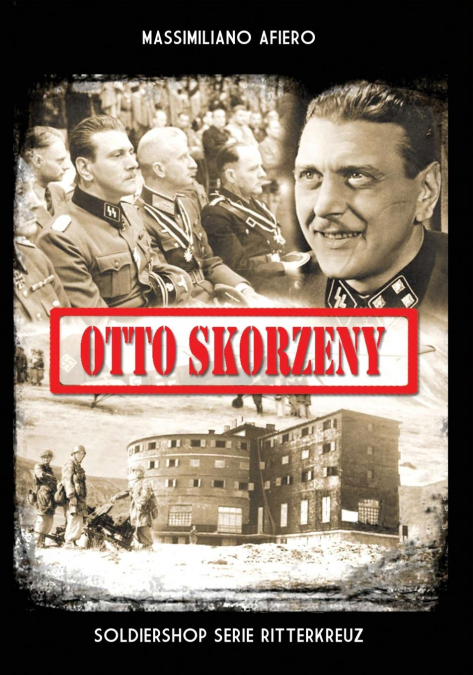
  • Otto Skorzeny
    Massimiliano Afiero
    Quella di Otto Skorzeny è sicuramente una delle figure più controverse ed interessanti della Seconda Guerra Mondiale, alla quale molti storici hanno dedicato articoli e libri, per esaltare o denigrare le sue azioni che nel bene o nel male furono comunque straordinarie: la liberazione del Duce sul Gran Sasso, l'operazione 'Panzerfaust' nell'ottobre del 1944, l'operaz...
    Disponible

    28,71 €

  • A Terrible Revenge
    Alfred-Maurice de Zayas
    ...
    Disponible

    24,93 €

  • Death in the Baltic
    Cathryn J Prince
    January 1945: the outcome of World War II has been determined. The Third Reich is in free fall as the Russians close in from the east. Berlin plans an eleventh-hour exodus for the German civilians trapped in the Red Army’s way. More than 10,000 women, children, sick, and elderly pack aboard the Wilhelm Gustloff, a former cruise ship. Soon after the ship leaves port, three Sovie...
    Disponible

    16,52 €

  • The Greatest Test of Courage
    Ronda Hassig
    Edward Mack had everything: a wife, a newborn son, and his dream job. But as a West Point graduate stationed in the Philippines, his life changed forever on December 7, 1941. Not long after, he would survive the Bataan Death March, Camps O’Donnell and Cabanatuan. At Cabanatuan, he headed an underground operation to get food and medicine for his fellow prisoners. His final desti...
    Disponible

    11,87 €

  • Renatus' Kayak
    Rozanne Enerson Junker
    Woody Belsheim had one question when he gave his niece, Rozanne Enerson Junker, a miniature sealskin kayak made for him in 1944 by Inuit hunter Renatus Tuglavina: Would it be possible for you to find out what happened to Renatus...and to his daughter, Harriot?Woody had seldom spoken about his World War II service when he and six other G.I.s manned a secret American weather stat...
    Disponible

    14,59 €

  • The Axis Forces 4
    Massimiliano Afiero
    Book magazine dedicated to the German, Italian and Japanese armed forces and their allies during WW2.In this issue. The battle of Narva 1944, The japan in war, The Italian Alpine Division Monterosa of RSI. Eastern Volunteer insignia. Heinrich Sonne. Knight Cross Holder. ...
    Disponible

    12,71 €