
Why Good People Do Bad Environmental Things

Why Good People Do Bad Environmental Things

Elizabeth R DeSombre

47,29 €
IVA incluido
Disponible
Editorial:
Oxford University Press
Año de edición:
2020
Materia
Conservación del medioambiente
ISBN:
9780197523803
47,29 €
IVA incluido
Disponible

Selecciona una librería:

  • Librería Samer Atenea
  • Librería Aciertas (Toledo)
  • Kálamo Books
  • Librería Perelló (Valencia)
  • Librería Elías (Asturias)
  • Donde los libros
  • Librería Kolima (Madrid)
  • Librería Proteo (Málaga)

No one sets out to intentionally cause environmental problems. All things being equal, we are happy to protect environmental resources; in fact, we tend to prefer our air cleaner and our species protected. But despite not wanting to create environmental problems, we all do so regularly in the course of living our everyday lives. Why do we behave in ways that cause environmental harm?It is often easy and inexpensive to behave in ways with bad environmental consequences, but more difficult and costly to take environmentally friendly actions. The incentives we face, some created by the nature of environmental resources, some by social and political structures, often do not make environmentally beneficial behavior the most likely choice. Furthermore, our behavior is conditioned by habits and social norms that fail to take environmental protection into consideration.In this book, Elizabeth R. DeSombre integrates research from political science, sociology, psychology, and economics to understand why bad environmental behavior makes perfect sense. As she notes, there is little evidence that having more information about environmental problems or the way an individual's actions contribute to them changes behavior in meaningful ways, and lack of information is rarely the underlying cause that connects behavior to harm. In some cases such knowledge may even backfire, as people come to see themselves as powerless to address huge global problems and respond by pushing these issues out of their minds. The fact that causing environmental problems is never anyone's primary goal means that people are happy to stop causing them if the alternative behavior still accomplishes their underlying goals. If we can figure out why those problems are caused, when no one intends to cause them, we can develop strategies that work to shift behavior in a positive direction. Over the course of this book, DeSombre considers the role of structure, incentives, information, habit, and norms on behavior in order to formulate lessons about how these factors lead to environmentally problematic behavior, and what understanding their effects can tell us about ways to change behavior. To prevent or address environmental problems, we have to understand why even good people do bad environmental things.

Artículos relacionados

  • Inorganic Pollutants in Wastewater
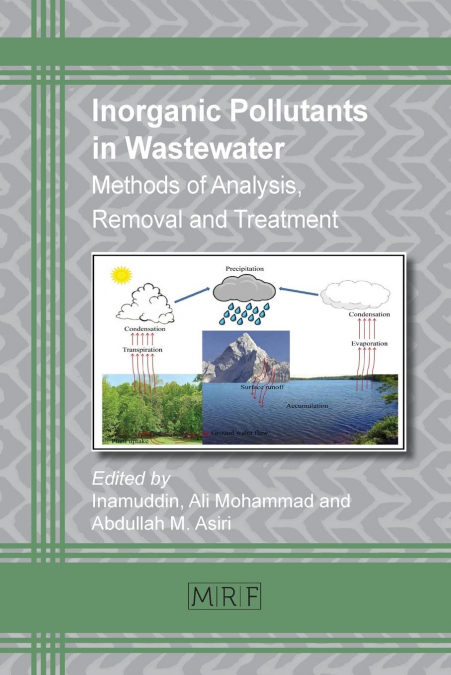
    This book, 'Inorganic Pollutants in Wastewater: Methods of Analysis, Removal and Treatment' extensively investigates the most recent improvements in the area of inorganic pollutants analysis, removal and treatment of wastewater by utilizing different materials such as natural polymers, husks, graphene and carbon nanotube composites, fruit cortex etc. It covers photocata...
    Disponible

    144,10 €

  • 3D Recording and Modelling in Archaeology and Cultural Heritage
    The book derives from the experiences of the authors as lecturers and tutors at different international summer schools on reality-based surveying and 3D modelling in the field of archaeology and cultural heritage. The book is organized in three main sections. The first part aims to introduce and discuss the contribution of geomatic techniques in archaeology and more generally i...
    Disponible

    88,00 €

  • SUN POWER
    NEVILLE WILLIAMS
    ...
    Disponible

    24,27 €

  • Bio-Invaders
    Sarah Johnson
    We are pleased to announce a new series ofenvironmental history readers, suitable for students.Comprising essays selected from our journals,Environment and History and Environmental Values,each inexpensive paperback volume will address animportant theme in environmental history, combiningunderlying theory and specific case-studies. The firstvolume, Bio-invaders, investigates th...
    Disponible

    39,21 €

  • A Rugged Nation
    Marco Armiero
    Landscape, politics and history: the Italian mountains as a crucible of national and natural identity.This book is part of a wider current in environmental history, that explores the links between nature and nation. It uncovers how Italian identity and mountains have constituted one another. It argues that state regimes since unification in 1861 have made mountains into nationa...
  • Indigenous Knowledge
    Sarah Johnson
    The third volume in the reader series, ’Themes in Environmental History’.Comprising essays selected from our journals, Environment and History and Environmental Values, these inexpensive paperbacks address important aspects of environmental history, by means of theoretical essays and case studies. Indigenous Knowledge investigates how indigenous peoples from various cultures in...
    Disponible

    38,83 €