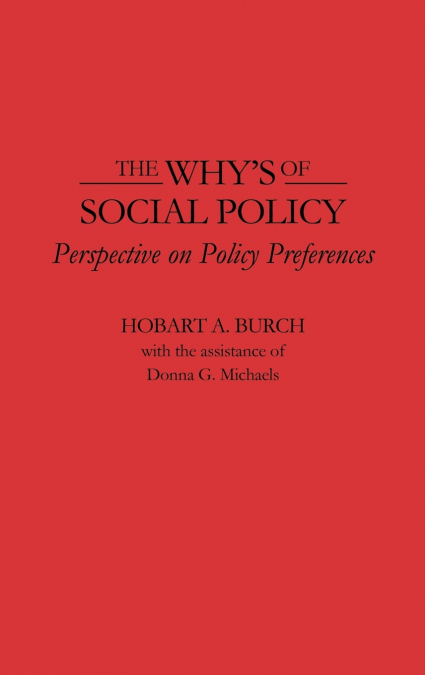
Hobart A. Burch / Hobart ABurch
 Librería Samer Atenea
 Kálamo Books
 Librería Elías (Asturias)
 Librería Kolima (Madrid)
 Librería Proteo (Málaga)
The purpose of this book is to help you make ethical decisions about what should be done in a given instance, whether individual or related to a broad policy. It does not do this by telling you but rather by giving you tools to decide for yourself.The book offers not so much an ethical map as a a gyroscope: offering awareness, perspective, and ability to work out your judgments on two levels, 1) appropriate ethical frameworks, and 2) real life applications which may coincide with, differ from, or go beyond the standard rules, practices, and policies where you are. It even includes a chapter on 'gray area ethics' situations: even if you are sure of what is 'right,' it is not actually possible to be purely ethical, because there are 'negative costs' to every available choice. You find yourself having to make the best choice rather than the ideally right choice.The book is in two parts. The first half explores alternative established frameworks for guiding social ethics and their roots. Within each, pros, cons, and variations are discussed. All are good. Some may be better than others. That is for you to decide. You may well develop your own hybrid framework which is better than any classic one. Or you may develop your own hierarchy , in which you apply this framework to the extent that it doesn’t conflict with or subvert that 'higher' one. Built on this foundation the second half discusses several, applied issues or policies. Each offers different, often conflicting, ethical vantage points. The purpose is twofold. One is to address several important social and economic issues. The other is to develop skills for you to apply to dilemmas we face when we apply abstract social ethics to 'real life'.This book is good to read and think by yourself. It may be even better if you can find others - a friend, a group, a seminar - with whom to explore 'What’s Right?'