
Inicio > Derecho > > Derecho y procedimiento penal > What Went Wrong With Money Laundering Law?
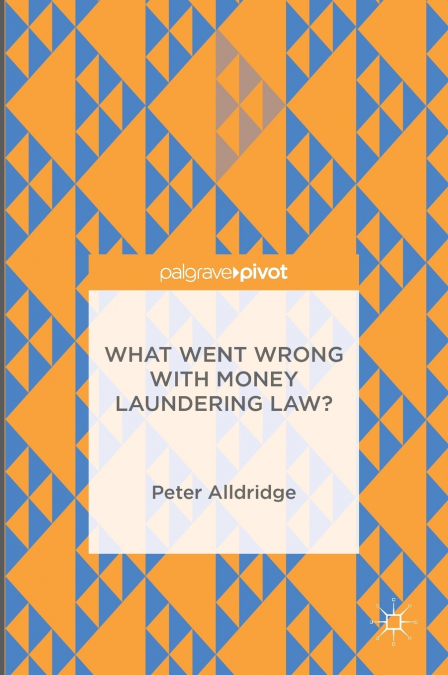
What Went Wrong With Money Laundering Law?

What Went Wrong With Money Laundering Law?

Peter Alldridge

83,94 €
IVA incluido
Consulta disponibilidad
Editorial:
Springer Nature B.V.
Año de edición:
2015
Materia
Derecho y procedimiento penal
ISBN:
9781137525352

Selecciona una librería:

  • Librería Samer Atenea
  • Librería Aciertas (Toledo)
  • Kálamo Books
  • Librería Perelló (Valencia)
  • Librería Elías (Asturias)
  • Donde los libros
  • Librería Kolima (Madrid)
  • Librería Proteo (Málaga)

This book surveys the development of laws surrounding the crime of money laundering and the associated changes in the anti-money laundering (AML) industry. The policy of attempting to deal with crime by attacking its financial products started in the arena of drugs, but quickly moved to organised crime, terrorism, corruption and tax. Now the focus has shifted once again to organised crime and to immigration. In the wake of the failure of the ’war on drugs’ a huge amount of money is now being spent on a global surveillance and reporting system, and we do not know whether the system works or not.What Went Wrong With Money Laundering Law? documents the events which, taken independently, could each be seen as rational responses to specific problems and as incremental adjustments to the focus of the law. Taken together, however, it is demonstrated that they have led to significant changes in the law and to the current situation. Underlying the entire AML industry is the crime of money laundering, which, having been devised more to provide a trigger for the reporting machinery than to describe and condemn a particular category of harmful behaviour, is now being used in a far wider range of cases than is appropriate. This book will be of great interest to scholars and practitioners of criminal and financial law, socio-legal studies and criminology.

Artículos relacionados

  • Data Mining Trends and Applications in Criminal Science and Investigations
    The field of data mining is receiving significant attention in today’s information-rich society, where data is available from different sources and formats, in large volumes, and no longer constitutes a bottleneck for knowledge acquisition. This rich information has paved the way for novel areas of research, particularly in the crime data analysis realm. Data Mining Trends and ...
  • Compulsion to Kill
    Stephen C. Challis
    Forward by Robert M. Ekes, M.AWhen we hear of an atrocity such as a mass murder in a mall, or a theater, or of someone’s murderous rampage against children in a school it affects us all. We recoil in shock, disbelief, horror, and with many questions. What exactly happened? How did it happen? How was it allowed to happen? And most importantly what can be done to stop it fro...
    Disponible

    14,51 €

  • Courtroom
    Quentin Reynolds
    ...
    Disponible

    26,85 €

  • The responsibility of UN staff in the context of PKOs
    Mireille Esther Batjom
    The accountability of United Nations personnel in peacekeeping operations is a topical issue in view of the many human rights violations and other reprehensible acts perpetrated by peacekeeping personnel against the civilian population, including acts of sexual exploitation and abuse, organised prostitution, murder, disappearances of persons, arms trafficking, and so on. Severa...
    Disponible

    114,89 €

  • A Practical Guide to Non-Molestation Orders and Occupation Orders in Family Proceedings
    Stephanie Coker
    Molestation can have detrimental impacts on an individual’s health, safety, and wellbeing. In such instances, parties may consider it necessary to seek the court’s intervention by way of a non-molestation order and occupation order to keep them and any relevant children safe. This book provides a practical guide to non-molestation orders and occupation orders in family law proc...
    Disponible

    77,49 €

  • Cooperação Jurídica Internacional em Matéria Penal
    Iris Saraiva Russowsky
    O século XX foi marcado pela facilitação de circulação de bens, capitais e pessoas entre países. A integração regional desenvolvida a partir dos blocos de integração regional como União Europeia e Mercosul acabaram por desenvolver economicamente os países que deles fazem parte, havendo ainda, na União Europeia um avanço grande no bloco com a instauração da moeda única. Toda ess...
    Disponible

    10,73 €