What Is a Fair International Society?

What Is a Fair International Society?

Emmanuelle Jouannet / Emmanuelle Tourme-Jouannet

75,87 €
IVA incluido
Disponible
Editorial:
Bloomsbury Publishing plc
Año de edición:
2013
Materia
Derechos humanos
ISBN:
9781849464307
75,87 €
IVA incluido
Disponible

Selecciona una librería:

  • Librería Samer Atenea
  • Librería Aciertas (Toledo)
  • Kálamo Books
  • Librería Perelló (Valencia)
  • Librería Elías (Asturias)
  • Donde los libros
  • Librería Kolima (Madrid)
  • Librería Proteo (Málaga)

Today’s world is post-colonial and post-Cold War. These twin characteristics explain why international society is also riddled with the two major forms of injustice which can be identified as afflicting national societies. First, the economic and social disparities between States caused outcry in the 1950s when the first steps were taken towards decolonization. These inequalities, to which a number of emerging States contributed, are still glaring and still pose the problem of the gap between formal equality and true equality. Second, international society is increasingly confronted with culture- and identity-related claims, stretching the dividing line between equality and difference. The less-favored States (those that feel stigmatized), as well as native peoples, ethnic groups, minorities, and women, now aspire to both legal recognition of their equal dignity and the protection of their identities and cultures. Some even seek reparation for injustices arising from the past violation of their identities and the confiscation of their property or land. In answer to these two forms of injustice claims, the subjects of international society have come up with two types of remedy encapsulated in legal rules: the law of development and the law of recognition. These two sets of rights are neither wholly autonomous and individualized branches of law, nor formalized sets of rules. They are imperfect and have their dark side, yet they can be seen as the first milestones towards what might become a fairer international society; one that is both equitable (as an answer to socio-economic injustice) and decent (as an answer to cultural injustice). This book explores this evolution in international society, setting it in historical perspective and examining its presuppositions and implications. The book shows how international law is shifting towards the recognition of socio-economic justice as its foundation, and it explains international law’s trajectory towards ’fairness.’ (Series: French Studies in International Law - Vol. 5)


Artículos relacionados

  • Tishio la Ukombozi
    Amrit Wilson / Ahmada Shafi Adam
    Tishio la Ukombozi examines the role of the Umma Party of Zanzibar and its leader in the turbulent years of the Zanzibar revolution of the 1960s that was perceived in those Cold War years as a threat to the interests of the US and Europe. Based on declassified US and British documents, in-depth interviews and information released by WikiLeaks, Amrit Wilson offers an insightful ...
    Disponible

    16,00 €

  • Robben Island and Prisoner Resistance to Apartheid
    Fran Lisa Buntman
    ...
  • Unitive Justice
    Sylvia Clute
    Unitive Justice introduces a revolutionary concept: Justice as Love, or Unitive Justice, a way to achieve justice without inflicting revenge or seeking retribution.Written by an experienced civil trial attorney, Sylvia Clute, Unitive Justice offers a much-needed alternative to the punitive model of justice, which comes with a heavy cost to individuals and communities, by settin...
    Disponible

    15,56 €

  • Personal Security Detail Operations Book 1
    Mike Harland
    Personal security detail operations is a manual on how to conduct successful security operation in a very hostile (non- permissive environment). In the manual I include aspects such as weapons training, driving techniques and patrolling and other aspects of Personal security detail operations. This can also be used for Body guarding operation which would not need the same level...
    Disponible

    26,62 €

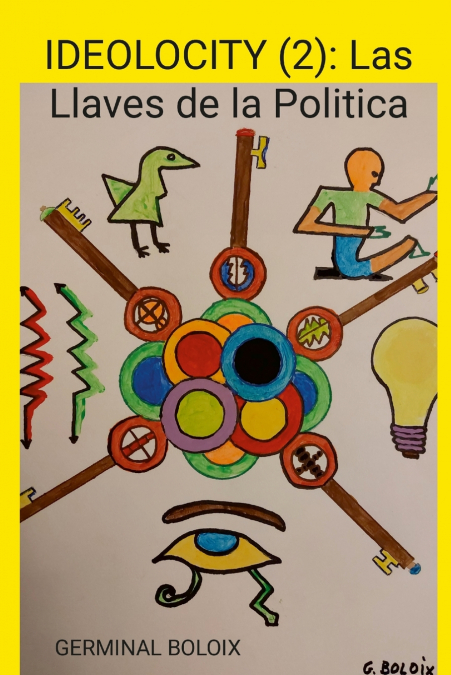
  • IDEOLOCITY (2)
    Germinal Boloix
    IDEOLOCITY (2) Las Llaves de la Politica, se concentra en las llaves que permiten tomar mejores decisiones políticas, comenzando por la comprensión de las emociones humanas, el apoyo ético, el apoyo filosófico, y el uso de principios para apoyar a los grandes pensadores que participan en política. Además de discutir sobre la política, los políticos, los sistemas sociopolíticos,...
    Disponible

    16,61 €

  • Perspectivas Emergentes en Justicia Juvenil
    Milton Daniel Calle Tapia
    Históricamente el manejo de adolescentes infractores ha sido un desafío. Por esta razón este artículo académico pretende exponer como la Justicia Juvenil Restaurativa se ha convertido en una alternativa valiosa para abordar esta problemática. Para lograrlo, se llevó a cabo un análisis de conceptos y prácticas internacionales relacionadas con este enfoque. Se destaca la importan...
    Disponible

    41,10 €