
Inicio > Humanidades > Historia > Historia regional y nacional > Historia de América > Wall Street’s Financing of World War I; Liberty Loans and Financial Demonization.
Wall Street’s Financing of World War I; Liberty Loans and Financial Demonization.

Wall Street’s Financing of World War I; Liberty Loans and Financial Demonization.

Kerry Segrave

20,99 €
IVA incluido
Disponible
Editorial:
Historical Press
Año de edición:
2023
Materia
Historia de América
ISBN:
9781777037086
20,99 €
IVA incluido
Disponible

Selecciona una librería:

  • Librería Samer Atenea
  • Librería Aciertas (Toledo)
  • Kálamo Books
  • Librería Perelló (Valencia)
  • Librería Elías (Asturias)
  • Donde los libros
  • Librería Kolima (Madrid)
  • Librería Proteo (Málaga)

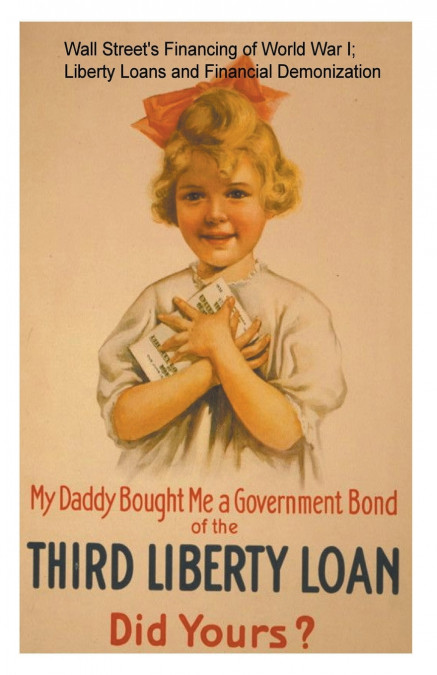
World War I was a gold mine for the capitalist class. The only problem was that they did not want to pay the entire war cost themselves. The banking plutocrats created the Liberty Loan programs to pass much of that cost along to the underclasses – five in total from 1917 to 1919. An intense campaign was put in motion to sell the bonds, perhaps the most significant public relations campaign to that time. Those who refused to buy any bonds or less than their "fair share" were demonized by the capitalist class as "financial slackers." Such individuals were attacked in the media by all the opinion makers of the day. No excuse for not buying was acceptable. It was a program crafted exclusively by the banking plutocracy, the United States Treasury Department bureaucrats, and administered by the newly created Federal Reserve banking system. The bond program was unnecessary since the ruling class could easily have paid the total cost, with almost enough money in liquid bank deposits alone. In all the discussions about how to raise money for the war, there was never any mention of some wealth tax; it was there the majority of money of the capitalist class was to be found, not from "income" as usually defined. Resistors to buying the bonds were often subject to summary dismissal from their jobs, tarred and feathered, and ridden out of town on a rail. Those who declined to purchase bonds were ruthlessly attacked by naming, shaming, force, and coercion. No one had a good word to say about those who declined to purchase bonds; dissent was not allowed.

Artículos relacionados

  • Pan-Africanism and Education
    Kenneth J. King / Kenneth JKing
    This is an analysis of the complex links between Black America and Africa in the period of 1880 to 1945. It examines an extended white attempt to pattern politics and education in colonial Africa upon the example of the U.S. South. This export of United States race relations to Africa was resisted by Black intellectuals in the United States and many of the early nationalists in...
    Disponible

    24,60 €

  • The Native American Cookbook Recipes From Native American Tribes
    G.W. Mullins
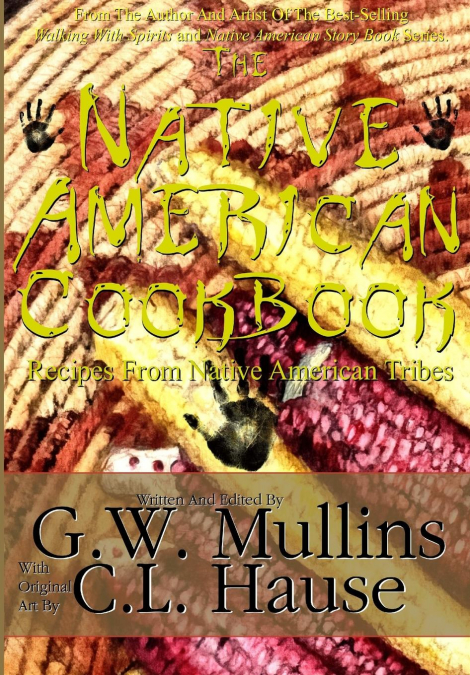
    Light Of The Moon Publishing along with Author G.W. Mullins and Illustrator / Artist C.L. Hause have joined together to explore Native American Indian Cooking.  More than just a cookbook, this Native American recipe collection offers a look into a forgotten past.  'The Native American Cookbook Recipes From Native American Tribes,' offers a large collection of recipes from and i...
    Disponible

    24,56 €

  • A Public Spirit
    George H. Atkinson
    George Henry Atkinson (1819-89) was a son of New England who arrived in the Oregon Territory in 1848, sent by the American Home Missionary Society. Although his commission from the Society specified that his work was to be ecclesiastical and educational, he took an approach to that assignment which went well beyond his mandate. Well-informed and energetic, he made an impact on ...
    Disponible

    10,45 €

  • North Carolina Women of the Confederacy
    Lucy London Anderson
    Long out of print, this volume of recollections, stories, and verse provides a glimpse of women's lives on the home front-and sometimes in the thick of battle-during the War between the States. Nearly fifty years after the American Civil War, Lucy Worth London Anderson (Mrs. John Huske Anderson) of Fayetteville, N.C., compiled one of the first memorial collections honoring the...
    Disponible

    17,20 €

  • Freedom by a Thread
    Freedom by a Thread: The History of Quilombos in Brazil brings together some of the best scholars in the world working on the history of quilombos (maroon societies) in Brazil from a variety of perspectives and approaches. Over 40 percent of the total volume of captive Africans arrived in Brazil during a 400-year period of legal and contraband transatlantic slaving. If slavery ...
    Disponible

    36,71 €

  • Nashville Baseball History
    Bill Traughber
    Nashville is a Big League city despite never having been home to a major league team. From the Civil War era, to star-studded exhibitions, to outstanding Negro Leagues teams, to some of the great minor league franchises of all time, few cities have as rich a baseball tradition as Nashville, Tennessee.Nashville sports historian Bill Traughber, who has been writing about baseball...
    Disponible

    13,15 €

Otros libros del autor

  • Tarring and Feathering in America
    Kerry Segrave
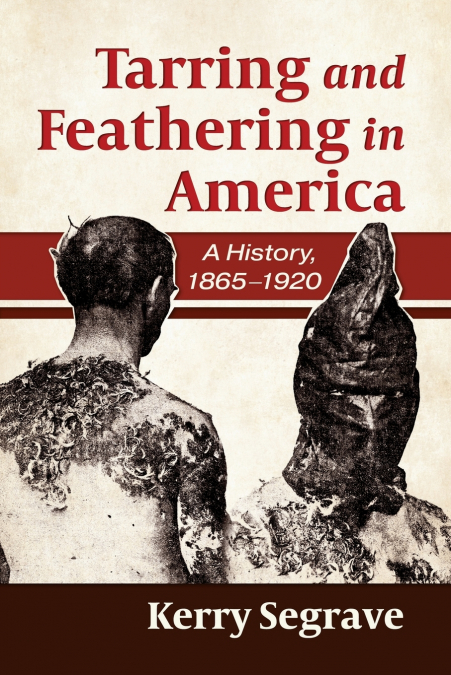
    Tarring and feathering as a punishment is present throughout American history, perhaps most notably as a form of political reprimand during the late eighteenth century. Its original use was as a non-lethal method of torture and humiliation, designed to publicly shame the targeted individual and drive them from the area. Following the Civil War, tarring and feathering became...
    Disponible

    71,94 €

  • Masking America, 1918-1919
    Kerry Segrave
    This book recalls masking efforts in response to the Spanish flu epidemic. Masking the population as an ineffective response to disease by public health officials and political bureaucrats at various levels of jurisdiction reached its zenith in 2020. However, it began a century earlier during the Spanish flu epidemic of 1918-1919. In both cases, masking was not the first re...
    Disponible

    109,95 €

  • Dying for Chocolate
    Kerry Segrave
    On a summer day in 1898, a family in Dover, Delaware, shared a box of chocolates they received in the mail from an anonymous sender. Within days, two of the seven family members were dead; the other five became ill but recovered. The search for the perpetrator soon moved from Delaware to California, where a suspect was quickly identified: Cordelia Botkin, lover of the husban...
    Disponible

    28,45 €

  • The National Security League, 1914-1922
    Kerry Segrave
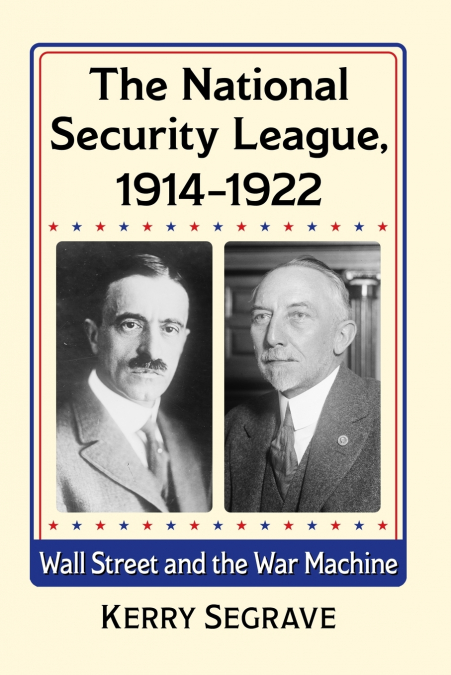
    The early 20th century saw the founding of the National Security League, a nationalistic nonprofit organization committed to an expanded military, conscripted service and meritocracy. This book details its history, from its formation in December 1914 through 1922, at which point it was a spent force in decline. Founded by wealthy corporate lawyers based in New York City, it ...
    Disponible

    79,27 €

  • Women and Bicycles in America, 1868-1900
    Kerry Segrave
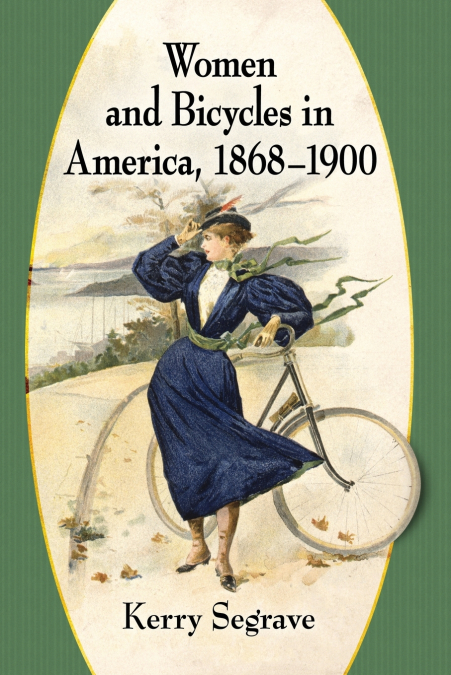
     In the last third of the 1800s, America was struck by a bicycle craze. This trend massively impacted the lives of women, allowing them greater mobility and changing perceptions of women as weak or in need of chaperons. This book traces the history and development of the American bicycle, observing its critical role in the fight for gender equality. The bicycle radically cha...
    Disponible

    79,27 €

  • The Electric Car in America, 1890-1922
    Kerry Segrave
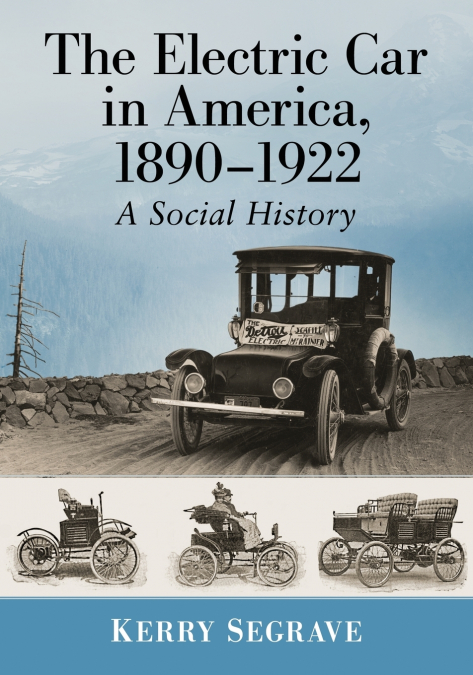
    The electric vehicle seemed poised in 1900 to be a leader in automotive production. Clean, odorless, noiseless and mechanically simple, electrics rarely broke down and were easy to operate. An electric car could be started instantly from the driver’s seat; no other machine could claim that advantage. But then it all went wrong. As this history details, the hope and confide...
    Disponible

    73,28 €