Walker’s Appeal in Four Articles

Walker’s Appeal in Four Articles

Walker's Appeal in Four Articles

David Walker / Henry Garnet Garnet

19,07 €
IVA incluido
Disponible
Editorial:
Cosimo
Año de edición:
2005
Materia
Historia de América
ISBN:
9781596056213
19,07 €
IVA incluido
Disponible

Selecciona una librería:

  • Librería Samer Atenea
  • Librería Aciertas (Toledo)
  • Kálamo Books
  • Librería Perelló (Valencia)
  • Librería Elías (Asturias)
  • Donde los libros
  • Librería Kolima (Madrid)
  • Librería Proteo (Málaga)

The whites want slaves, and want us for their slaves, but some of them will curse the day they ever saw us. As true as the sun ever shone in its meridian splendor, my colour will root some of them out of the very face of the earth. They shall have enough of making slaves of, and butchering, and murdering us in the manner which they have.-from Walker’s Appeal in Four ArticlesThe rage of blacks in slavery-era America is not something we today must merely imagine: we can read their angry words in documents like these. David Walker, born to a free black woman, was by the 1820s a leading black intellectual and a proponent of black unity as a necessary precursor to throwing off the shackles of slavery. His Appeal, published in 1829, warned of a violent and bloody slave insurgency, and startled even abolitionists with its vehemence. He was rehabilitated by Henry Highland Garnet two decades later, when he-a runaway slave since childhood-republished it, in the single 1848 volume of which this is a replica, along with his own Address to the Slaves of the United States of America. Garnet’s call for massive slave uprisings had been similarly rebuffed several years earlier, but worsening tensions between the North and the South, and between slave owners and abolitionists, created an atmosphere in which rising militancy was more welcome.In their passionate writings, the bitter wrath of Walker and Garnet echoes across the decades, reminders of the shameful past that continues to haunt America as a nation to this day.DAVID WALKER (c. 1780s-1830) was a contributor to Freedom’s Journal, the first black newspaper in America.HENRY HIGHLAND GARNET (1815-1882) was editor of the black newspaper The Clarion, and, after the Civil War, served as the president of Avery College and as an advisor to President James Garfield.

Artículos relacionados

  • Pan-Africanism and Education
    Kenneth J. King / Kenneth JKing
    This is an analysis of the complex links between Black America and Africa in the period of 1880 to 1945. It examines an extended white attempt to pattern politics and education in colonial Africa upon the example of the U.S. South. This export of United States race relations to Africa was resisted by Black intellectuals in the United States and many of the early nationalists in...
    Disponible

    24,60 €

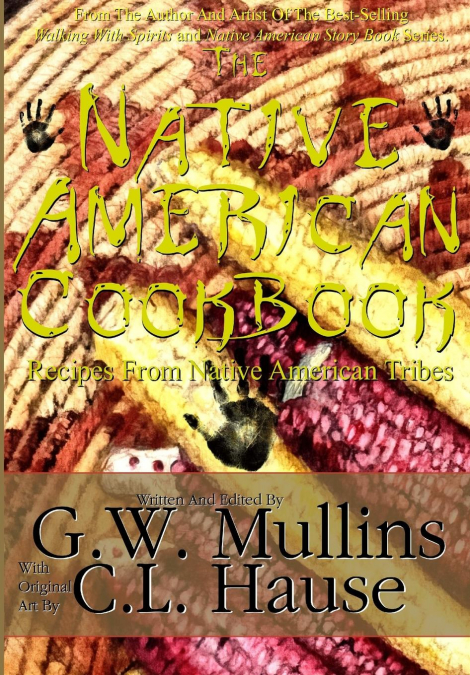
  • The Native American Cookbook Recipes From Native American Tribes
    G.W. Mullins
    Light Of The Moon Publishing along with Author G.W. Mullins and Illustrator / Artist C.L. Hause have joined together to explore Native American Indian Cooking.  More than just a cookbook, this Native American recipe collection offers a look into a forgotten past.  'The Native American Cookbook Recipes From Native American Tribes,' offers a large collection of recipes from and i...
    Disponible

    24,56 €

  • A Public Spirit
    George H. Atkinson
    George Henry Atkinson (1819-89) was a son of New England who arrived in the Oregon Territory in 1848, sent by the American Home Missionary Society. Although his commission from the Society specified that his work was to be ecclesiastical and educational, he took an approach to that assignment which went well beyond his mandate. Well-informed and energetic, he made an impact on ...
    Disponible

    10,45 €

  • North Carolina Women of the Confederacy
    Lucy London Anderson
    Long out of print, this volume of recollections, stories, and verse provides a glimpse of women's lives on the home front-and sometimes in the thick of battle-during the War between the States. Nearly fifty years after the American Civil War, Lucy Worth London Anderson (Mrs. John Huske Anderson) of Fayetteville, N.C., compiled one of the first memorial collections honoring the...
    Disponible

    17,20 €

  • Freedom by a Thread
    Freedom by a Thread: The History of Quilombos in Brazil brings together some of the best scholars in the world working on the history of quilombos (maroon societies) in Brazil from a variety of perspectives and approaches. Over 40 percent of the total volume of captive Africans arrived in Brazil during a 400-year period of legal and contraband transatlantic slaving. If slavery ...
    Disponible

    36,71 €

  • Nashville Baseball History
    Bill Traughber
    Nashville is a Big League city despite never having been home to a major league team. From the Civil War era, to star-studded exhibitions, to outstanding Negro Leagues teams, to some of the great minor league franchises of all time, few cities have as rich a baseball tradition as Nashville, Tennessee.Nashville sports historian Bill Traughber, who has been writing about baseball...
    Disponible

    13,15 €