Jean-Jacques Ampère / Michel Lévy ((Hermanos de))
 Librería Samer Atenea
 Kálamo Books
 Librería Elías (Asturias)
 Librería Kolima (Madrid)
 Librería Proteo (Málaga)
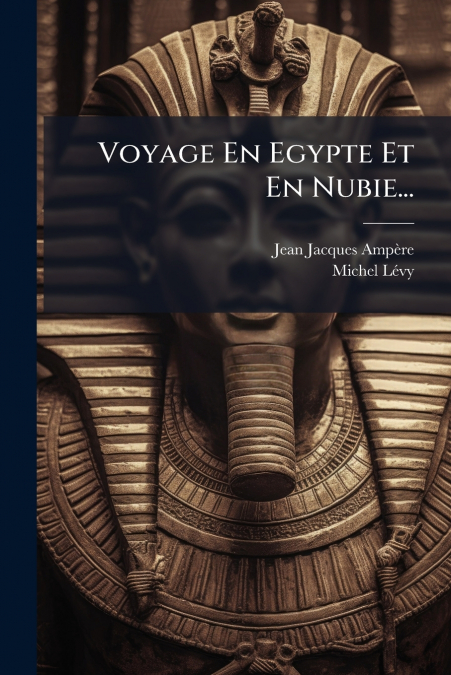
Voyage En Egypte Et En Nubie..., written by Jean-Jacques Ampère, offers a fascinating glimpse into 19th-century Egypt and Nubia through the eyes of a French scholar. Ampère’s meticulous observations cover a range of topics, from ancient monuments and hieroglyphs to the daily life and customs of the people he encountered. This travelogue provides valuable insights into the cultural and historical landscape of the region during a period of significant change and exploration. Ampère’s detailed descriptions bring to life the wonders of the Nile, the grandeur of the pyramids, and the mysteries of ancient civilizations. This work is a valuable resource for historians, travelers, and anyone interested in the rich heritage of Egypt and Nubia, providing a window into a world long past and the enduring allure of these ancient lands.This work has been selected by scholars as being culturally important, and is part of the knowledge base of civilization as we know it. This work was reproduced from the original artifact, and remains as true to the original work as possible. Therefore, you will see the original copyright references, library stamps (as most of these works have been housed in our most important libraries around the world), and other notations in the work.This work is in the public domain in the United States of America, and possibly other nations. Within the United States, you may freely copy and distribute this work, as no entity (individual or corporate) has a copyright on the body of the work.As a reproduction of a historical artifact, this work may contain missing or blurred pages, poor pictures, errant marks, etc. Scholars believe, and we concur, that this work is important enough to be preserved, reproduced, and made generally available to the public. We appreciate your support of the preservation process, and thank you for being an important part of keeping this knowledge alive and relevant.