
Voices of Nîmes

Voices of Nîmes

Suzannah Lipscomb

72,59 €
IVA incluido
Consulta disponibilidad
Editorial:
Oxford University Press
Año de edición:
2019
Materia
Historia social y cultural
ISBN:
9780198797661

Selecciona una librería:

  • Librería Samer Atenea
  • Librería Aciertas (Toledo)
  • Kálamo Books
  • Librería Perelló (Valencia)
  • Librería Elías (Asturias)
  • Donde los libros
  • Librería Kolima (Madrid)
  • Librería Proteo (Málaga)

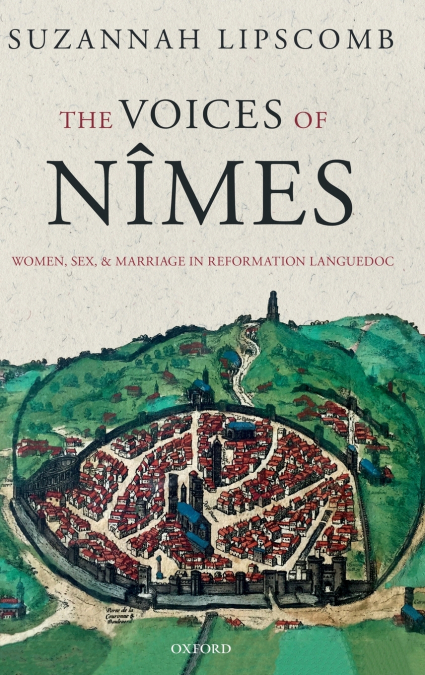
Most of the women who ever lived left no trace of their existence on the record of history. Sixteenth- and seventeenth-century women of the middling and lower levels of society left no letters or diaries in which they expressed what they felt or thought. Criminal courts and magistrates kept few records of their testimonies, and no ecclesiastical court records are known to survive for the French Roman Catholic Church between 1540 and 1667. For the most part, we cannot hear the voices of ordinary French women - but this study allows us to do so. Based on the evidence of 1,200 cases brought before the consistories - or moral courts - of the Huguenot church of Languedoc between 1561 and 1615, The Voices of N�mes allows us to access ordinary women’s everyday lives: their speech, behaviour, and attitudes relating to love, faith, and marriage, as well as friendship and sex. Women appeared frequently before the consistory because one of the chief functions of moral discipline was the regulation of sexuality, and women were thought to be primarily responsible for sexual sin. This means that the registers include over a thousand testimonies by and about women, most of whom left no other record to posterity. Women also featured so prominently before the consistories because of an ironic, unintended consequence of the consistorial system: it empowered women. Women quickly learnt how to use the consistory: they denounced those who abused them, they deployed the consistory to force men to honour their promises, and they started rumours they knew would be followed up by the elders. The registers therefore offer unrivalled evidence of women’s agency, in this intensely patriarchal society, in a range of different contexts, such as their enjoyment of their sexuality, choice of marriage partners, or idiosyncratic spiritual engagement. The consistorial registers, therefore, let us see how independent, self-determining, and vocal women could be in an age when they had limited legal rights, little official power, and few prospects. As a result, this book suggests we need to reconceptualize female power: women’s power was not just hidden, manipulative, and devious, but also far more public than historians have previously recognized.
Artículos relacionados

  • Arizal
    Raphael Afilalo
    The Ari overflowed with Torah. He was expert in Scripture, Mishnah, Talmud, Midrash, Maaseh Bereishit and Maaseh Merkavah. About all the different levels of prophecy, their details and from which level the prophets had their revelations.  He understood the whistling of the trees, the grass and stones, the language of the birds and other animals, the conversations of angels, the...
  • Rose-tinted Memory
    Michael S Fryer
    “Those who deny Auschwitz would be ready to remake it”.  ~ Primo Levi, Holocaust survivor and author Seventy years after the mass murder of the Jews of Europe, Holocaust denial and Holocaust revisionism are creeping into our overall perception of what actually happened.Christendom has not ‘denied’ Holocaust, but it has attempted to create a memory of Holocaust which suggests th...
    Disponible

    8,84 €

  • Pan Kapitan of Jordanow
    William Leibner
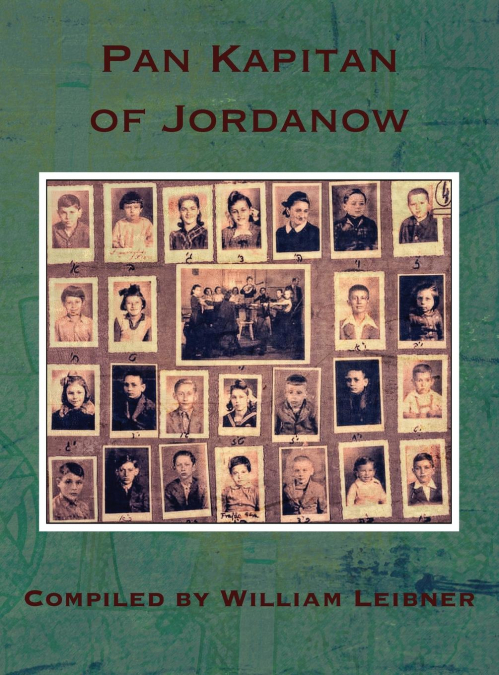
    Yeshayahu Drucker devoted a good part of his life to rescuing Jewish children from non-Jewish homes. Many parents had given their children to Polish neighbors for safekeeping during the war. Unfortunately most of the parents did not survive the Shoah. At the end of the war, there was no one to claim the children and they remained with the “adopted” Polish families. Following hi...
  • Holy Dissent
    Glenn Dynner
    BThe religious communities of early modern Eastern Europe—particularly those with a mystical bent—are typically studied in isolation. Yet the heavy Slavic imprint on Jewish popular mysticism and pervasive Judaizing tendencies among Christian dissenters call into question the presumed binary quality of Jewish-Christian interactions. In Holy Dissent: Jewish and Christian Mystics ...
  • AL-FARD
    Ali Mahdi Muhammad
    The Al-Fard, or the The Dawn, has captured the early rays of Our history. This history is essential if we are to be brought face to face with the One true and living God of the universe. The purpose of this writing is to bring the reader step by step, one degree at a time to the reality of God in person. The teachings of Our Father elevates the believer to the level of Godhood ...
  • Wild Things. Nature and the Social Imagination
    HISTORIES OF HUMAN CONSTRUCTIONS OF NATUREWild Things: Nature and the Social Imagination assembles eleven substantive and original essays on the cultural and social dimensions of environmental history. They address a global cornucopia of social and ecological systems, from Africa to Europe, North America and the Caribbean, and their temporal range extends from the 1830s into th...