
Vision-Based Vehicle Guidance

Vision-Based Vehicle Guidance

Ichiro Masaki

68,87 €
IVA incluido
Disponible
Editorial:
Springer Nature B.V.
Año de edición:
2011
Materia
Inteligencia artificial
ISBN:
9781461276654
68,87 €
IVA incluido
Disponible

Selecciona una librería:

  • Librería Samer Atenea
  • Librería Aciertas (Toledo)
  • Kálamo Books
  • Librería Perelló (Valencia)
  • Librería Elías (Asturias)
  • Donde los libros
  • Librería Kolima (Madrid)
  • Librería Proteo (Málaga)

There is a growing social interest in developing vision-based vehicle guidance systems for improving traffic safety and efficiency and the environment. Ex­ amples of vision-based vehicle guidance systems include collision warning systems, steering control systems for tracking painted lane marks, and speed control systems for preventing rear-end collisions. Like other guidance systems for aircraft and trains, these systems are ex­ pected to increase traffic safety significantly. For example, safety improve­ ments of aircraft landing processes after the introduction of automatic guidance systems have been reported to be 100 times better than prior to installment. Although the safety of human lives is beyond price, the cost for automatic guidance could be compensated by decreased insurance costs. It is becoming more important to increase traffic safety by decreasing the human driver’s load in our society, especially with an increasing population of senior people who continue to drive. The second potential social benefit is the improvement of traffic efficiency by decreasing the spacing between vehicles without sacrificing safety. It is reported, for example, that four times the efficiency is expected if the spacing between cars is controlled automatically at 90 cm with a speed of 100 kmjh compared to today’s typical manual driving. Although there are a lot of tech­ nical, psychological, and social issues to be solved before realizing the high­ density jhigh-speed traffic systems described here, highly efficient highways are becoming more important because of increasing traffic congestion.
Artículos relacionados

  • Artificial Cognition Systems
    ...
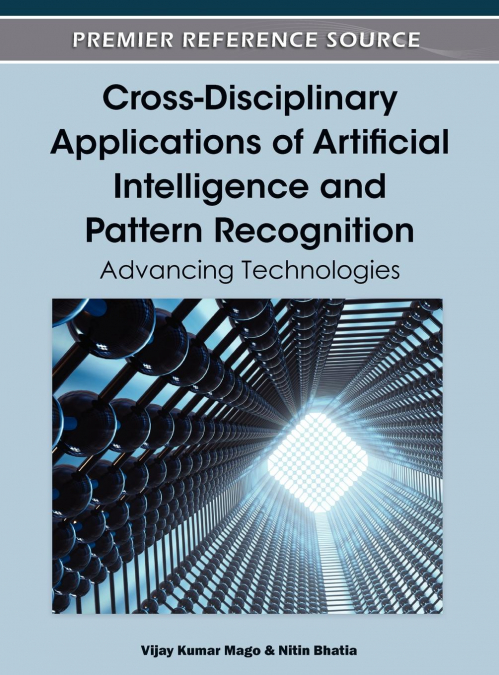
  • Cross-Disciplinary Applications of Artificial Intelligence and Pattern Recognition
    Vijay Kumar Mago
    The need for intelligent machines in areas such as medical diagnostics, biometric security systems, and image processing motivates researchers to develop and explore new techniques, algorithms, and applications in this evolving field. Cross-Disciplinary Applications of Artificial Intelligence and Pattern Recognition: Advancing Technologies provides a common platform for researc...
  • Emerging Applications of Natural Language Processing
    Over the last few years, the area of Natural Language Processing has drastically grown in recognition, not only within the research and development community, but also with industry professionals. As NLP continues to be discussed and researched, certain areas continue to grow and mature. As a result, the need for advanced research and information is in high demand. Emerging App...
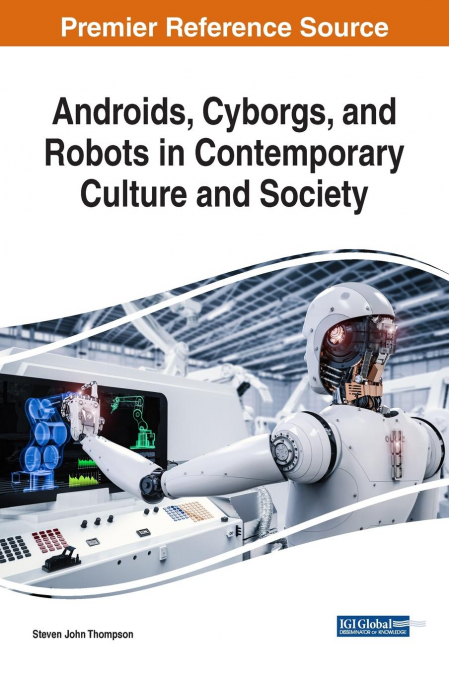
  • Androids, Cyborgs, and Robots in Contemporary Culture and Society
    Steven John Thompson
    Mankind’s dependence on artificial intelligence and robotics is increasing rapidly as technology becomes more advanced. Finding a way to seamlessly intertwine these two worlds will help boost productivity in society and aid in a variety of ways in modern civilization. Androids, Cyborgs, and Robots in Contemporary Culture and Society is an essential scholarly resource that delve...
  • Deep Learning Innovations and Their Convergence With Big Data
    The expansion of digital data has transformed various sectors of business such as healthcare, industrial manufacturing, and transportation. A new way of solving business problems has emerged through the use of machine learning techniques in conjunction with big data analytics. Deep Learning Innovations and Their Convergence With Big Data is a pivotal reference for the latest sc...
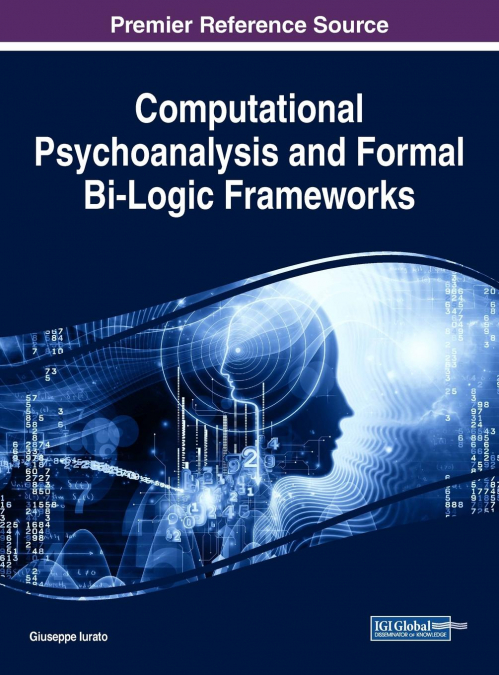
  • Computational Psychoanalysis and Formal Bi-Logic Frameworks
    Giuseppe Iurato
    Computational psychoanalysis is a new field stemming from Freudian psychoanalysis. The new area aims to understand the primary formal structures and running mechanisms of the unconscious while implementing them into computer sciences. Computational Psychoanalysis and Formal Bi-Logic Frameworks provides emerging information on this new field which uses psychoanalysis and the unc...