
Inicio > Matemáticas y ciencia > Biologia, ciencias de la vida > Virulenzmechanismen von Clostridium botulinum A3 im menschlichen Darm
Virulenzmechanismen von Clostridium botulinum A3 im menschlichen Darm

Virulenzmechanismen von Clostridium botulinum A3 im menschlichen Darm

Chellapandi P. / Roja B.

104,10 €
IVA incluido
Disponible
Editorial:
KS OmniScriptum Publishing
Año de edición:
2025
Materia
Biologia, ciencias de la vida
ISBN:
9786209238338
104,10 €
IVA incluido
Disponible

Selecciona una librería:

  • Librería Samer Atenea
  • Librería Aciertas (Toledo)
  • Kálamo Books
  • Librería Perelló (Valencia)
  • Librería Elías (Asturias)
  • Donde los libros
  • Librería Kolima (Madrid)
  • Librería Proteo (Málaga)

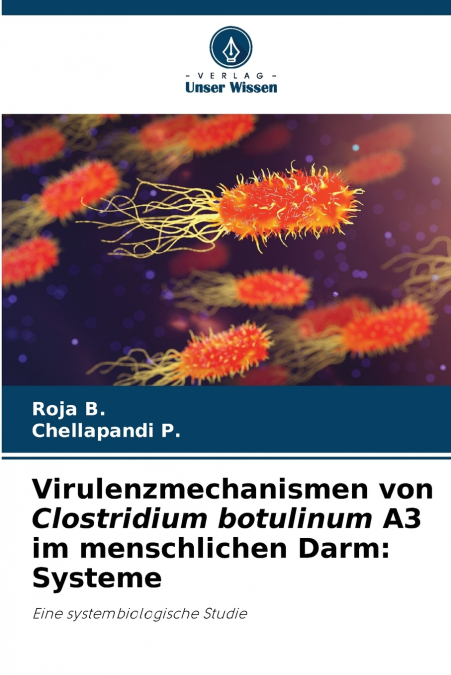
Das Genom von Clostridium botulinum A3 Loch Maree (4.259.691 bp) produziert Neurotoxine des Typs A3 und andere Virulenzfaktoren, wobei das bont/A-Gen auf dem Plasmid pCLK_A0076 liegt. Dieser Stamm weist eine hohe Evolutionsrate auf, passt sich an Wirte und Umgebungen an und besitzt 43 einzigartige Virulenz- und Wirtsabwehrgene. Extrachromosomale Elemente verstärken seine Virulenz, darunter Botulismustoxin A3. Von 521 hypothetischen Proteinen sind viele am Aminosäurestoffwechsel beteiligt, und wir haben 13 neue Virulenzproteine vorhergesagt. Ein globales regulatorisches Netzwerkmodell ergab 12 Transkriptionsregulatoren, die homolog zu Bacillus subtilis sind und Virulenzfaktoren kontrollieren. Es wurden ein rekombinanter Untereinheiten- und ein Multiepitop-Impfstoff entwickelt, die auf Proteine wie die Peptidoglykan-Hydrolase und das SCP-ähnliche extrazelluläre Protein abzielen und stabile Interaktionen mit Immunrezeptoren zeigen. Diese Impfstoffe mit minimaler Allergenität sind vielversprechende Kandidaten gegen die Virulenz des A3-Stammes. Die Modellierung von Netzwerken zeigte Wechselwirkungen zwischen Wirt und Mikrobe und identifizierte Linolsäure als einen wichtigen Metaboliten.

Artículos relacionados

  • Viral Replication Complexes
    Viruses are obligate intracellular parasites that need to co-opt a living cell’s machinery for replication. At the heart of the viral replication machinery are the nucleic acid polymerases, which are responsible for efficiently copying the viral genome. This process must often be coordinated with other viral processes, including protein translation and viral packaging. The poly...
    Disponible

    99,07 €

  • Advances in Flavivirus Research
    The flaviviruses are composed almost entirely of arthropod-borne viruses, a subset of which are responsible for millions of cases of human disease each year. Among these viruses are dengue virus—a scourge throughout the tropical regions of Asia and the Americas; yellow fever virus—the “original” hemorrhagic fever virus; and the recently emerged Zika virus. While the flaviviruse...
    Disponible

    51,85 €

  • Brain Asymmetry of Structure and/or Function
    Lesley J. Rogers / Lesley JRogers
    This edited book brings together research reports on the asymmetry of brain function in various species, including humans, dogs, birds, lizards and bees. As shown in a wide range of species, and, as we now know, not solely in humans, the left and right sides of the brain process information in different ways and control different responses or patterns of behaviour. Since this d...
    Disponible

    51,71 €

  • Fungal Pigments
    With the impact of globalization in research trends, the search for healthier life styles, the increasing public demand for natural, organic, and ‘clean labelled’ products, as well as the growing global market for natural colorants in economically fast-growing countries all over the world, filamentous fungi started to be investigated as readily available sources of chemically d...
    Disponible

    43,80 €

  • The Epithelialto- Mesenchymal Transition ( EMT ) in Cancer
    Joëlle Roche
    The epithelial-to-mesenchymal transition (EMT) is a highly dynamic process with multiple transitional states, by which epithelial cells can convert into a mesenchymal phenotype. This process involves loss of cellular adhesion and cellular polarity, and an improvement in migratory and invasive properties. It occurs during normal embryonic development, tissue regeneration, organ ...
    Disponible

    67,86 €

  • The Biology and Treatment of Myeloid Leukaemias
    There has been an observed decrease in the global mortality from cancer, mostly atributable to improved, particularly early, detection and prevention. For many carcinomas and leukaemias in adults, once the disease has reached a certain stage there are no therapies that are able to erradicate the cancer cells and cure patients. There has been progress in the treatment of acute m...
    Disponible

    51,85 €

Otros libros del autor

  • Mécanismes de virulence de Clostridium botulinum A3 dans l’intestin humain
    Chellapandi P. / Roja B.
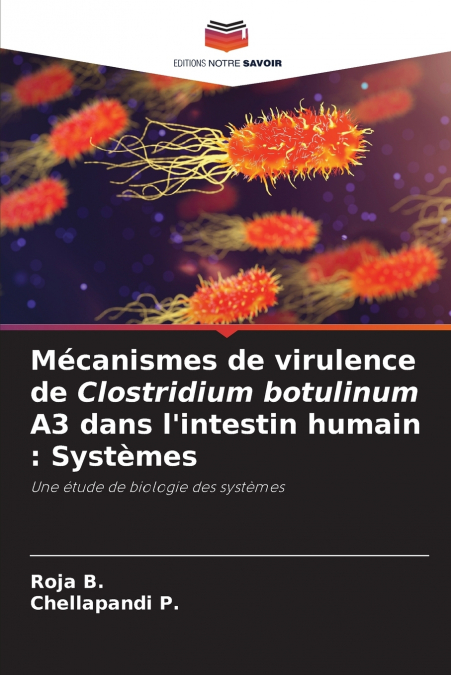
    Le génome de Clostridium botulinum A3 Loch Maree (4 259 691 pb) produit des neurotoxines de type A3 et d’autres facteurs de virulence, avec le gène bont/A sur le plasmide pCLK_A0076. Cette souche présente un taux d’évolution élevé, s’adaptant aux hôtes et aux environnements, et possède 43 gènes uniques de virulence et de défense de l’hôte. Des éléments extrachromosomiques renfo...
    Disponible

    104,14 €

  • Meccanismi di virulenza del Clostridium botulinum A3 nell’intestino umano
    Chellapandi P. / Roja B.
    Il genoma del Clostridium botulinum A3 Loch Maree (4.259.691 bp) produce neurotossine di tipo A3 e altri fattori di virulenza, con il gene bont/A sul plasmide pCLK_A0076. Questo ceppo mostra un alto tasso evolutivo, adattandosi agli ospiti e agli ambienti, e possiede 43 geni unici di virulenza e di difesa dell’ospite. Elementi extracromosomici ne potenziano la virulenza, tra cu...
    Disponible

    104,14 €

  • Mechanizmy wirulencji Clostridium botulinum A3 w ludzkich jelitach
    Chellapandi P. / Roja B.
    Genom Clostridium botulinum A3 Loch Maree (4,259,691bp) wytwarza neurotoksyny typu A3 i inne czynniki wirulencji, z genem bont/A na plazmidzie pCLK_A0076. Szczep ten wykazuje wysokie tempo ewolucji, dostosowując się do gospodarzy i środowisk oraz posiada 43 unikalne geny wirulencji i obrony gospodarza. Elementy pozachromosomalne zwiększają jego zjadliwość, w tym toksyna botulin...
    Disponible

    104,14 €

  • Virulence Mechanisms of Clostridium botulinum A3 on Human Gut
    Chellapandi P. / Roja B.
    The genome of Clostridium botulinum A3 Loch Maree (4,259,691bp) produces type A3 neurotoxins and other virulence factors, with the bont/A gene on plasmid pCLK_A0076. This strain shows a high evolutionary rate, adapting to hosts and environments, and has 43 unique virulence and host defense genes. Extrachromosomal elements enhance its virulence, including botulism toxin A3. Of 5...
    Disponible

    83,57 €