 Librería Samer Atenea
 Kálamo Books
 Librería Elías (Asturias)
 Librería Kolima (Madrid)
 Librería Proteo (Málaga)
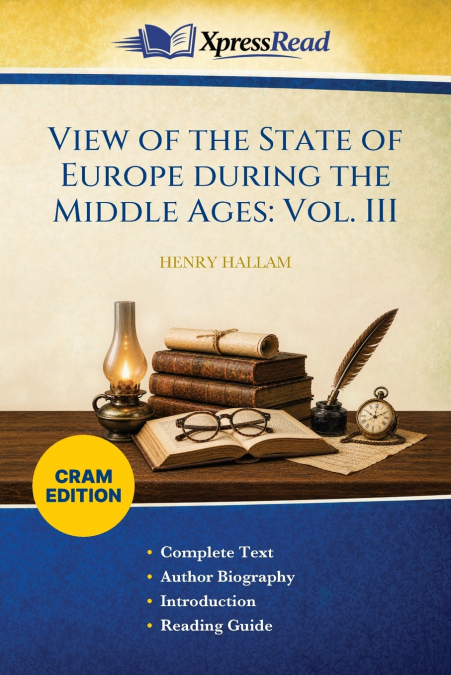
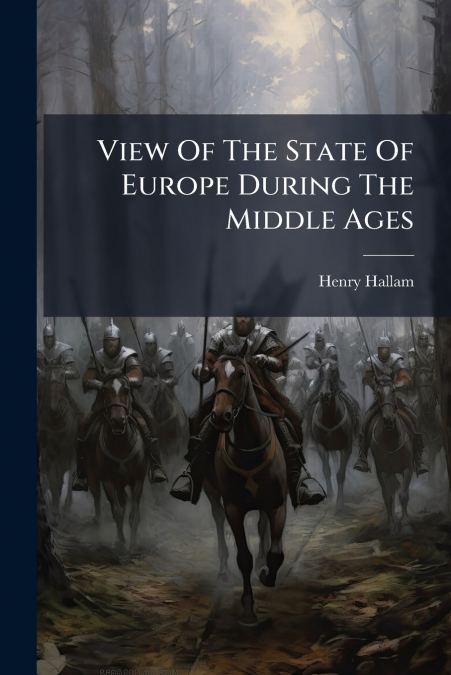
'View Of The State Of Europe During The Middle Ages' by Henry Hallam offers a comprehensive exploration of Europe from the decline of the Roman Empire through the fifteenth century. This detailed study examines the political institutions, social structures, and cultural developments that shaped the medieval world. Hallam’s work, known for its thorough research and insightful analysis, provides a valuable perspective on the forces that transformed Europe during this pivotal era.Hallam delves into the complexities of feudalism, the rise of the papacy, and the impact of the Crusades. He considers the growth of towns, the evolution of legal systems, and the flourishing of arts and literature. This book remains an essential resource for anyone seeking a deeper understanding of the historical roots of modern Europe and the enduring legacy of the Middle Ages.This work has been selected by scholars as being culturally important, and is part of the knowledge base of civilization as we know it. This work was reproduced from the original artifact, and remains as true to the original work as possible. Therefore, you will see the original copyright references, library stamps (as most of these works have been housed in our most important libraries around the world), and other notations in the work.This work is in the public domain in the United States of America, and possibly other nations. Within the United States, you may freely copy and distribute this work, as no entity (individual or corporate) has a copyright on the body of the work.As a reproduction of a historical artifact, this work may contain missing or blurred pages, poor pictures, errant marks, etc. Scholars believe, and we concur, that this work is important enough to be preserved, reproduced, and made generally available to the public. We appreciate your support of the preservation process, and thank you for being an important part of keeping this knowledge alive and relevant.