 Librería Samer Atenea
 Kálamo Books
 Librería Elías (Asturias)
 Librería Kolima (Madrid)
 Librería Proteo (Málaga)
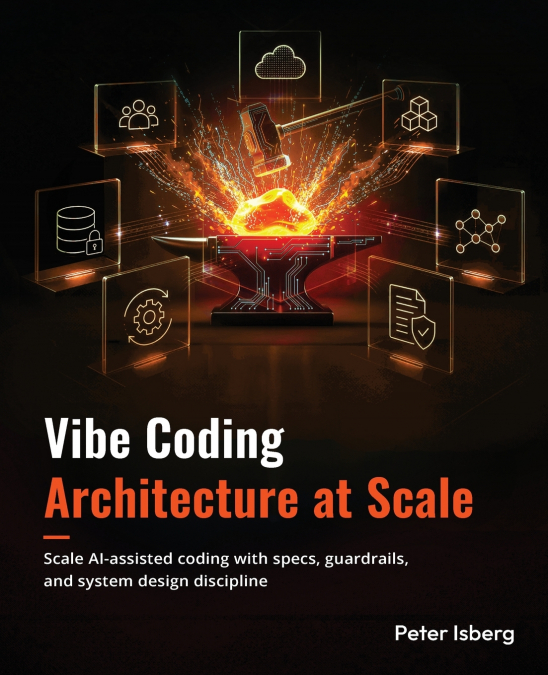
Turn vibe coding into reliable software delivery by using specs, guardrails, tests, and workflows that keep AI-generated systems coherentKey Features:- Turn fast AI coding into scalable software architecture- Use specs, tests, and guardrails to control generated code- Apply workflows for agents, reviews, CI/CD, and team adoptionBook Description:AI-assisted coding can help teams move faster, but speed without structure creates brittle systems, hidden dependencies, weak tests, and decisions that are difficult to trace. This book reframes vibe coding as a disciplined engineering workflow for turning prompts, generated code, and agent output into systems that can be reviewed, tested, and scaled.Based on Peter Isberg’s experience across defense, automotive, online travel, and logistics, the book shows how to bring architectural intent into AI-assisted software development. You’ll learn how to manage context, use specs as guardrails, design architectural tests, visualize system behavior, build prompt and review workflows, and apply practices for multi-agent orchestration, CI/CD, prompt lineage, model routing, and secure handling of untrusted context.By the end of this book, you’ll be able to move beyond ad hoc prompting and use vibe coding architecture to guide AI-generated software with clearer structure, stronger feedback loops, and better engineering control.What You Will Learn:- Use specs to guide AI-assisted software delivery- Manage context to reduce prompt entropy and drift- Design guardrails for generated code and agents- Build tests that check architectural intent- Apply review workflows for AI-generated changes- Handle prompt injection and untrusted context safely- Use CI/CD and orchestration for multi-agent work- Track prompts, model choices, and intent in GitWho this book is for:This book is for developers, product managers, engineers, architects, and technical leads who are already using or evaluating AI-assisted coding and need stronger control over architecture, quality, security, and team workflow. Familiarity with software delivery, code review, testing, and modern development tools will help readers get the most from the book.Table of Contents- The Entropy of the Prompt- Shift Left, Guide Right- Context Diets- Annotation-Driven Design- Architectural Unit Testing- Visualizing the Vibe- Spec-Driven Development: The Spec Is the Guardrail- Spec Kit in Practice: From Prompt to Merged Code- Kiro: When the IDE Is the Spec Engine- Zenflow: The Spec as an Executable DAG- Get-Shit-Done: Spec-Driven Plus Context Engineering- Superpowers: The Portable Workflow- Vibe Coding Prompt Template: Thinking Before Building- Vibe Coding Playbook: Prompting as Engineering- Vibe Kanban: Managing the Human Bottleneck- Skill Forge: Skills Forged From Your Own Codebase- The Asynchronous Trap- Schema Drift & API Contracts- The Untrusted Context: Prompt Injection- The Attacker Agent: Adversarial Runtime Testing- Multi-Agent Orchestration & CI/CD- The Two-AI Gripe: Adversarial Review Pipelines- Prompt Lineage: Git for Intent- Git as a Save-State Engine