Inicio > Ciencias de la tierra, geografía, medioambiente, planificación > Geografía > Variation der Niederschlagsmenge im Juli in Indien
Variation der Niederschlagsmenge im Juli in Indien

Variation der Niederschlagsmenge im Juli in Indien

Manjunatha S Tyalagadi

53,60 €
IVA incluido
Disponible
Editorial:
KS OmniScriptum Publishing
Año de edición:
2025
Materia
Geografía
ISBN:
9786202475563
53,60 €
IVA incluido
Disponible

Selecciona una librería:

  • Librería Samer Atenea
  • Librería Aciertas (Toledo)
  • Kálamo Books
  • Librería Perelló (Valencia)
  • Librería Elías (Asturias)
  • Donde los libros
  • Librería Kolima (Madrid)
  • Librería Proteo (Málaga)

In einem Land wie Indien, wo Niederschläge saisonal bedingt sind, richtet sich die Landwirtschaft häufig nach der Regenzeit (Juni bis September). Diese Jahreszeit ist von entscheidender Bedeutung, da 66 Prozent der Anbaufläche des Landes von diesen Regenfällen abhängig sind. Von den vier Monaten ist der Juli für die landwirtschaftlichen Aktivitäten besonders wichtig. Ausbleiben dieser Regenfälle hat daher negative Auswirkungen auf Produktion und Erträge. Daher ist es wichtig, die Natur der Juli-Regenfälle in ganz Indien und in 36 meteorologischen Unterregionen (MS) im Zeitraum von 1901 bis 2004 zu verstehen. Dabei zeigt sich, dass in den MS Ost- und West-Madhya Pradesh, Ost-Rajasthan und Saurashtra die Wahrscheinlichkeit eines Defizits im Juli bei 60 % oder mehr liegt. Die Wahrscheinlichkeit von Niederschlagsdefiziten im Juli und während der Saison liegt in den Regionen Ost- und West-Madhya Pradesh, West-Uttar Pradesh, Saurashtra, Madhya Maharashtra, Uttaranchal und Himachal Pradesh bei mindestens 50 %. Die Zirkulation in der oberen Luftschicht, die Schwankungen der Monsuntiefdruckrinne, westliche Störungen und die Zugbahnen von Zyklonen, die sich über der Head Bay bilden, sind synoptische Bedingungen, die für Niederschlagsdefizite über dem nordindischen MS verantwortlich sind. In den Regionen Madhya Maharashtra und North Interior Karnataka ist hingegen die Lage des Hochdruckrückens der entscheidende Faktor für Niederschlagsdefizite im Juli und während der Saison.


Artículos relacionados

  • Tourism and Indigeneity in the Arctic
    This is the first book to exclusively address tourism and indigenous peoples in the circumpolar North. It examines how tourism in indigenous communities is influenced by academic and political discourses, and how these communities are influenced by tourism. The volume focuses on the ambivalence relating to tourism as a modern force within ethnic groups who are concerned with ma...
  • Playas en la costa caribeña colombiana
    Diva Marcela Piamba Tulcán / Eduardo Silva Peña / Eliana Díaz Muñoz / Juliana Javierre / Mónica María Del Valle Idárraga / Yessica Chiquillo
    En este libro, reconstruimos el surgimiento y transformación de varias playas del hoy llamado Caribe colombiano, como playas turísticas, entre 1950 y 1990. Mediante un análisis de archivos periodísticos y audiovisuales y de narraciones de Amira de la Rosa, Jaime Manrique, Fanny Buitrago, Tomás González, entre otros, desanudamos el cronotopo playas, tomando como foco Prado Mar y...
    Disponible

    20,75 €

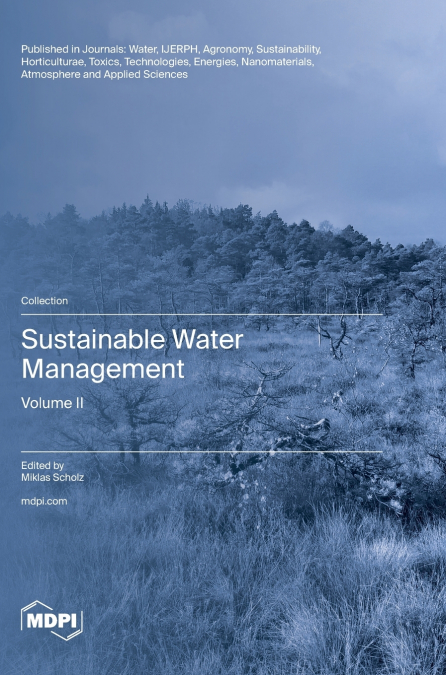
  • Sustainable Water Management
    Miklas Scholz
    The collection is comprised of 40 reprinted articles grouped into six sections. Section 1 is concerned with the interface between climate change, water resources and public health. The water-related impacts of climate change on agriculture and, subsequently, on public health are also assessed. Agricultural water management is covered in Section 2. Novel water retention and nutr...
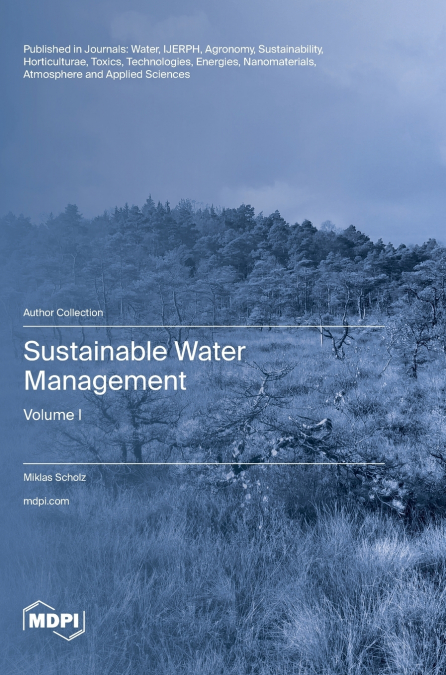
  • Sustainable Water Management
    Miklas Scholz
    The collection is comprised of 40 reprinted articles grouped into six sections. Section 1 is concerned with the interface between climate change, water resources and public health. The water-related impacts of climate change on agriculture and, subsequently, on public health are also assessed. Agricultural water management is covered in Section 2. Novel water retention and nutr...
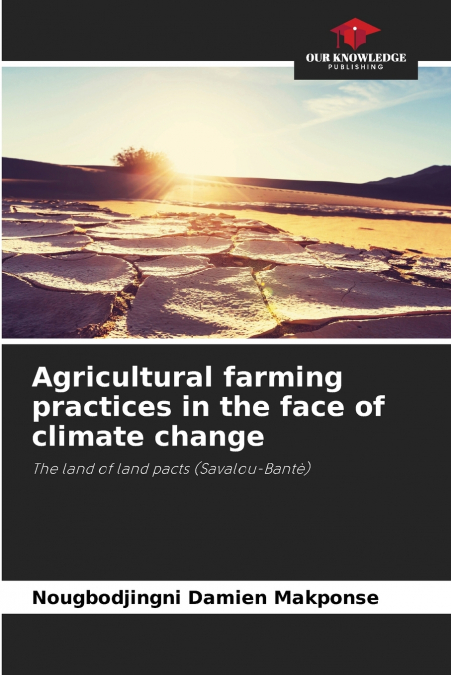
  • Agricultural farming practices in the face of climate change
    Nougbodjingni Damien Makponse
    In recent years, the land pact region has experienced the vulnerability and adverse effects of climate change. This research analyses the adaptation strategies used by farmers to improve their living conditions. The methodology used consists of collecting, processing and analysing results based on 120 farmers in two districts of each commune. The field results reveal that the i...
    Disponible

    48,30 €

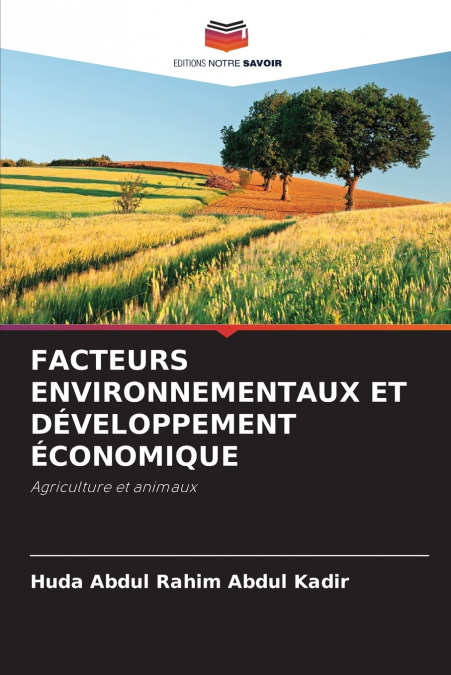
  • FACTEURS ENVIRONNEMENTAUX ET DÉVELOPPEMENT ÉCONOMIQUE
    Huda Abdul Rahim Abdul Kadir
    Les facteurs environnementaux qui nous entourent sont nombreux, les hommes, les animaux et les plantes en sont affectés, et affectent l’activité et la capacité de production, ainsi que l’économie de la vie qui en est affectée sous différents aspects. L’effet de ces facteurs se reflète clairement sur l’agriculture générale et comprend de nombreux types de produits, y compris les...
    Disponible

    54,38 €

Otros libros del autor

  • Zmienność opadów w lipcu w Indiach
    Manjunatha S Tyalagadi
    W kraju takim jak Indie, gdzie opady deszczu mają charakter sezonowy, rolnictwo często dostosowuje się do pory deszczowej (czerwiec-wrzesień). Sezon ten jest bardzo ważny, ponieważ 66% areału uprawialnego kraju zależy od tych opadów. Spośród czterech miesięcy lipcowe opady deszczu mają kluczowe znaczenie dla działalności agronomicznej, dlatego też ich brak powoduje spadek produ...
    Disponible

    53,60 €

  • Variation des précipitations mensuelles en juillet en Inde
    Manjunatha S Tyalagadi
    Dans un pays comme l’Inde, où les précipitations sont saisonnières, l’agriculture est souvent synchronisée avec la saison des pluies (juin-septembre). Cette saison est très importante, car 66 % des terres cultivables du pays dépendent de ces pluies. Sur ces quatre mois, les précipitations de juillet sont essentielles pour les activités agronomiques. Si elles font défaut, la pro...
    Disponible

    53,60 €

  • Variazione delle precipitazioni nel mese di luglio in India
    Manjunatha S Tyalagadi
    In un Paese come l’India, dove le precipitazioni sono stagionali, l’agricoltura è spesso legata alla stagione delle piogge (giugno-settembre). Questo periodo è molto importante, poiché il 66% della superficie coltivabile del Paese dipende da queste piogge. Dei quattro mesi, luglio è fondamentale per le attività agricole e, quindi, se le piogge non arrivano, la produzione e il r...
    Disponible

    53,60 €

  • Variação da precipitação no mês de julho na Índia
    Manjunatha S Tyalagadi
    Para um país como a Índia, onde as chuvas são sazonais, a agricultura costuma estar sintonizada com a estação chuvosa (junho-setembro). Esta estação é muito importante, pois 66% da área cultivável do país depende dessas chuvas. Dos quatro meses, as chuvas de julho são críticas para as atividades agronómicas e, portanto, se essas chuvas falham, a produção e o rendimento são afet...
    Disponible

    53,60 €