 Librería Samer Atenea
 Kálamo Books
 Librería Elías (Asturias)
 Librería Kolima (Madrid)
 Librería Proteo (Málaga)
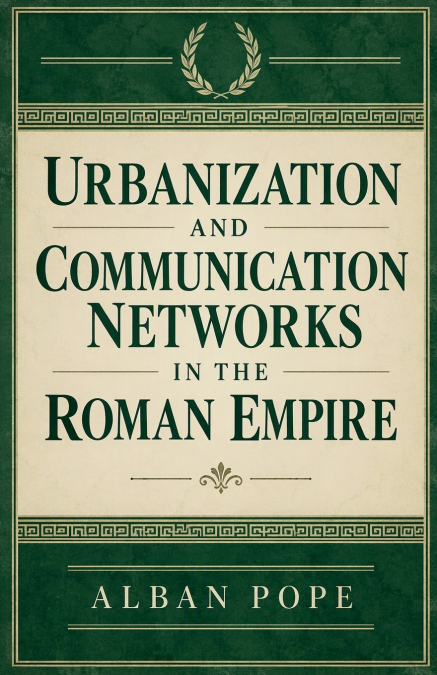
The Roman Empire occupies a singular place in world history not merely because of its vast territorial extent, military achievements, or enduring legal and cultural legacy, but because it succeeded in creating and maintaining an unprecedented degree of integration across a remarkably diverse and expansive geographical space. Stretching from the Atlantic shores of Hispania to the deserts of Syria, from the forests of Germania to the fertile valleys of the Nile, the empire encompassed millions of inhabitants, hundreds of cities, and a multitude of languages, religions, and local traditions. Yet despite these immense differences, Roman territories were connected through networks that facilitated the movement of people, goods, information, and ideas on a scale unmatched in the ancient world. At the heart of this achievement stood two closely intertwined phenomena: urbanization and communication.This book explores the relationship between cities and communication networks in the Roman Empire, arguing that neither can be fully understood without the other. Urbanization was not simply a demographic process through which populations concentrated in cities, nor was communication limited to the transmission of official messages along imperial roads. Rather, both were components of a broader system that transformed the Mediterranean and its surrounding regions into an interconnected imperial landscape. Cities functioned as nodes within extensive networks, while communication infrastructures provided the channels through which those nodes interacted. Together, they created a framework that sustained political authority, economic exchange, cultural interaction, and social cohesion across enormous distances.