
Inicio > Humanidades > Filosofía > Ética y filosofía moral > The Vision of Roman Ethical Life Through Aeneas’s Journey
The Vision of Roman Ethical Life Through Aeneas’s Journey

The Vision of Roman Ethical Life Through Aeneas’s Journey

Alban Pope

20,94 €
IVA incluido
Disponible
Editorial:
Colloquium
Año de edición:
2026
Materia
Ética y filosofía moral
ISBN:
9798235417410
20,94 €
IVA incluido
Disponible

Selecciona una librería:

  • Librería Samer Atenea

  • Kálamo Books
  • Librería Elías (Asturias)
  • Librería Kolima (Madrid)
  • Librería Proteo (Málaga)

The transition from the fractured, blood-soaked decades of the Late Roman Republic to the nascent stability of the Augustan Principate represents one of the most profound ideological transformations in Western antiquity. Decades of civil strife had not merely dismantled the political infrastructure of the traditional res publica; they had systematically eroded the moral and spiritual scaffolding that the Romans called mos maiorum, the custom of the ancestors. To the Roman mind, historical cataclysms were never merely political or military failures; they were fundamentally symptoms of moral decay, theological neglect, and the collapse of the ethical relationships holding the civic body together. When Octavian emerged from the chaos of Actium as the sole custodian of the Mediterranean world, assuming the sacral title of Augustus, his primary domestic challenge was not merely structural reconstruction, but systemic moral regeneration. The new regime recognized that political legitimacy could not rest securely on the edge of a praetorian sword or within the bureaucratic innovations of a disguised autocracy. It required a foundational mythos-a grand, overarching narrative that could simultaneously rationalize the immense suffering of the past century, validate the radical political changes of the present, and project an idealized vision of Roman ethical responsibility into an eternal future. It is within this urgent matrix of cultural trauma and ideological reconstruction that Publius Virgilius Maro undertook the composition of the Aeneid. Far from being a piece of uncritical court panegyric or mechanical state propaganda, the Aeneid serves as a rigorous, deeply nuanced philosophical investigation into the anatomy of human duty, the spiritual costs of imperial destiny, and the volatile nature of the virtues required to sustain a civilization.
Artículos relacionados

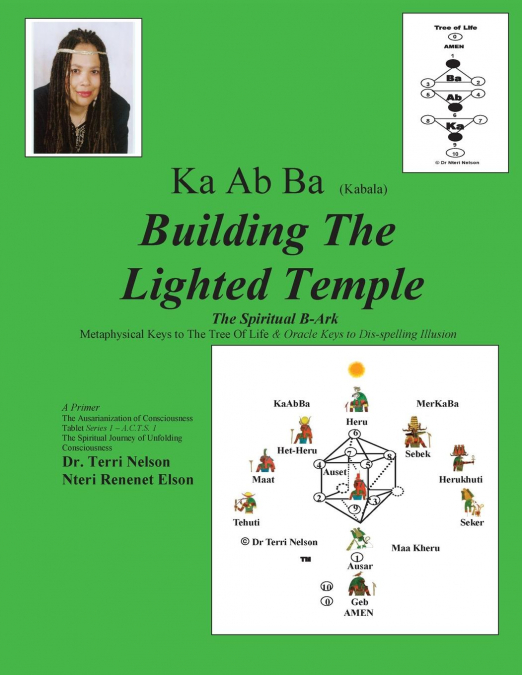
  • Ka Ab Ba Building The Lighted Temple
    Dr Terri R. Nelson / Dr Terri RNelson
    The book KaAbBa Building The Lighted Temple/Metaphysical Keys to the Tree of Life draws a circle that is inclusive of the Afrikan origin of the Ancient Kemetic/Egyptian wisdom. It reveals the undeniable root and link of Ancient Africa to all the religious systems that would develop worldwide. This book is explosive in its power to convey the meaning of KaAbBa, the Medu Neter  (...
    Disponible

    37,41 €

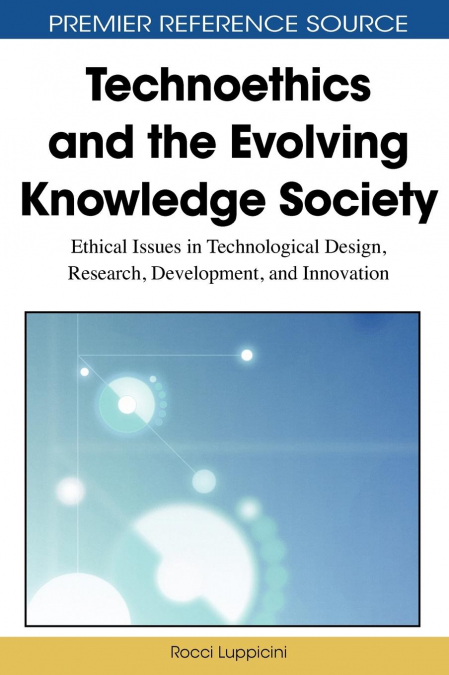
  • Technoethics and the Evolving Knowledge Society
    Rocci Luppicini
    Recently, there has been a major push to rediscover the ethical dimension of technology across the sciences, social sciences, and humanities. Technoethics and the Evolving Knowledge Society: Ethical Issues in Technological Design, Research, Development, and Innovation examines human processes and practices connected to technology embedded within social, political, and moral sph...
  • Kant
    Immanuel Kant
    Kant’s Groundwork of the Metaphysics of Morals is one of the most important works in modern moral philosophy. It belongs beside Plato, Aristotle, Machiavelli, and Hobbes. Here Kant sets out to articulate and defend the Categorical Imperative - the fundamental principle that underlies moral reasoning - and to lay the foundation for a comprehensive account of justice and human vi...
  • On the Duty of Civil Disobedience
    HENRY DAVID THOREAU
    Civil Disobedience argues that citizens should not permit their governments to overrule their consciences, and that they have a duty to avoid allowing their acquiescence to enable the government to make them the agents of injustice. Thoreau was motivated in part by his disgust with slavery and the Mexican-American War, but the sentiments he expresses here are just as pertinent ...
  • Beyond Good and Evil
    Friedrich Nietzsche
    Nietzsche, though primarily a philosopher, wrote widely on art, philology, history, religion, tragedy, culture, and science.  In 1886, at the height of his powers, he published Beyond Good and Evil.  Here he examines much of the best of human thought--dogmatic philosophy, Judeo-Christian morality, science and democracy – and finds it lacking.  Rejecting “slave-morality” he pres...
  • Beyond Good and Evil
    Friedrich Nietzsche
    Nietzsche, though primarily a philosopher, wrote widely on art, philology, history, religion, tragedy, culture, and science.  In 1886, at the height of his powers, he published Beyond Good and Evil.  Here he examines much of the best of human thought--dogmatic philosophy, Judeo-Christian morality, science and democracy – and finds it lacking.  Rejecting “slave-morality” he pres...
    Disponible

    9,99 €

Otros libros del autor

  • Urbanization and Communication Networks in the Roman Empire
    Alban Pope
    The Roman Empire occupies a singular place in world history not merely because of its vast territorial extent, military achievements, or enduring legal and cultural legacy, but because it succeeded in creating and maintaining an unprecedented degree of integration across a remarkably diverse and expansive geographical space. Stretching from the Atlantic shores of Hispania to th...
    Disponible

    20,92 €

  • Religion as Political Language in Ancient Rome
    Alban Pope
    Few civilizations have left behind a political legacy as influential as that of Rome. Its institutions, legal traditions, military organization, and concepts of citizenship have attracted continuous scholarly attention from antiquity to the present. Yet one of the most fundamental dimensions of Roman public life has often been misunderstood by modern observers: the role of reli...
    Disponible

    21,00 €

  • The Ideological Construction of the Roman Empire
    Alban Pope
    The Roman Empire has long occupied a central place in historical inquiry. Its military conquests, administrative sophistication, legal traditions, urban networks, and enduring cultural influence have made it one of the most extensively studied political formations in human history. Yet the remarkable longevity and resilience of Roman rule cannot be explained through military po...
    Disponible

    23,29 €

  • Patronage, Censorship, and the Economics of Literary Production in Ancient Rome
    Alban Pope
    The study of classical Latin literature has long suffered from an idealized isolation, treated by subsequent centuries as a collection of pristine aesthetic monuments detached from the vulgar anxieties of subsistence, political coercion, and material scarcity. To read Virgil’s Eclogues, Horace’s Odes, or Martial’s Epigrams purely through the lens of modern literary autonomy is ...
    Disponible

    21,11 €

  • Virgil’s Poetic Project and Augustan Moral Renewal
    Alban Pope
    This book explores how Virgil uses his three major works to construct a systematic, evolving discourse on the nature of virtue, authority, and moral responsibility in the new Augustan world. The trajectory of his poetic career is itself a deliberate moral and artistic ascent, mirroring the traditional rota Virgilii (the wheel of Virgil) that moves from the humble, low-style pas...
    Disponible

    21,16 €

  • The Creation of a Roman Political Persona Through Literature
    Alban Pope
    In the intense, highly competitive arena of Roman public life, a politician’s survival and success depended entirely on their ability to craft, project, and defend a distinct public identity. This identity, known as a persona, was not a mere passive reflection of a man’s character or ancestry; it was an actively engineered political monument. To the Roman ruling class, identity...
    Disponible

    21,02 €