 Librería Samer Atenea
 Librería Aciertas (Toledo)
 Kálamo Books
 Librería Perelló (Valencia)
 Librería Elías (Asturias)
 Donde los libros
 Librería Kolima (Madrid)
 Librería Proteo (Málaga)
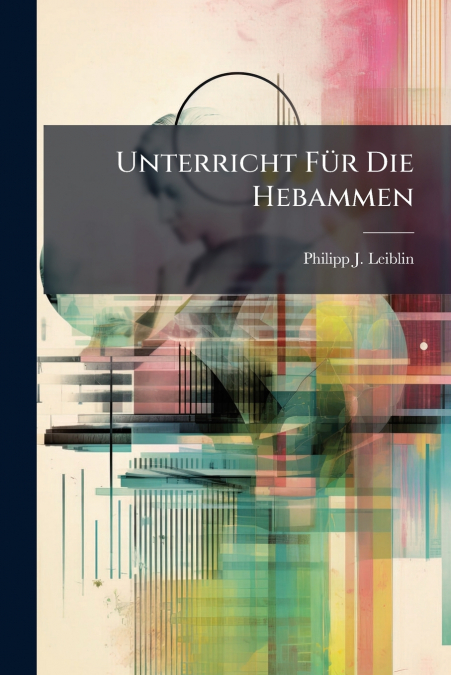
'Unterricht Für Die Hebammen' by Philipp J. Leiblin is a comprehensive guide intended for the education and training of midwives. This work likely delves into the essential aspects of midwifery, providing instruction on prenatal care, labor and delivery, and postpartum care. The book probably covers a range of topics, including anatomy and physiology related to pregnancy, common complications during childbirth, and techniques for managing various obstetrical scenarios. Leiblin’s book would have served as a vital resource for aspiring midwives, offering structured lessons and practical advice to equip them with the knowledge and skills necessary to support women through pregnancy and childbirth. Readers can expect detailed explanations and guidance aimed at fostering competence and confidence in midwifery practices. This book is valuable for anyone interested in the history of medicine and the evolution of women’s healthcare.This work has been selected by scholars as being culturally important, and is part of the knowledge base of civilization as we know it. This work was reproduced from the original artifact, and remains as true to the original work as possible. Therefore, you will see the original copyright references, library stamps (as most of these works have been housed in our most important libraries around the world), and other notations in the work.This work is in the public domain in the United States of America, and possibly other nations. Within the United States, you may freely copy and distribute this work, as no entity (individual or corporate) has a copyright on the body of the work.As a reproduction of a historical artifact, this work may contain missing or blurred pages, poor pictures, errant marks, etc. Scholars believe, and we concur, that this work is important enough to be preserved, reproduced, and made generally available to the public. We appreciate your support of the preservation process, and thank you for being an important part of keeping this knowledge alive and relevant.