 Librería Samer Atenea
 Kálamo Books
 Librería Elías (Asturias)
 Librería Kolima (Madrid)
 Librería Proteo (Málaga)
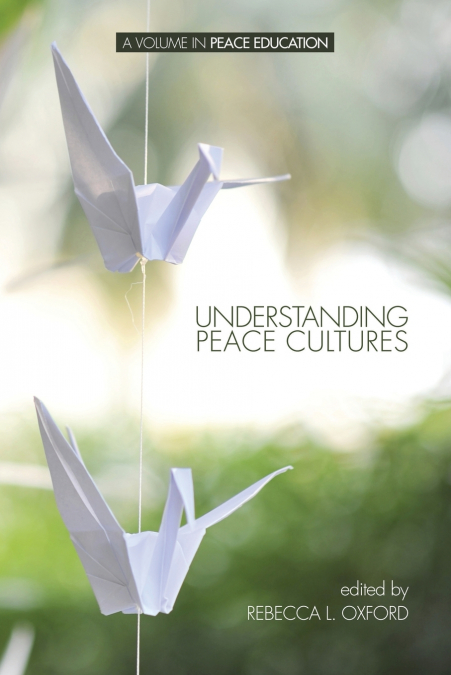
A volume in Peace EducationSeries Editors Jing Lin, University of Maryland, Edward Brantmeier, James Madison University, and Ian Harris, University of Wisconsin, MilwaukeeUnderstanding Peace Cultures is exceptionally practical as well as theoretically grounded. As Elise Boulding tells us, culture consists of the shared values, ideas,practices, and artifacts of a group united by a common history. Rebecca Oxford explains thatpeace cultures are cultures, large or small, which foster any of the dimensions of peace - inner, interpersonal, intergroup, international, intercultural, or ecological - and thus help transform the world. As in her earlier book, The Language of Peace: Communicating to Create Har-mony, Oxford contends herethat peace is a serious and desirable option.Excellent educators help build peace cultures. In this book, Shelley Wong and Rachel Grant reveal how highly diverse public school classrooms serve as peace cultures, using activities and themes founded on womanistand critical race theories. Yingji Wang portrays a peace culture in a university classroom. Rui Ma’s model reaches out interculturally to Abraham’s children: Jewish, Christian, and Muslim youth, who share an ancient heritage. Children’s literature (Rebecca Oxford et al.) and students’ own writing (Tina Wei) spread cultures of peace.Deep traditions, such as African performance art, Buddhism, Daoism, Confucianism and Islam, give rise to peace cultures, as shown here by John Grayzel, Sister Jewel (a colleague of Thich Nhat Hanh), Yingji Wang et al., and Dian Marissa et al. Peace cultures also emerge in completely unex-pected venues, such as gangsta rap, unveiled by Charles Blake etal., and a prison where inmates learn Lois Liggett’s 'spiritual semantics.' Finally, the book includes perspectives from Jerusalem (by Lawrence Berlin) and North Korea and South Korea (by Carol Griffiths) to help us envision - and hope for - new, transformative peace cultures where now there is strife.