
Inicio > Sociedad y ciencias sociales > Sociología y antropología > Antropología > Understanding Cultural Transmission in Anthropology
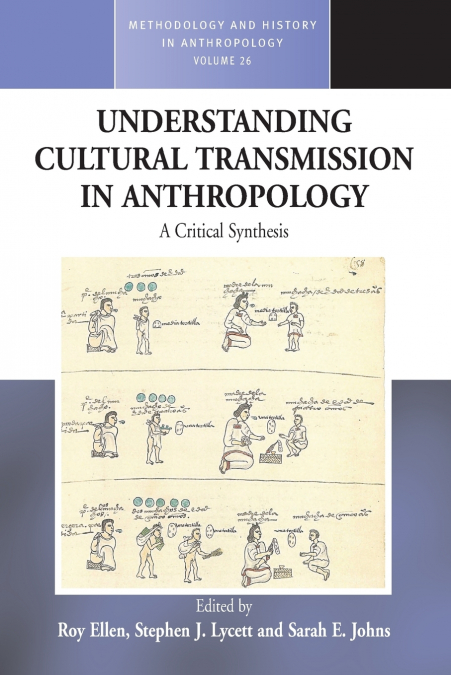
Understanding Cultural Transmission in Anthropology

Understanding Cultural Transmission in Anthropology

Understanding Cultural Transmission in Anthropology


43,87 €
IVA incluido
Disponible
Editorial:
Berghahn Books
Año de edición:
2013
Materia
Antropología
ISBN:
9781782380719
43,87 €
IVA incluido
Disponible

Selecciona una librería:

  • Librería Samer Atenea
  • Librería Aciertas (Toledo)
  • Kálamo Books
  • Librería Perelló (Valencia)
  • Librería Elías (Asturias)
  • Donde los libros
  • Librería Kolima (Madrid)
  • Librería Proteo (Málaga)

The concept of 'cultural transmission' is central to much contemporary anthropological theory, since successful human reproduction through social systems is essential for effective survival and for enhancing the adaptiveness of individual humans and local populations. Yet, what is understood by the phrase and how it might best be studied is highly contested. This book brings together contributions that reflect the current diversity of approaches - from the fields of biology, primatology, palaeoanthropology, psychology, social anthropology, ethnobiology, and archaeology - to examine social and cultural transmission from a range of perspectives and at different scales of generalization. The comprehensive introduction explores some of the problems and connections. Overall, the book provides a timely synthesis of current accounts of cultural transmission in relation to cognitive process, practical action, and local socio-ecological context, while linking these with explanations of longer-term evolutionary trajectories.Roy Ellen is Professor of Anthropology and Human Ecology at the University of Kent, Canterbury. His recent publications include On the Edge of the Banda Zone (University of Hawaii Press, 2003), The Categorical Impulse: Essays on the Anthropology of Classifying Behavior (Berghahn Books, 2006), and Nuaulu Religious Practices: The Frequency and Reproduction of Rituals in a Moluccan Society (KITLV Press, 2012). He is a Fellow of the British Academy and a member of its Council. He was President of the Royal Anthropological Institute between 2007 and 2011.Stephen J. Lycett is Senior Lecturer in Anthropology at the University of Kent, Canterbury. Trained in both biological anthropology and archaeology, his work is multidisciplinary, making extensive use of evolutionary principles and quantitative methodologies. His major research interests focus on integrating the biological, cultural, and technological aspects of evolution in humans, non-human primates, and fossil hominins.Sarah E. Johns is a Lecturer in Evolutionary Anthropology at the University of Kent, Canterbury. Her recent publications include'Red is not a proxy signal for female genitalia in humans' (PLoS ONE 2012); 'Perceived environmental risk as a predictor of teenage motherhood in a British population' (Health and Place 2011); and 'Teenage pregnancy and motherhood: How might evolutionary theory inform policy?' (Journal of Evolutionary Psychology 2011).
Artículos relacionados

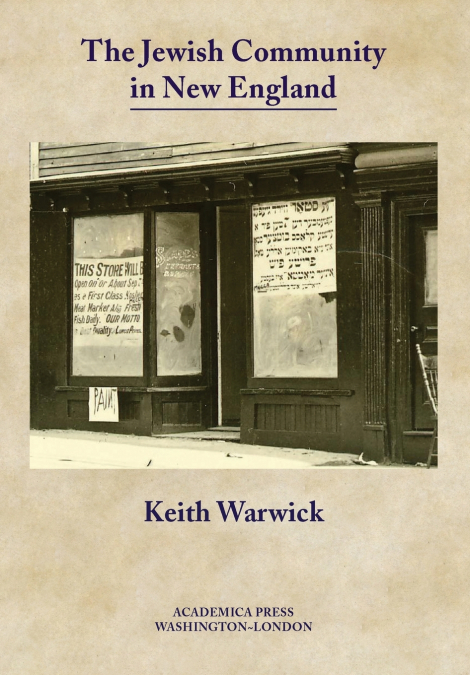
  • The jewish community in new england
    Keith Warwick
    The purpose of The Jewish Community in New England is to inform readers about the Jewish community in each of the six New England States: Rhode Island, Connecticut, Maine, Massachusetts, New Hampshire, and Vermont. Factual, inspirational, and poetic, it serves as a scholarly guide to institutions of Jewish life in this dynamic American region. Stocked with valuable information ...
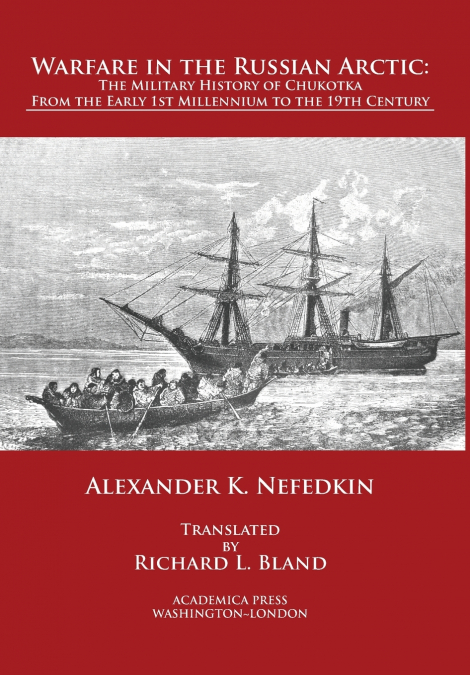
  • Warfare in the Russian arctic
    Alexander K Nefedkin / Richard L Bland
    Alexander Nefedkin’s highly original new book, translated by the noted American scholar Richard L. Bland, is devoted to the understudied topic of the military and military-political history of Chukotka, the far northeastern region of the Russian Federation, separated from Alaska by Bering Strait. This study is based on primary sources, including archaeological, folkloric, and d...
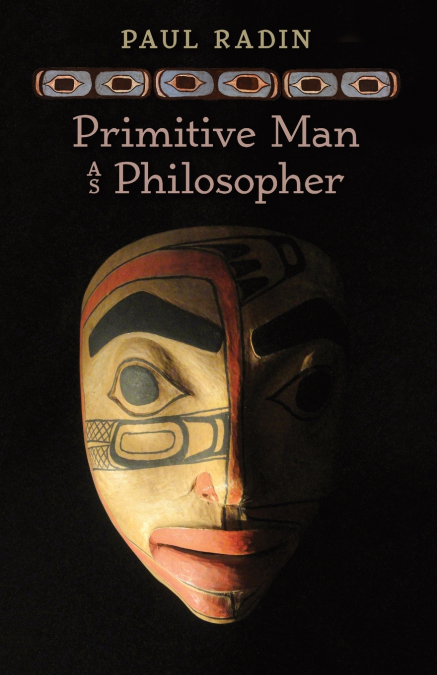
  • Primitive Man as Philosopher
    Paul Radin
    First published in 1927, Primitive Man as Philosopher represents a landmark in early anthropological studies. In this work, Paul Radin demonstrates the problematic nature of distinguishing between 'primitive' and 'civilized' cultures. He traces such ideas as the nature of Goodness and Truth, the meaning of life, and the reality of death across various cultures, highlighting how...
    Disponible

    24,38 €

  • The Economics of Population Growth
    Julian Lincoln Simon
    Comparison with stationary and very fast rates of population growth shows modern population grwoth to have long-run positive effects on the standards of living. This is Julian Simon’s contention, and he provides support for its validity in both more and less-developed countries. He notes that since each person constitutes a burden in the short run, whether population growth is ...
    Disponible

    153,61 €

  • Running Out
    Lucas Bessire
    Finalist for the National Book AwardAn intimate reckoning with aquifer depletion in America’s heartlandThe Ogallala aquifer has nourished life on the American Great Plains for millennia. But less than a century of unsustainable irrigation farming has taxed much of the aquifer beyond repair. The imminent depletion of the Ogallala and other aquifers around the world is a defining...
    Disponible

    25,19 €

  • The Nation and Its Fragments
    Partha Chatterjee
    In this book, the prominent theorist Partha Chatterjee looks at the creative and powerful results of the nationalist imagination in Asia and Africa that are posited not on identity but on difference with the nationalism propagated by the West. Arguing that scholars have been mistaken in equating political nationalism with nationalism as such, he shows how anticolonialist nation...
    Disponible

    72,17 €