
Turkestan and the Rise of Eurasian Empires

Turkestan and the Rise of Eurasian Empires

Ali Anooshahr

54,02 €
IVA incluido
Disponible
Editorial:
Oxford University Press
Año de edición:
2020
Materia
Historia social y cultural
ISBN:
9780197532898
54,02 €
IVA incluido
Disponible

Selecciona una librería:

  • Librería Samer Atenea
  • Librería Aciertas (Toledo)
  • Kálamo Books
  • Librería Perelló (Valencia)
  • Librería Elías (Asturias)
  • Donde los libros
  • Librería Kolima (Madrid)
  • Librería Proteo (Málaga)

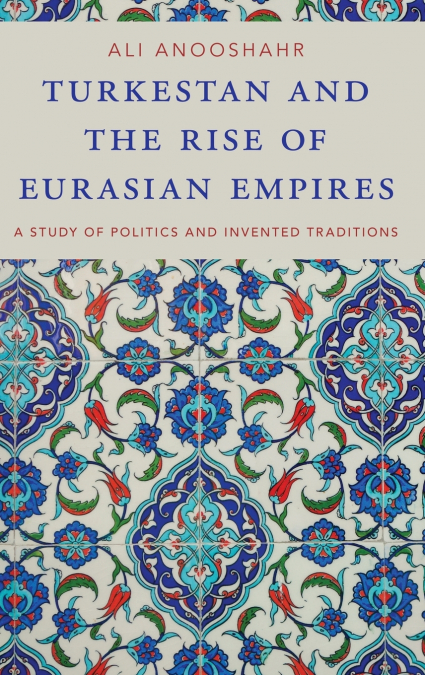
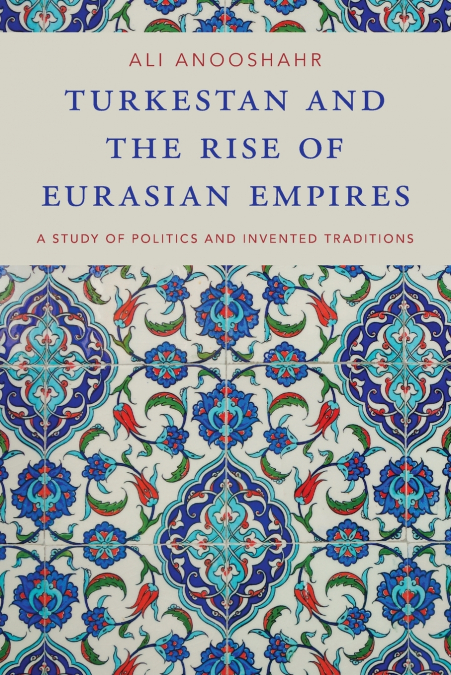
It has long been known that the origins of the early modern dynasties of the Ottomans, Safavids, Mughals, Mongols, and Shibanids in the sixteenth century go back to "Turco-Mongol" or "Turcophone" war bands. However, too often has this connection been taken at face value, usually along the lines of ethno-linguistic continuity. Turkestan and the Rise of Eurasian Empires argues that the connection between a mythologized "Turkestani" or "Turco-Mongol" origin and these dynasties was not simply and objectively present as fact. Rather, much creative energy was unleashed by courtiers and leaders from Bosnia to Bihar (with Bukhara and Badakhshan along the way) in order to manipulate and invent the ancestry of the founders of these dynasties.Through constructed genealogies, nascent empires founded on disorganized military and political events were reduced to clear and stable categories. With proper family trees in place and their power legitimized, leaders became far removed from their true identities as bands of armed men and transformed into warrior kings. This created a longstanding pattern of false histories created by the intellectuals of the day. Essentially, one can even say that Turco-Mongol progenitors did not beget the Ottoman, Safavid, Mughal, Mongol, and Shibanid states. Quite the contrary, one can instead say that historians writing in these empires were the ancestors of the "Turco-Mongol" lineage of their founders. Using one or more specimens of Persian historiography, in a series of five case studies, each focusing on one of these early polities, Ali Anooshahr shows how "Turkestan", "Central Asia", or "Turco-Mongol" functioned as literary tropes in the political discourse of the time.
Artículos relacionados

  • Arizal
    Raphael Afilalo
    The Ari overflowed with Torah. He was expert in Scripture, Mishnah, Talmud, Midrash, Maaseh Bereishit and Maaseh Merkavah. About all the different levels of prophecy, their details and from which level the prophets had their revelations.  He understood the whistling of the trees, the grass and stones, the language of the birds and other animals, the conversations of angels, the...
  • Rose-tinted Memory
    Michael S Fryer
    “Those who deny Auschwitz would be ready to remake it”.  ~ Primo Levi, Holocaust survivor and author Seventy years after the mass murder of the Jews of Europe, Holocaust denial and Holocaust revisionism are creeping into our overall perception of what actually happened.Christendom has not ‘denied’ Holocaust, but it has attempted to create a memory of Holocaust which suggests th...
    Disponible

    8,84 €

  • Pan Kapitan of Jordanow
    William Leibner
    Yeshayahu Drucker devoted a good part of his life to rescuing Jewish children from non-Jewish homes. Many parents had given their children to Polish neighbors for safekeeping during the war. Unfortunately most of the parents did not survive the Shoah. At the end of the war, there was no one to claim the children and they remained with the “adopted” Polish families. Following hi...
  • Holy Dissent
    Glenn Dynner
    BThe religious communities of early modern Eastern Europe—particularly those with a mystical bent—are typically studied in isolation. Yet the heavy Slavic imprint on Jewish popular mysticism and pervasive Judaizing tendencies among Christian dissenters call into question the presumed binary quality of Jewish-Christian interactions. In Holy Dissent: Jewish and Christian Mystics ...
  • AL-FARD
    Ali Mahdi Muhammad
    The Al-Fard, or the The Dawn, has captured the early rays of Our history. This history is essential if we are to be brought face to face with the One true and living God of the universe. The purpose of this writing is to bring the reader step by step, one degree at a time to the reality of God in person. The teachings of Our Father elevates the believer to the level of Godhood ...
  • Wild Things. Nature and the Social Imagination
    HISTORIES OF HUMAN CONSTRUCTIONS OF NATUREWild Things: Nature and the Social Imagination assembles eleven substantive and original essays on the cultural and social dimensions of environmental history. They address a global cornucopia of social and ecological systems, from Africa to Europe, North America and the Caribbean, and their temporal range extends from the 1830s into th...

Otros libros del autor

  • Turkestan and the Rise of Eurasian Empires
    Ali Anooshahr
    It has long been known that the origins of the early modern dynasties of the Ottomans, Safavids, Mughals, Mongols, and Shibanids in the sixteenth century go back to 'Turco-Mongol' or 'Turcophone' war bands. However, too often has this connection been taken at face value, usually along the lines of ethno-linguistic continuity. Turkestan and the Rise of Eurasian Empires argues th...
  • The Ghazi Sultans and the Frontiers of Islam
    Ali Anooshahr
    The Ghazi Sultans were frontier holy-warrior kings of late medieval and early modern Islamic history. This book is a comparative study of three particular Ghazis in the Muslim world at that time, demonstrating the extent to which these men were influenced by the actions and writings of their predecessors in shaping strategy and the way in which they saw themselves.Using a broad...
    Disponible

    70,74 €