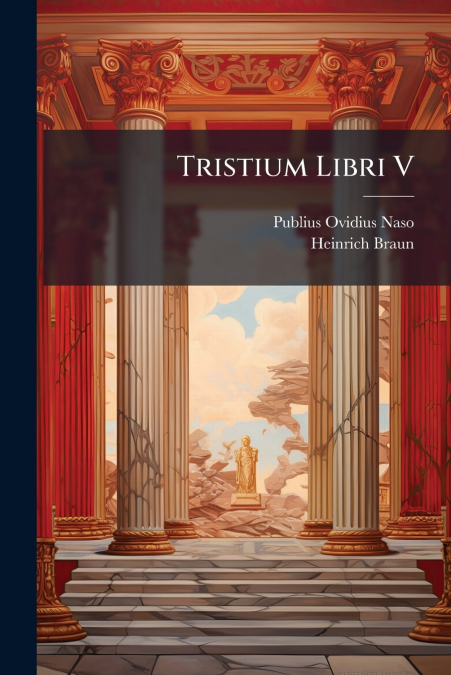
Heinrich Braun / Publius OVIDIUS Naso
 Librería Samer Atenea
 Kálamo Books
 Librería Elías (Asturias)
 Librería Kolima (Madrid)
 Librería Proteo (Málaga)
Tristium Libri V, also known as 'Tristia' (Sorrows), is a collection of poems by the Roman poet Ovid written in exile. Banished by Emperor Augustus to Tomis, a remote town on the Black Sea, Ovid composed these verses to express his grief, loneliness, and longing for Rome. The poems offer a poignant glimpse into the life of a celebrated artist stripped of his former glory and forced to confront the harsh realities of exile. Through evocative language and heartfelt emotion, Ovid reflects on his past life, his literary achievements, and the injustice of his punishment. He appeals to Augustus for clemency and seeks solace in the act of writing. 'Tristia' remains a powerful testament to the resilience of the human spirit in the face of adversity and a valuable historical document offering insights into Roman society and imperial power.This work has been selected by scholars as being culturally important, and is part of the knowledge base of civilization as we know it. This work was reproduced from the original artifact, and remains as true to the original work as possible. Therefore, you will see the original copyright references, library stamps (as most of these works have been housed in our most important libraries around the world), and other notations in the work.This work is in the public domain in the United States of America, and possibly other nations. Within the United States, you may freely copy and distribute this work, as no entity (individual or corporate) has a copyright on the body of the work.As a reproduction of a historical artifact, this work may contain missing or blurred pages, poor pictures, errant marks, etc. Scholars believe, and we concur, that this work is important enough to be preserved, reproduced, and made generally available to the public. We appreciate your support of the preservation process, and thank you for being an important part of keeping this knowledge alive and relevant.