Inicio > Sociedad y ciencias sociales > Sociedad y cultura: general > Trees of Paradise and Pillars of the World
Trees of Paradise and Pillars of the World

Trees of Paradise and Pillars of the World

Elizabeth A. Newsome / Elizabeth ANewsome

55,71 €
IVA incluido
Disponible
Editorial:
Univ of Chicago behalf of University of Texas
Año de edición:
2009
Materia
Sociedad y cultura: general
ISBN:
9780292722323
55,71 €
IVA incluido
Disponible

Selecciona una librería:

  • Librería Samer Atenea
  • Librería Aciertas (Toledo)
  • Kálamo Books
  • Librería Perelló (Valencia)
  • Librería Elías (Asturias)
  • Donde los libros
  • Librería Kolima (Madrid)
  • Librería Proteo (Málaga)

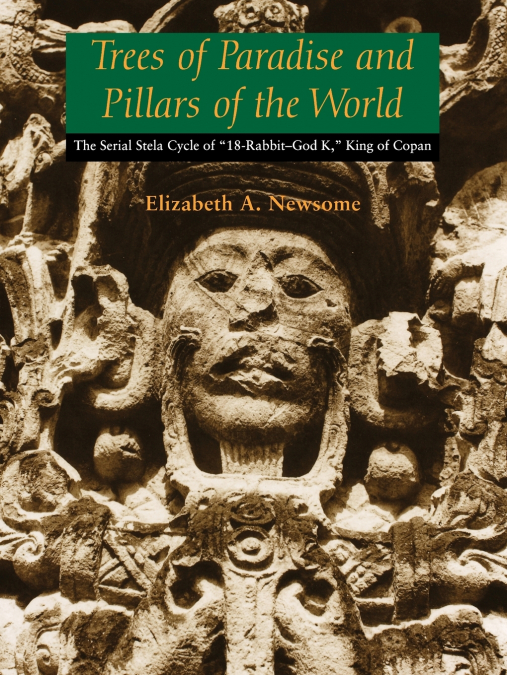
Assemblies of rectangular stone pillars, or stelae, fill the plazas and courts of ancient Maya cities throughout the lowlands of southern Mexico, Guatemala, Belize, and western Honduras. Mute testimony to state rituals that linked the king’s power to rule with the rhythms and renewal of time, the stelae document the ritual acts of rulers who sacrificed, danced, and experienced visionary ecstasy in connection with celebrations marking the end of major calendrical cycles. The kings’ portraits are carved in relief on the main surfaces of the stones, deifying them as incarnations of the mythical trees of life. Based on a thorough analysis of the imagery and inscriptions of seven stelae erected in the Great Plaza at Copan, Honduras, by the Classic Period ruler '18-Rabbit-God K,' this ambitious study argues that stelae were erected not only to support a ruler’s temporal claims to power but more importantly to express the fundamental connection in Maya worldview between rulership and the cosmology inherent in their vision of cyclical time. After an overview of the archaeology and history of Copan and the reign and monuments of '18-Rabbit-God K,' Elizabeth Newsome interprets the iconography and inscriptions on the stelae, illustrating the way they fulfilled a coordinated vision of the king’s ceremonial role in Copan’s period-ending rites. She also links their imagery to key Maya concepts about the origin of the universe, expressed in the cosmologies and mythic lore of ancient and living Maya peoples.


Artículos relacionados

  • The Gandhian Iceberg
    Chris D Moore-Backman
    The Gandhian Iceberg presents a bold, new interpretation of Gandhian nonviolence from the rare perspective of an author who is equal parts writer, scholar, and frontlines practitioner. The book faces the current crisis of climate change and the intensification of social unrest around the world, and calls for a new convergence of serious, spiritually-rooted US nonviolence activi...
    Disponible

    11,52 €

  • Contemporary Developments in Child Protection
    Nigel Parton
    Volume 1 "Policy Changes and Challenges" takes as its central theme the ongoing and challenging issues which child protection agencies have to address and the policy and practice initiatives that are developed to try and address these. The volume includes papers on: the relationship between the decline in the rate of ‘unnatural’ deaths and the growth of concern about child abus...
  • Diversity in Information Technology Education
    Goran Trajkovski
    ...
  • Model-Driven Software Development
    Model-driven software development (MDSD) drastically alters the software development process, characterized by a high degree of innovation and productivity. However, quality assurance application in the domain of software models and model-driven software development is still in an emergent phase. Model-Driven Software Development: Integrating Quality Assurance provides in-depth...
  • Evidence-Based Practice in Nursing Informatics
    Andrew Chasin
    Because of the constant advances and dynamics within the nascent field of nursing informatics, many nurses struggle in practice as they continue to try and apply habitual communication practices in the new environment without any critical reflection on, and adaptation of, those practices. Evidence-Based Practice in Nursing Informatics: Concepts and Applications serves as a valu...
  • Actor-Network Theory and Technology Innovation
    Arthur Tatnall
    About 25 years ago, the first developments of ANT (Actor-Network Theory) took place, but it wasn’t until much later that researchers began to take it seriously. In the late 1990s, ANT began to take hold in the scientific community as a new and exciting approach to socio-technical research and social theory. Actor-Network Theory and Technology Innovation: Advancements and New Co...